


Injury and repair in the neurovascular unit
- PMID: 22643075
- PMCID: PMC3985722
- DOI: 10.1179/1743132812Y.0000000019
Injury and repair in the neurovascular unit
Abstract
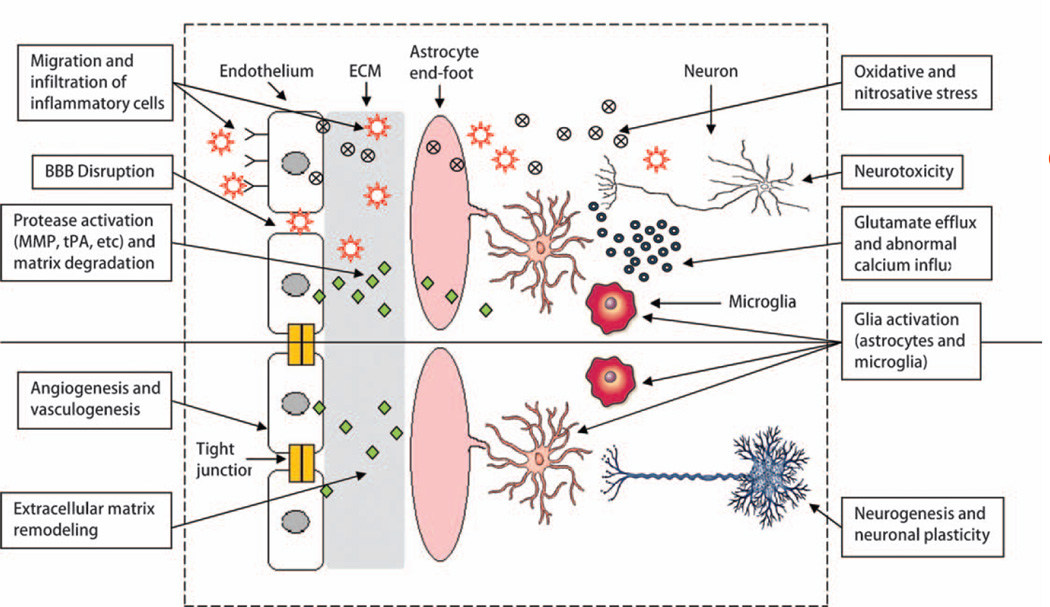
The neurovascular unit provides a conceptual framework for investigating the pathophysiology of how brain cells die after stroke, brain injury, and neurodegeneration. Emerging data now suggest that this concept can be further extended. Cell-cell signaling between neuronal, glial, and vascular elements in the brain not only mediates the mechanisms of acute injury, but integrated responses in these same elements may also be required for recovery as the entire neurovascular unit attempts to reorganize and remodel. Understanding the common signals and substrates of this transition between acute injury and delayed repair in the neurovascular unit may reveal useful paradigms for augmenting neuronal, glial, and vascular plasticity in damaged and diseased brain.
Figures
References
-
- Iadecola C. Neurovascular regulation in the normal brain and in Alzheimer’s disease. Nat Rev Neurosci. 2004;5(5):347–360. - PubMed
-
- Lo EH, Dalkara T, Moskowitz MA. Mechanisms, challenges and opportunities in stroke. Nat Rev Neurosci. 2003;4(5):399–415. - PubMed
-
- Lok J, Gupta P, Guo S, Kim WJ, Whalen MJ, van Leyen K, et al. Cell–cell signaling in the neurovascular unit. Neurochem Res. 2007;32(12):2032–2045. - PubMed
-
- Besancon E, Guo S, Lok J, Tymianski M, Lo EH. Beyond NMDA and AMPA glutamate receptors: emerging mechanisms for ionic imbalance and cell death in stroke. Trends Pharmacol Sci. 2008;29(5):268–275. - PubMed
Publication types
MeSH terms
Grants and funding
LinkOut - more resources
Full Text Sources
