The intersection of everyday life and group prenatal care for women in two urban clinics
- PMID: 22643609
- PMCID: PMC3625534
- DOI: 10.1353/hpu.2012.0060
The intersection of everyday life and group prenatal care for women in two urban clinics
Abstract
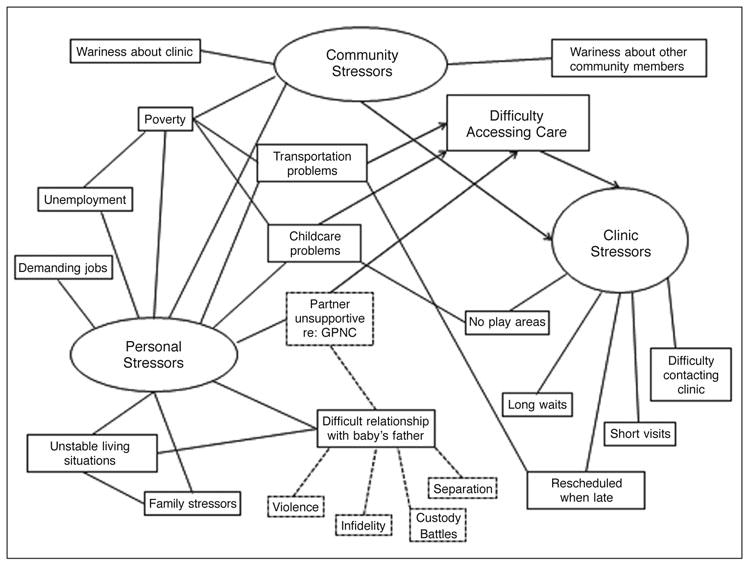
Women from vulnerable populations encounter challenging circumstances that generate stress and may adversely affect their health. Group prenatal care (GPNC) incorporates features that address social stressors, and has been demonstrated to improve pregnancy outcomes and prenatal care experiences. In this qualitative study, we describe the complex circumstances in the lives of women receiving care in two urban clinics and how GPNC attenuated them. Stressors included problems with transportation and child care, demanding jobs, poverty, homelessness, difficult relationships with partners, limited family support, and frustrating health care experiences. Receiving prenatal care in groups allowed women to strengthen relationships with significant others, gain social support, and develop meaningful relationships with group leaders. By eliminating waits and providing the opportunity to participate in care, GPNC also offered sanctuary from frustrations encountered in receiving individual care. Reducing such stressors may help improve pregnancy outcomes; however, more evidence is needed on mechanisms underlying these effects.
Figures
References
-
- McEwen BS. Seminars in medicine of the Beth Israel Deaconess Medical Center: Protective and damaging effects of stress mediators. New England Journal of Medicine. 1998;338(3):171–9. - PubMed
-
- Lu MC, Kotelchuck M, Hogan VK, Johnson K, Reyes C. Innovative strategies to reduce disparities in the quality of prenatal care in underresourced settings. Medical Care Research and Review. 2010;67(5):198S–230S. - PubMed
Publication types
MeSH terms
Grants and funding
LinkOut - more resources
Full Text Sources
Medical