


Multisystemic therapy compared to telephone support for youth with poorly controlled diabetes: findings from a randomized controlled trial
- PMID: 22644587
- PMCID: PMC3443313
- DOI: 10.1007/s12160-012-9378-1
Multisystemic therapy compared to telephone support for youth with poorly controlled diabetes: findings from a randomized controlled trial
Abstract
Background: Few interventions have effectively improved health outcomes among youth with diabetes in chronic poor metabolic control.
Purpose: This study aims to determine whether multisystemic therapy (MST), an intensive, home-based, tailored family treatment, was superior to weekly telephone support for improving regimen adherence and metabolic control among adolescents with chronic poor metabolic control.
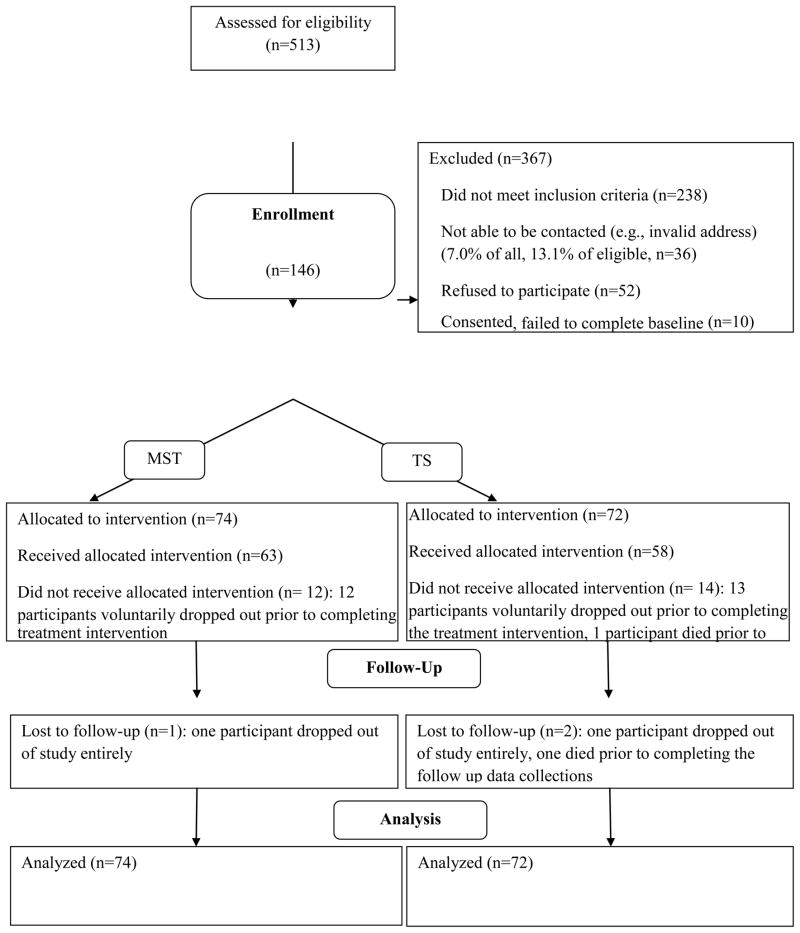
Methods: A randomized controlled trial was conducted with 146 adolescents with types 1 or 2 diabetes. Data were collected at baseline, 7 months (treatment termination), and 12 months (6 months follow-up).
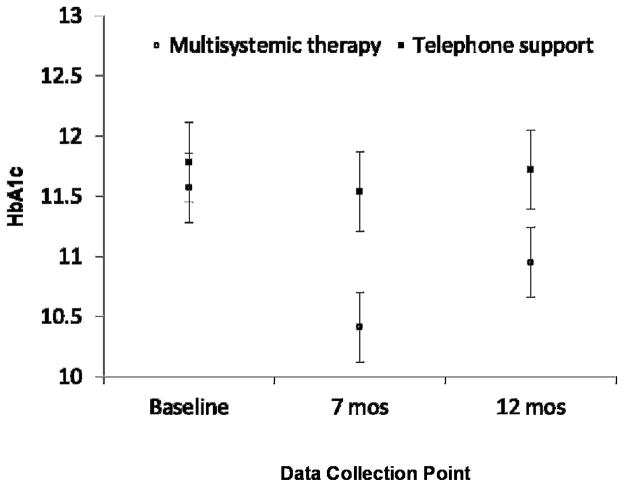
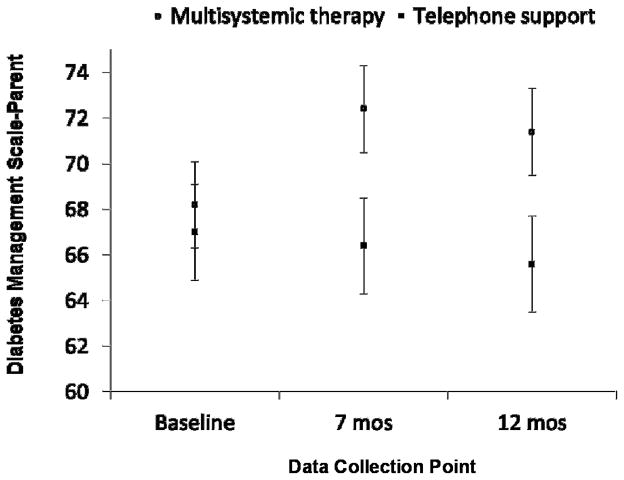
Results: Adolescents receiving MST had significantly improved metabolic control at 7 (1.01 % decrease) and 12 months (0.74 % decrease) compared to adolescents in telephone support. Parents of adolescents receiving MST reported significant improvements in adolescent adherence. However, adolescent-reported adherence was unchanged.
Conclusions: MST improved health outcomes among adolescents with chronic poor metabolic control when compared to telephone support. Home-based approaches may provide a viable means to improve access to behavioral interventions for such youth.
Conflict of interest statement
Conflict of Interest Statement
Three of the authors are board members of Evidence Based Services, which has a licensing agreement with MST Services, LLC, for dissemination of multisystemic therapy treatment technology. There are no other potential author conflicts of interest.
Figures
References
-
- Burdick J, Chase HP, Slover RH, et al. Missed insulin meal boluses and elevated hemoglobin A1c levels in children receiving insulin pump therapy. Pediatrics. 2004;113:e221–224. - PubMed
-
- Seiffge-Krenke I, Stemmler M. Coping with everyday stress and links to medical and psychosocial adaptation in diabetic adolescents. Journal of Adolescent Health. 2003;33:180–188. - PubMed
-
- Menzin J, Langley-Hawthorne C, Friedman M, Boulanger L, Cavanaugh R. Potential short-term economic benefits of improved glycemic control: A managed care perspective. Diabetes Care. 2001;24:51–55. - PubMed
