


Seasonal variation in the incidence rate of tuberculous meningitis is associated with sunshine hours
- PMID: 22647556
- PMCID: PMC9151823
- DOI: 10.1017/S0950268812001045
Seasonal variation in the incidence rate of tuberculous meningitis is associated with sunshine hours
Abstract
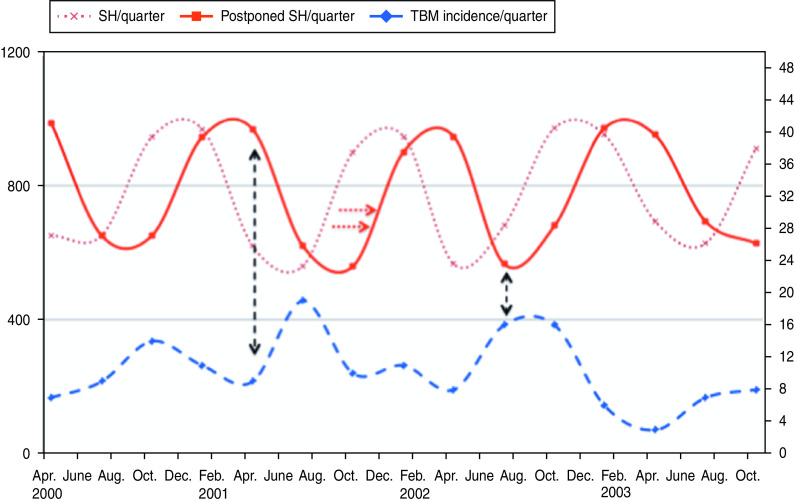
Tuberculous meningitis (TBM) is a severe complication of tuberculosis and occurs mainly during early childhood. The incidence rate of TBM varies with season, and serum vitamin D levels, which are dependent on sunlight, might play a role. We studied the association between TBM incidence rate and hours of sunshine in Cape Town, South Africa and found a significant association between the incidence rate of TBM and hours of sunshine 3 months earlier (incidence rate ratio per 100 sunshine hours 0·69, 95% confidence interval 0·54-0·88, P = 0·002). The association supports the hypothesis that vitamin D might play a role in the pathophysiology of TBM. Further prospective studies in which vitamin D status is measured are necessary to determine causality.
Figures
References
-
- World Health Organization (WHO) Global tuberculosis control: WHO report, 2011. (http://www.who.int/tb/publications/global_report/2011/gtbr11_main.pdf). Accessed 15 April 2012.
-
- Wallgren A. The time-table of tuberculosis. Tubercle 1948; 29: 245–251. - PubMed
-
- Schaaf HS, et al. A decade of experience with Mycobacterium tuberculosis culture from children: a seasonal influence on incidence of childhood tuberculosis. Tubercle and Lung Disease 1996; 77: 43–46. - PubMed
MeSH terms
LinkOut - more resources
Full Text Sources
