


Pharmaceuticals and personal care products in the environment: what are the big questions?
- PMID: 22647657
- PMCID: PMC3440110
- DOI: 10.1289/ehp.1104477
Pharmaceuticals and personal care products in the environment: what are the big questions?
Abstract
Background: Over the past 10-15 years, a substantial amount of work has been done by the scientific, regulatory, and business communities to elucidate the effects and risks of pharmaceuticals and personal care products (PPCPs) in the environment.
Objective: This review was undertaken to identify key outstanding issues regarding the effects of PPCPs on human and ecological health in order to ensure that future resources will be focused on the most important areas.
Data sources: To better understand and manage the risks of PPCPs in the environment, we used the "key question" approach to identify the principle issues that need to be addressed. Initially, questions were solicited from academic, government, and business communities around the world. A list of 101 questions was then discussed at an international expert workshop, and a top-20 list was developed. Following the workshop, workshop attendees ranked the 20 questions by importance.
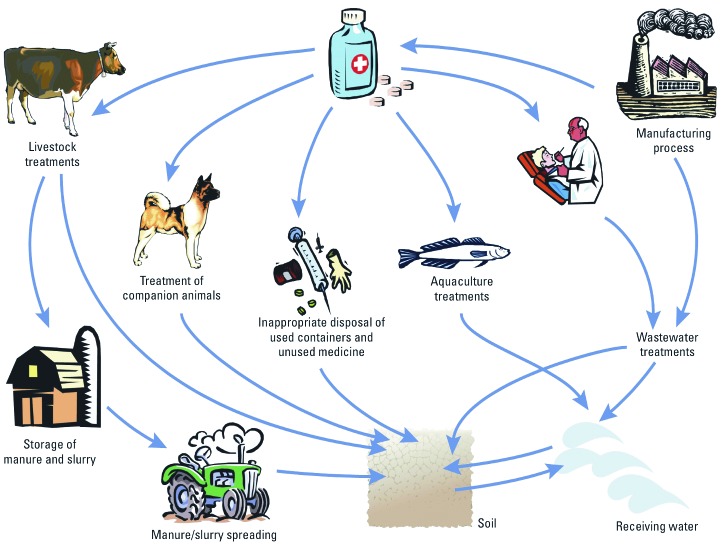
Data synthesis: The top 20 priority questions fell into seven categories: a) prioritization of substances for assessment, b) pathways of exposure, c) bioavailability and uptake, d) effects characterization, e) risk and relative risk, f ) antibiotic resistance, and g) risk management.
Conclusions: A large body of information is now available on PPCPs in the environment. This exercise prioritized the most critical questions to aid in development of future research programs on the topic.
Conflict of interest statement
A.B.A.B., J.P.S., T.V., A.C., and P.C.D. have provided consultancy services to the pharmaceutical and personal care product (PPCP) industry. D.J.C., J.P.S., S.E.B., S.D.D., J.F.E., T.G., F.M., R.D.M., R.M.S., and J.O.S. are employed by the PPCP sector. A.B.A.B., B.W.B., K.C., J.P.S., T.V., A.C., P.C.D., F.G., J.P.G., M.V.K., D.G., J.L., J.M.L., J.L.P., M.E.M., M.R.S., P.K.S., E.T., G.R.T. V.L.T., and G.V., D.K. have received funding from industry and/or government for research on PPCP issues. M.A.R., D.J.C., S.E.B., P.C.D., F.M., R.D.M., J.R.S., and R.M.S. have shareholdings in the PPCP sector. S.H., E.I., K.O., G.T.A., K.F.B., J.P.B., P.C., L.H., A.M., R.M., and N.D.S. declare they have no actual or potential competing financial interests.
Figures
References
-
- Ankley GT, Brooks BW, Huggett DB, Sumpter JP. Repeating history: pharmaceuticals in the environment. Environ Sci Technol. 2007;41:8211–8217. - PubMed
-
- Barraclough D, Kearney T, Croxford A. Bound residues: environmental solution or future problem? Environ Pollut. 2005;133:85–90. - PubMed
-
- Berninger JP, Brooks BW. Leveraging mammalian pharmaceutical toxicology and pharmacology data to predict chronic fish responses to pharmaceuticals. Toxicol Lett. 2010;193:69–78. - PubMed
-
- Boxall ABA, Fogg LA, Kay P, Blackwell PA, Pemberton EJ, Croxford A. Prioritisation of veterinary medicines in the UK environment. Toxicol Lett. 2003b;142:207–218. - PubMed
Publication types
MeSH terms
Substances
LinkOut - more resources
Full Text Sources
Other Literature Sources
Medical
Miscellaneous