


Weaning management of newly received beef calves with or without continuous exposure to a persistently infected bovine viral diarrhea virus pen mate: effects on health, performance, bovine viral diarrhea virus titers, and peripheral blood leukocytes
- PMID: 22648754
- PMCID: PMC7110029
- DOI: 10.2527/jas.2011-4077
Weaning management of newly received beef calves with or without continuous exposure to a persistently infected bovine viral diarrhea virus pen mate: effects on health, performance, bovine viral diarrhea virus titers, and peripheral blood leukocytes
Abstract
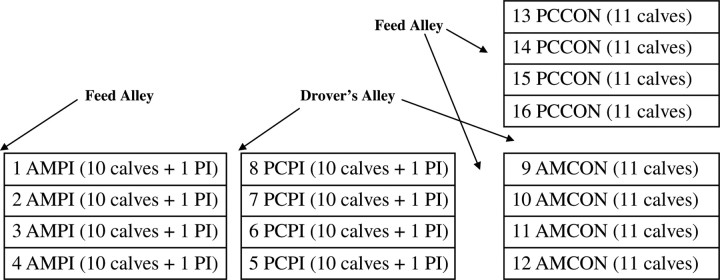
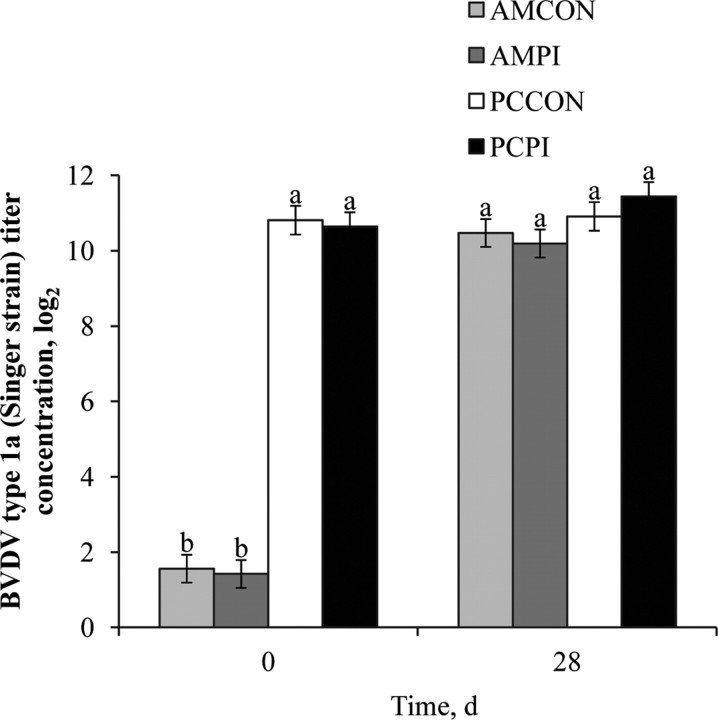
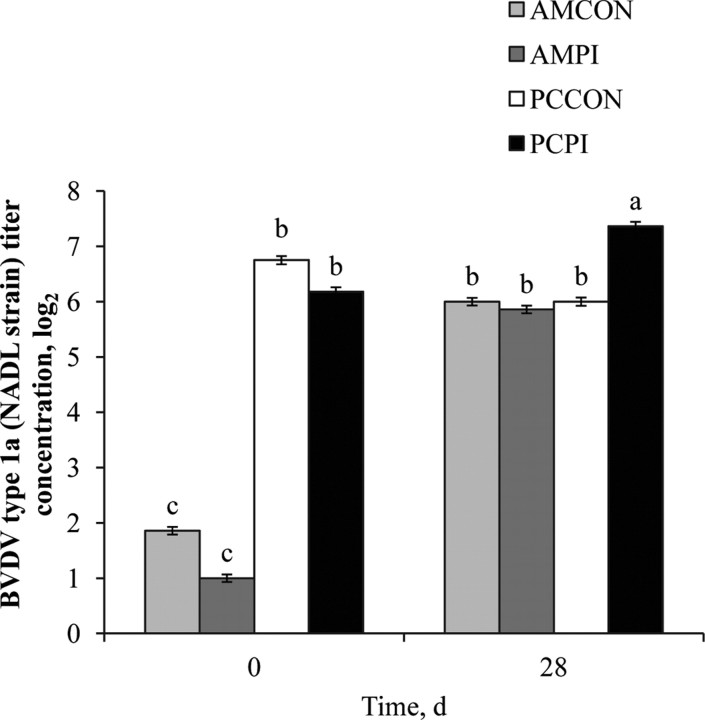
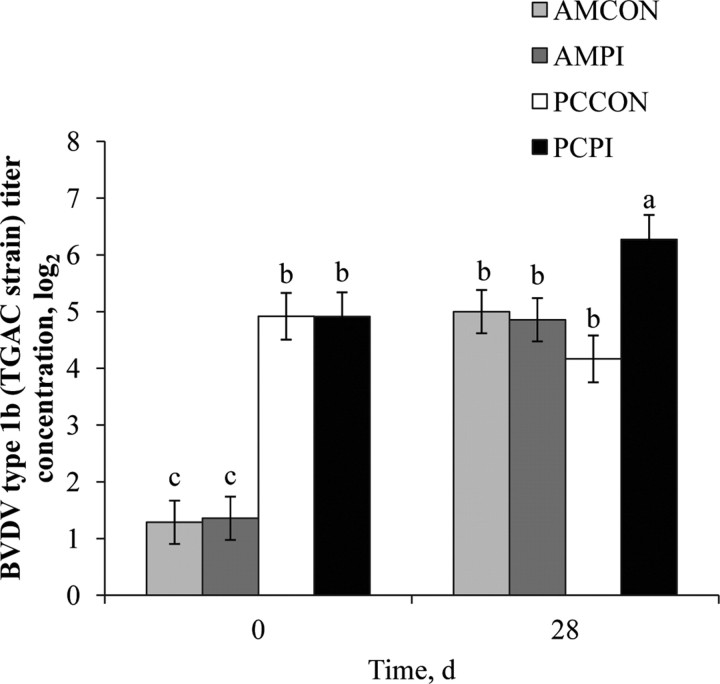
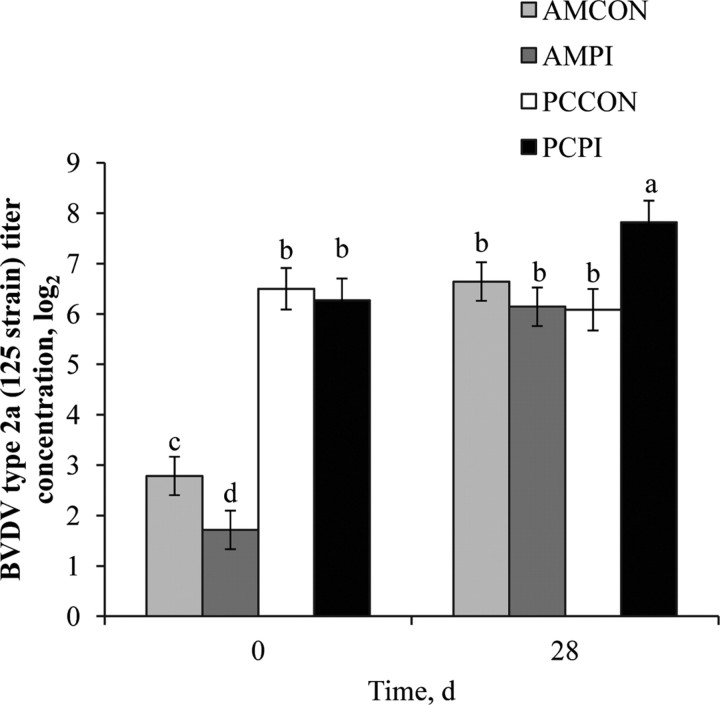
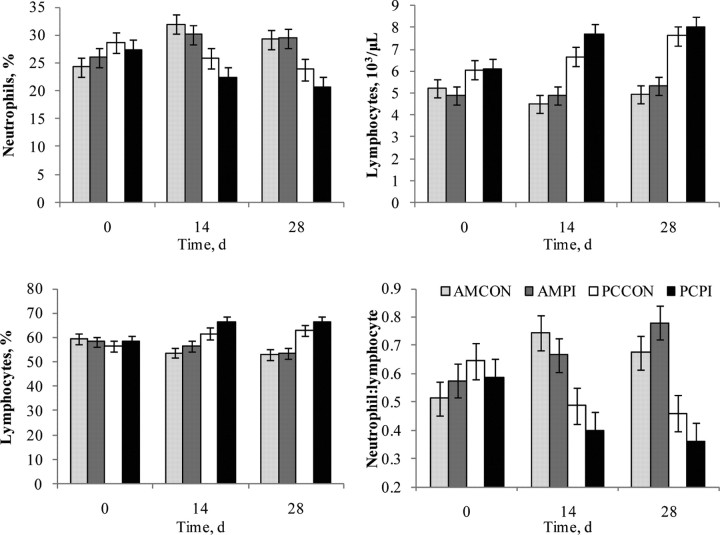
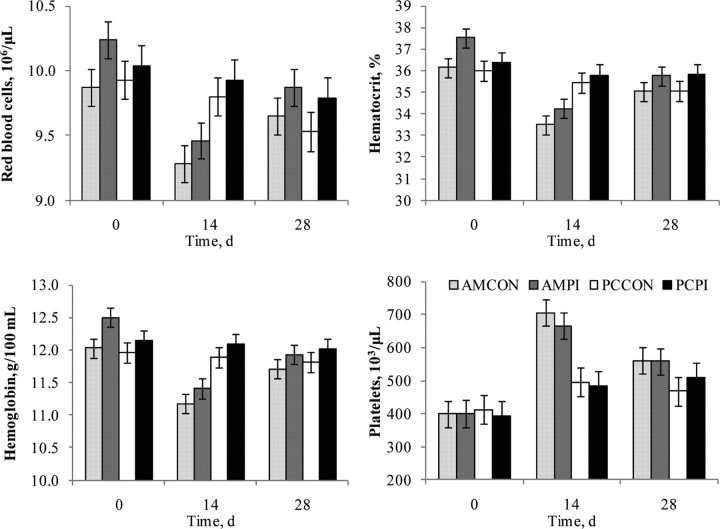
Exposure to animals persistently infected (PI) with bovine viral diarrhea virus (BVDV) results in immunomodulation of cohorts that may have health and growth consequences; however, effects may differ in low-risk, preconditioned (PC) vs. high-risk, auction market (AM) beef cattle. Our objective was to compare health and performance of PC or AM management systems with (PI) or without (CON) presence of a PI-BVDV pen mate using a 2 × 2 factorial arrangement. Four shipment blocks of crossbred PC steers (n = 236) from 3 ranch-origins were weaned, dewormed, vaccinated, tested for PI-BVDV, and kept on the ranch for ≥42 d. Subsequently, PC steers were transported to a stocker receiving unit (RU), weighed (251 ± 2 kg), blood sampled, stratified by d -1 BW, and assigned randomly to treatment (PCPI or PCCON) with no additional processing. Simultaneously, 4 blocks of crossbred AM calves (n = 292) were assembled from regional auction markets and transported to the RU ± 36 h from PC arrival. The AM calves were weighed (245 ± 1.3 kg), stratified by gender and d -1 BW, processed under the same regimen used for PC steers at their origin ranch except bull calves were castrated, and then assigned randomly to treatment (AMPI or AMCON). Treatment pens (0.45 ha) were arranged spatially such that PI did not have fence-line or water source contact with CON. Calves were fed identically and followed the same antibiotic treatment protocol. Daily BW gain for the entire 42-d receiving trial was greater (P < 0.001) for PC (1.2 kg) compared with AM (0.85 kg). There was an exposure effect (P = 0.002) on ADG from d 28 to 42; CON gained 1.12 kg vs. 0.90 kg BW for PI cohort. Morbidity was markedly greater (P < 0.001) in AM (70%) vs. PC (7%), resulting in (P < 0.001) an antibiotic treatment cost of $20.52 and $2.48/animal, respectively. Treatment with a third antibiotic occurred more often (P = 0.04) for PI cohort, and the percentage of chronically ill cattle was greatest (P = 0.06) for AMPI. Upon arrival, BVDV type 1a, 1b, and 2a titers were greater for PC (treatment × day, P < 0.001), and the percentage seropositive to BVDV type 1a on d 0 was 100% for PC vs. 23% in AM. Platelets increased transiently (P < 0.001) with greater platelets observed in AM (P < 0.001). Results indicate that PC calves gain faster and require fewer antibiotic treatments during the receiving period. Exposure to PI reduced BW gain from d 28 to 42, increased the number of calves treated thrice, and increased chronically ill cattle for AM.
Figures
References
-
- Bolin S.R., Ridpath J.F. 1995. Assessment of protection from systemic infection or disease afforded by low to intermediate titers of passively acquired neutralizing antibody against bovine viral diarrhea virus in calves. Am. J. Vet. Res. 56:755–759. - PubMed
-
- Booker C.W., Abutarbush S.M., Morley P.S., Guichon P.T., Wildman B.K., Jim G.K., Schunicht O.C., Pittman T.J., Perrett T., Ellis J.A., Appleyard G., Haines D.M. 2008. The effect of bovine viral diarrhea virus infections on health and performance of feedlot cattle. Can. Vet. J. 49:253–260. - PMC - PubMed
-
- Burciaga-Robles L.O., Step D.L., Krehbiel C.R., Holland B.P., Richards C.J., Montelongo M.A., Confer A.W., Fulton R.W. 2010. Effects of exposure to calves persistently infected with bovine viral diarrhea virus type 1b and subsequent infection with Manheimia haemolytica on clinical signs and immune variables: Model for bovine respiratory disease via viral and bacterial interaction. J. Anim. Sci. 88:2166–2178. - PubMed
-
- Clark J.H., Olson K.C., Schmidt T.B., Larson R.L., Ellersieck M.R., Alkire D.O., Meyer D.L., Rentfrow G.K., Carr C.C. 2006. Effects of respiratory disease risk and a bolus injection of trace minerals at receiving on growing and finishing performance by beef steers. Prof. Anim. Sci. 22:245–251.
-
- Cole N.A. 1985. Preconditioning steers for the feedlot. Vet. Clin. North Am. Food Anim. Prac. 1:401–411. - PubMed
MeSH terms
Substances
LinkOut - more resources
Full Text Sources
Research Materials
Miscellaneous
