


Molecular epidemiology of HIV-associated tuberculosis in Dar es Salaam, Tanzania: strain predominance, clustering, and polyclonal disease
- PMID: 22649022
- PMCID: PMC3421504
- DOI: 10.1128/JCM.00624-12
Molecular epidemiology of HIV-associated tuberculosis in Dar es Salaam, Tanzania: strain predominance, clustering, and polyclonal disease
Abstract
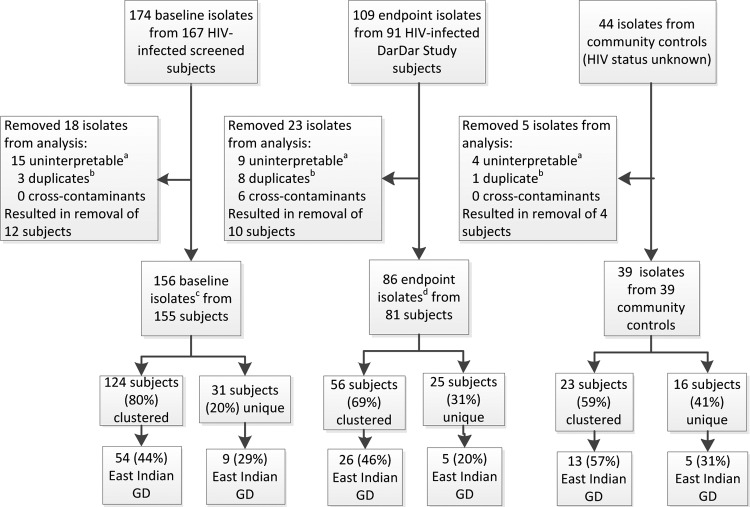
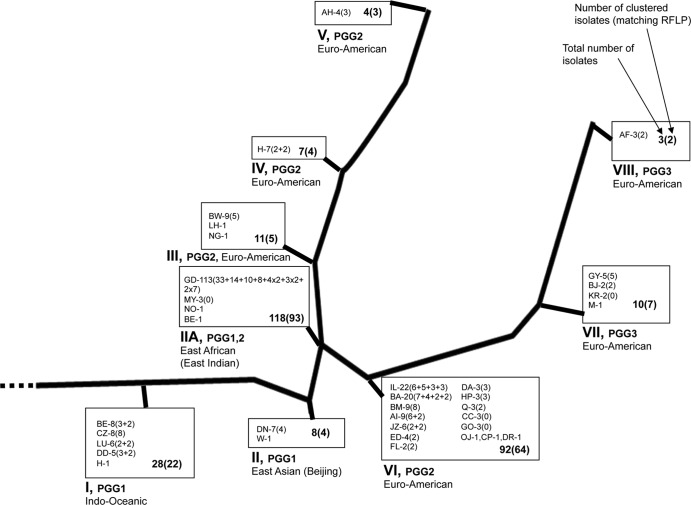
Molecular typing of Mycobacterium tuberculosis can be used to elucidate the epidemiology of tuberculosis, including the rates of clustering, the frequency of polyclonal disease, and the distribution of genotypic families. We performed IS6110 typing and spoligotyping on M. tuberculosis strains isolated from HIV-infected subjects at baseline or during follow-up in the DarDar Trial in Tanzania and on selected community isolates. Clustering occurred in 203 (74%) of 275 subjects: 124 (80%) of 155 HIV-infected subjects with baseline isolates, 56 (69%) of 81 HIV-infected subjects with endpoint isolates, and 23 (59%) of 39 community controls. Overall, 113 (41%) subjects had an isolate representing the East Indian "GD" family. The rate of clustering was similar among vaccine and placebo recipients and among subjects with or without cellular immune responses to mycobacterial antigens. Polyclonal disease was detected in 6 (43%) of 14 patients with multiple specimens typed. Most cases of HIV-associated tuberculosis among subjects from this study in Dar es Salaam resulted from recently acquired infection. Polyclonal infection was detected and isolates representing the East Indian GD strain family were the most common.
Figures
References
-
- Bifani PJ, et al. 1999. 1999. Identification of a W variant outbreak of Mycobacterium tuberculosis via population-based molecular epidemiology. JAMA 282:2321–2327 - PubMed
-
- Brander E. 1972. A simple way of detecting pyrazinamide resistance. Tubercle 53:128–131 - PubMed
-
- Chaves F, Dronda F, Alonso-Sanz M, Noriega AR. 1999. Evidence of exogenous reinfection and mixed infection with more than one strain of Mycobacterium tuberculosis among Spanish HIV-infected inmates. AIDS 13:615–620 - PubMed
Publication types
MeSH terms
Substances
Grants and funding
LinkOut - more resources
Full Text Sources
Medical
