


The pattern, clinical characteristics and outcome of ESRD in Ile-Ife, Nigeria: is there a change in trend?
- PMID: 22649440
- PMCID: PMC3362977
The pattern, clinical characteristics and outcome of ESRD in Ile-Ife, Nigeria: is there a change in trend?
Abstract
Background: The prevalence of chronic renal failure and End Stage Renal Disease (ESRD) has remained high worldwide and the epidemiology has changed significantly in the last decade in industrialised countries. While there have been significant improvements in these patient's outcomes in developed countries, their state and survival is still appalling in developing countries.
Objective: To determine the clinical pattern, presentation and management outcomes in our ESRD population over a 19-year period (1989-2007).
Methods: Seven hundred and sixty patients' records were reviewed. Data on major causes, clinical presentation, management and survival were retrieved and collated. Data was analysed using SPSS package version 16.
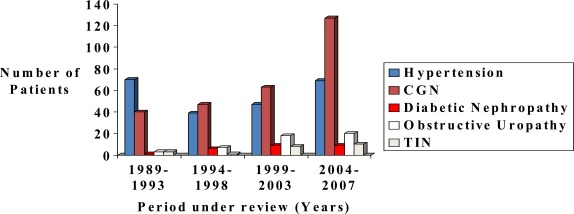
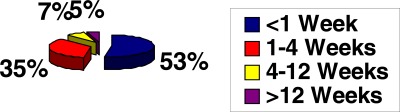
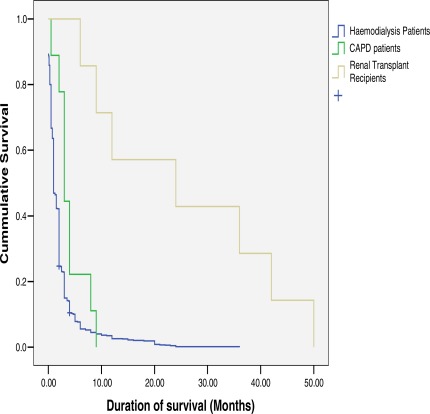
Results: Their ages ranged between 15-90 years (mean ± SD; 39.9±1.67years) with male preponderance (70.3%). Major presenting complaints were body swelling and uraemic symptoms in most studied patients. The predisposing conditions included chronic glomerulonephritis, hypertension, obstructive uropathy and diabetes mellitus. Renal replacement therapy offered included HD in 556(73.2%), Continous Ambulatory Peritoneal Dialysis (CAPD) in only 9(1.2%) patients and renal transplantation in only 7(0.9%). Only 38(6.8%) survived on HD for longer than three months while 7(77.8%) CAPD patients and all transplanted patients survived for between six months and four years (p<0.00001). Median duration of survival after diagnosis for all the patients was 2 weeks (range 0-50 months).
Conclusion: End stage renal disease is still prevalent with chronic glomerulonephritis and hypertension being the common causes. Prognosis is still grave hence subsidized renal replacement therapy and preventive nephrology should be targeted in such underserved populations.
Keywords: ESRD; dialysis; survival.
Figures
References
-
- Barsoum RS. Chronic kidney disease in the developing world. N Engl J Med. 2006;354:997–999. - PubMed
-
- Arogundade FA, Barsoum RS. CKD prevention in sub-Saharan Africa: A call for Government, Non-governmental and community support. Am J Kid Dis. 2008;51(3):515–523. - PubMed
-
- Dubose TD., Jr American society on Nephrology presidential Address 2006: Chronic kidney disease as a public health threat- New strategy for a growing problem. J Am Soc Nephrol. 2007;18:1038–1045. - PubMed
-
- Naicker S. End-stage renal disease in sub-Saharan Africa. Ethn Dis. 2009;19(1 Suppl 1):S113–S115. - PubMed
-
- United States Renal Data System, author. Annual data report: Incidence and prevalence of ESRD. Am J Kid Dis. 2003;42(suppl5):s37–s173.
MeSH terms
LinkOut - more resources
Full Text Sources
Medical