


Physiologically based toxicokinetic modelling as a tool to support risk assessment: three case studies
- PMID: 22649449
- PMCID: PMC3357559
- DOI: 10.1155/2012/359471
Physiologically based toxicokinetic modelling as a tool to support risk assessment: three case studies
Abstract
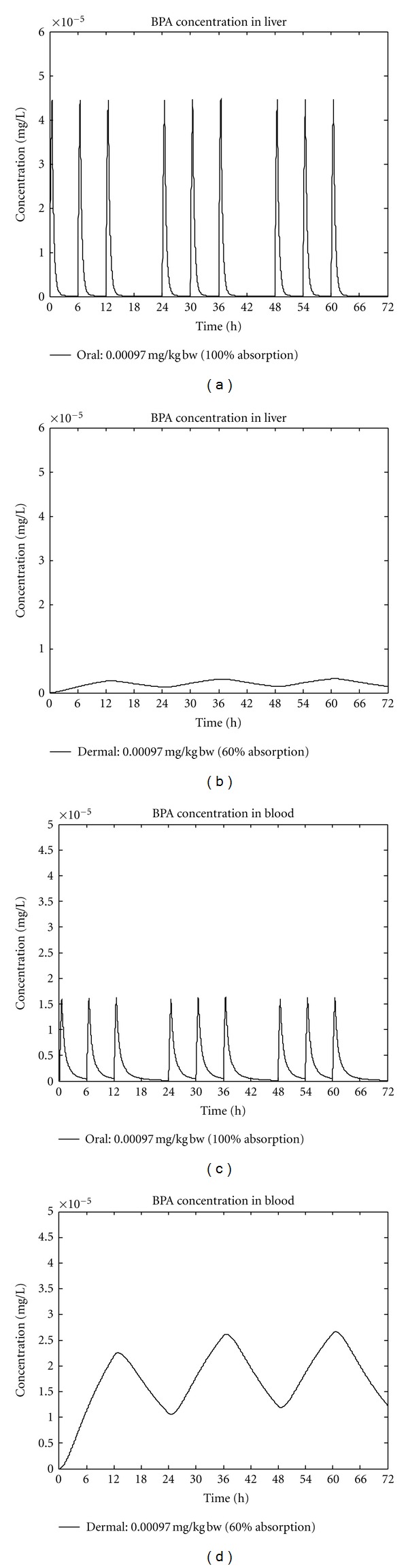
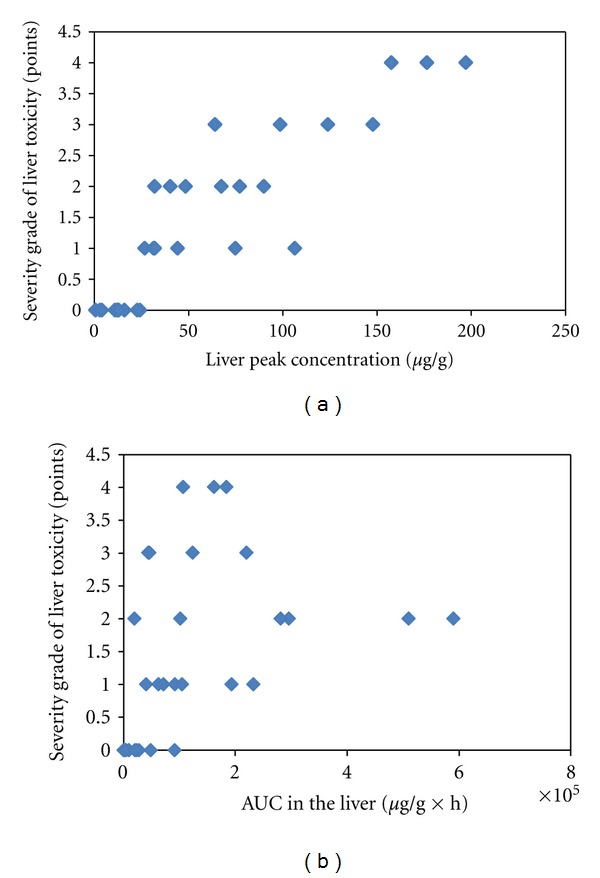
In this contribution we present three case studies of physiologically based toxicokinetic (PBTK) modelling in regulatory risk assessment. (1) Age-dependent lower enzyme expression in the newborn leads to bisphenol A (BPA) blood levels which are near the levels of the tolerated daily intake (TDI) at the oral exposure as calculated by EFSA. (2) Dermal exposure of BPA by receipts, car park tickets, and so forth, contribute to the exposure towards BPA. However, at the present levels of dermal exposure there is no risk for the adult. (3) Dermal exposure towards coumarin via cosmetic products leads to external exposures of two-fold the TDI. PBTK modeling helped to identify liver peak concentration as the metric for liver toxicity. After dermal exposure of twice the TDI, the liver peak concentration was lower than that present after oral exposure with the TDI dose. In the presented cases, PBTK modeling was useful to reach scientifically sound regulatory decisions.
Figures
References
-
- Teorell T. Kinetics of distribution of substances administered to body. Archives Internationales de Pharmacodynamie et de Therapie. 1937;57:205–240.
-
- Dahl SG, Aarons L, Gundert-Remy U, et al. Incorporating physiological and biochemical mechanisms into pharmacokinetic-pharmacodynamic models: a conceptual framework. Basic and Clinical Pharmacology and Toxicology. 2010;106(1):2–12. - PubMed
-
- Mapleton WW. Chest gas-exchange theory using an electrical analogue. Journal of Applied Physiology. 1964;19:1193–1199. - PubMed
-
- Ashman MN, Blesser WB, Epstein RM. A nonlinear model for the uptake and distribution of halothane in man. Anesthesiology. 1970;33(4):419–429. - PubMed
-
- Poulin P, Theil FP. Prediction of pharmacokinetics prior to in vivo studies—II. Generic physiologically based pharmacokinetic models of drug disposition. Journal of Pharmaceutical Sciences. 2002;91(5):1358–1370. - PubMed
LinkOut - more resources
Full Text Sources
