Review
. 2012 May;10(5):635-47.
doi: 10.1586/erc.12.33.

Therapeutic strategies to combat neointimal hyperplasia in vascular grafts

Affiliations
Review

Therapeutic strategies to combat neointimal hyperplasia in vascular grafts

Michael J Collins et al. Expert Rev Cardiovasc Ther. 2012 May.

Abstract

Neointimal hyperplasia (NIH) in bypass conduits such as veins and prosthetic grafts is an important clinical entity that limits the long-term success of vascular interventions. Although the development of NIH in the conduits shares many of the same features of NIH that develops in native arteries after injury, vascular grafts are exposed to unique circumstances that predispose them to NIH, including surgical trauma related to vein handling, hemodynamic changes creating areas of low flow, and differences in biocompatibility between the conduit and the host environment. Multiple different approaches, including novel surgical techniques and targeted gene therapies, have been developed to target and prevent the causes of NIH. Recently, the PREVENT trials, the first molecular biology trials in vascular surgery aimed at preventing NIH, have failed to produce improved clinical outcomes, highlighting the incomplete knowledge of the pathways leading to NIH in vascular grafts. In this review, we aim to summarize the pathophysiologic pathways that underlie the formation of NIH in both vein and synthetic grafts and discuss current and potential mechanical and molecular approaches under investigation that may limit NIH in vascular grafts.


Figures
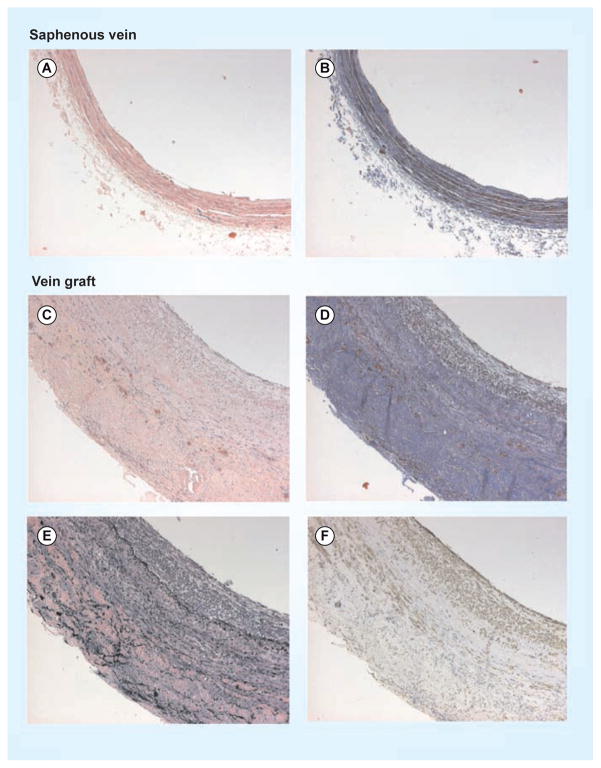
Figure 1
Figure 1. Representative histologic sections of human vein and vein graft
(A) Human saphenous vein stained with hematoxylin and eosin stain and (B) Masson’s trichrome. In comparison, sections taken from a (C) representative patent human vein graft demonstrate neointimal hyperplasia shown by increased vein thickness (hematoxylin and eosin stain), (D) increased deposition of collagen (Masson’s trichrome) and (E) elastin (elastin stain), and (F) infiltration of smooth muscle cells (α-actin stain).
Figure 2
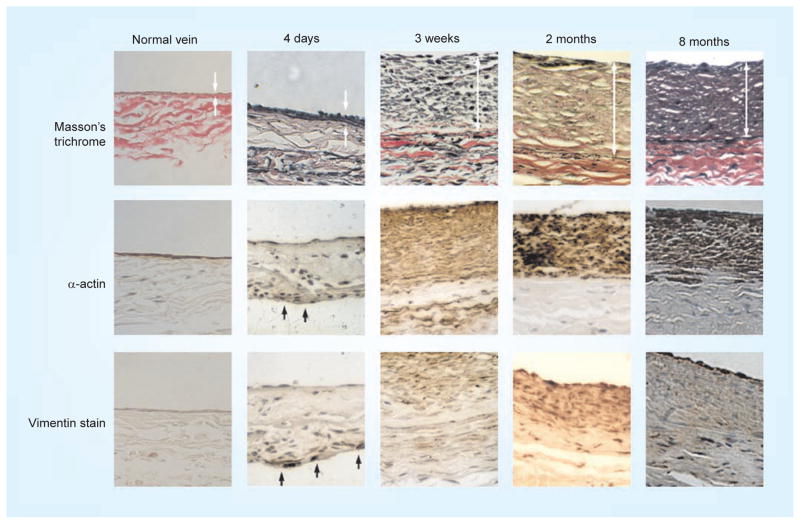
Figure 2. Time course of development of neointimal hyperplasia in a rabbit vein graft model
Neointimal hyperplasia results in the development of a thickened intima (top row arrows) and the migration and accumulation of smooth muscle cells (middle row arrows) and fibroblasts (bottom row arrows).
Figure 3
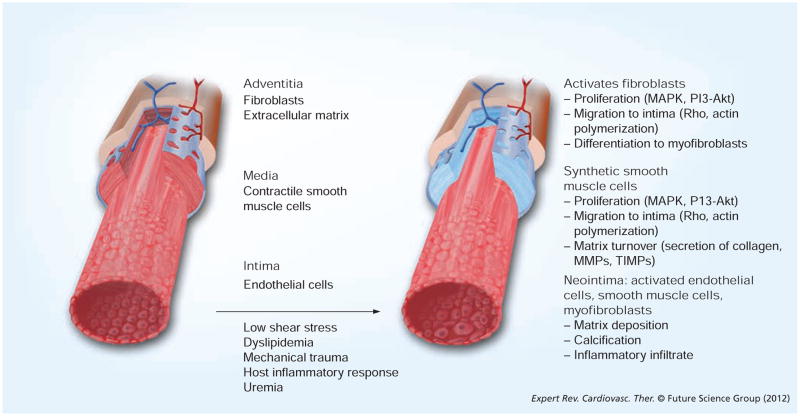
Figure 3. Summary of the cellular changes that occur in vein grafts associated with the development of neointimal hyperplasia
MMP: Matrix metalloproteinase; TIMP: Tissue inhibitor of metalloproteinases.
Figure 4
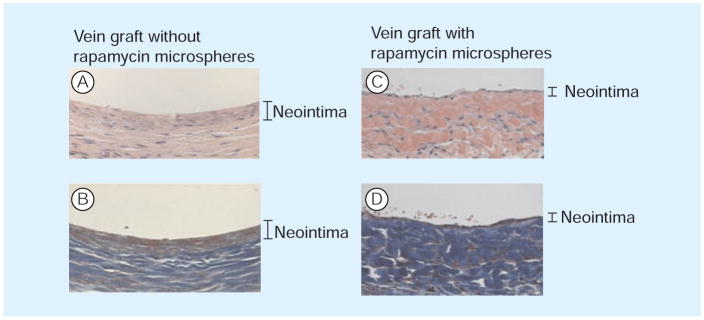
Figure 4. Rat vein grafts treated with or without rapamycin-infused microspheres
(A & C) Hematoxylin and eosin; (B & D) Masson’s trichrome. Rapamycin significantly reduces neointimal hyperplasia in this model.

References

    1. Imparato AM, Bracco A, Kim GE, Zeff R. Intimal and neointimal fibrous proliferation causing failure of arterial reconstructions. Surgery. 1972;72(6):1007–1017. - PubMed
    1. Nguyen LL, Moneta GL, Conte MS, Bandyk DF, Clowes AW, Seely BL PREVENT III Investigators. Prospective multicenter study of quality of life before and after lower extremity vein bypass in 1404 patients with critical limb ischemia. J Vasc Surg. 2006;44(5):977–983. discussion 983. - PMC - PubMed
    1. Muto A, Model L, Ziegler K, Eghbalieh SD, Dardik A. Mechanisms of vein graft adaptation to the arterial circulation: insights into the neointimal algorithm and management strategies. Circ J. 2010;74(8):1501–1512. - PMC - PubMed
    1. Muto A, Fitzgerald TN, Pimiento JM, et al. Smooth muscle cell signal transduction: implications of vascular biology for vascular surgeons. J Vasc Surg. 2007;45(Suppl A):A15–A24. - PMC - PubMed
    1. Christiansen JF, Hartwig D, Bechtel JF, et al. Diseased vein grafts express elevated inflammatory cytokine levels compared with atherosclerotic coronary arteries. Ann Thorac Surg. 2004;77(5):1575–1579. - PubMed

Publication types