


Lag screw fixation of fracture of the anterior mandible: a new minimal access technique
- PMID: 22654375
- PMCID: PMC3177514
- DOI: 10.1007/s12663-011-0176-2
Lag screw fixation of fracture of the anterior mandible: a new minimal access technique
Abstract
Objective: Purpose of this study to introduce a new minimal access technique for management of anterior mandible fracture with several advantages over conventional methods.
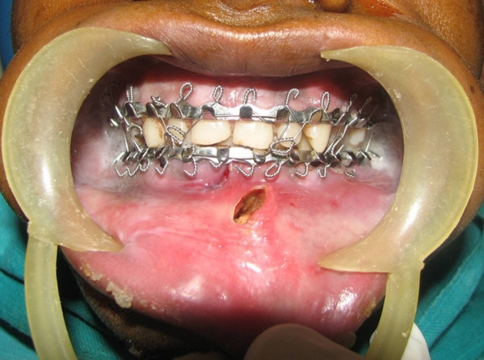
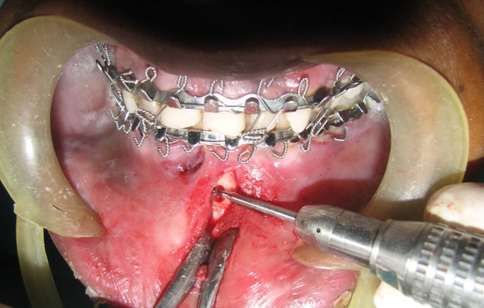
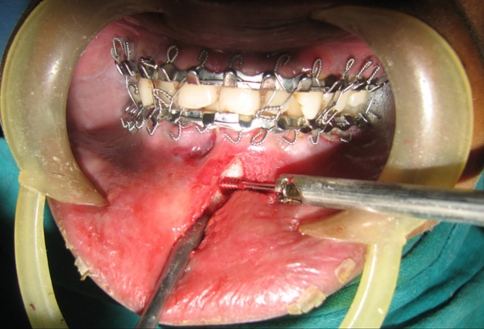
Method: Four cases of undisplaced anterior mandibular fracture were selected. Tension band was achieved either by arch bar fixation to mandible or placement of interdental wire followed by intermaxillary fixation. With a 1 cm vertical incision was placed adjacent to fractured line. Fractured segment was immobilized with lag screw with minimal stripping. All patients were followed for 6 months.
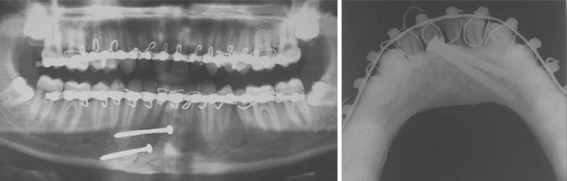
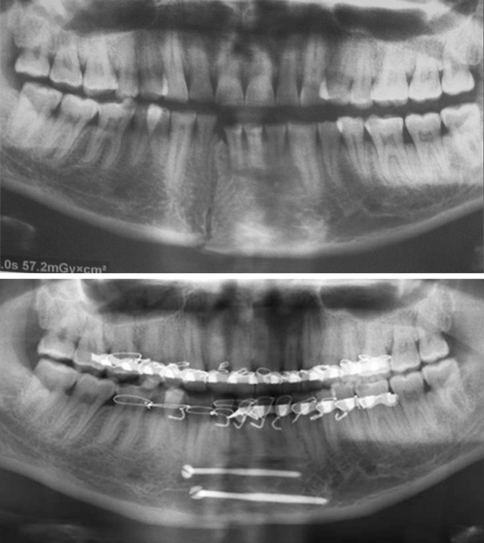
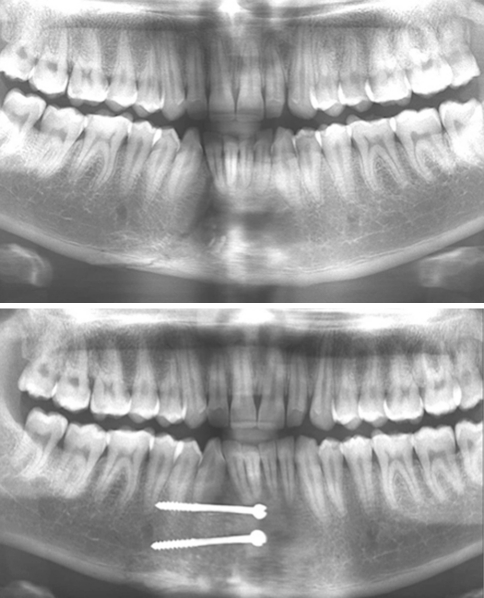
Results: All four cases shown good stable segment after 6 months of post operative follow up. OPG revealed well placed lag screw and there were no surgical complications, for example parasthesia, scarring and odema.
Conclusion: Fixation of anterior mandible fracture using this technique can achieve good stability and appropriate compression. The technique is simple and easily performed, reducing the surgical time, reduce the chances of infection due to less exposure and promote the healing process by producing stress in the fracture lines.
Keywords: Anterior mandible fracture; Lag screw; Minimal access technique.
Figures



References
-
- Niederdellmann H, Shetty V. Solitary lag screw osteosynthesis in the treatment of fractures of the angle of mandible: a retrospective study. Plast Reconstr Surg. 1987;80:688. - PubMed
LinkOut - more resources
Full Text Sources