


The yin and yang of nrf2-regulated selenoproteins in carcinogenesis
- PMID: 22654914
- PMCID: PMC3357939
- DOI: 10.1155/2012/486147
The yin and yang of nrf2-regulated selenoproteins in carcinogenesis
Abstract
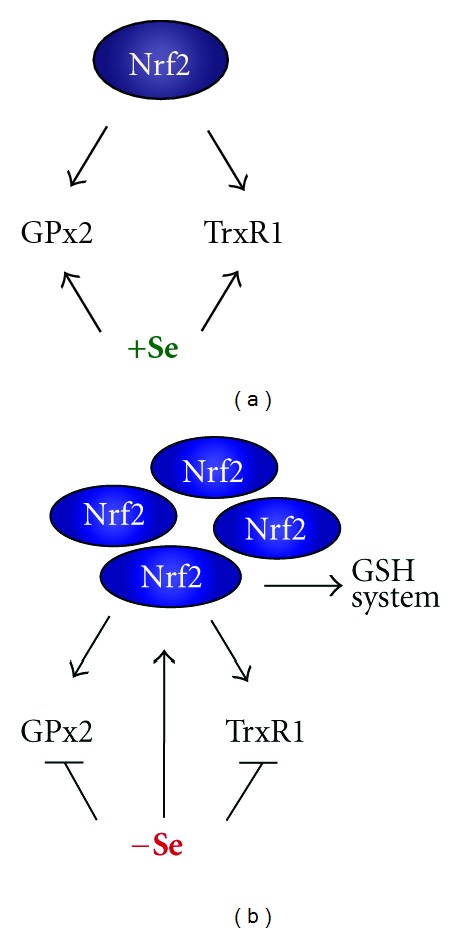
The NF-E2-related factor-2 (Nrf2) is a transcription factor which regulates the major cellular defense systems and thereby contributes to the prevention of many diseases including cancer. Selenium deficiency is associated with a higher cancer risk making also this essential trace element a promising candidate for cancer prevention. Two selenoproteins, thioredoxin reductase-1 (TrxR1) and glutathione peroxidase-2 (GPx2), are targets for Nrf2. Selenium deficiency activates Nrf2 as does a TrxR1 knockout making a synergism between both systems plausible. Although this might hold true for healthy cells, the interplay may turn into the opposite in cancer cells. The induction of the detoxifying and antioxidant enzymes by Nrf2 will make cancer cells chemoresistant and will protect them against oxidative damage. The essential role of TrxR1 in maintaining proliferation makes its upregulation in cancer cells detrimental. The anti-inflammatory potential of GPx2 will help to inhibit cancer initiation and inflammation-triggered promotion, but its growth supporting potential will also support tumor growth. This paper considers beneficial and adverse consequences of the activation of Nrf2 and the selenoproteins which appear to depend on the cancer stage.
Figures
References
-
- Blot WJ, Li JY, Taylor PR, et al. Nutrition intervention trials in Linxian, China: supplementation with specific vitamin/mineral combinations, cancer incidence, and disease-specific mortality in the general population. Journal of the National Cancer Institute. 1993;85(18):1483–1492. - PubMed
-
- Wei WQ, Abnet CC, Qiao YL, et al. Prospective study of serum selenium concentrations and esophageal and gastric cardia cancer, heart disease, stroke, and total death. American Journal of Clinical Nutrition. 2004;79(1):80–85. - PubMed
-
- Mark SD, Qiao YL, Dawsey SM, et al. Prospective study of serum selenium levels and incident esophageal and gastric cancers. Journal of the National Cancer Institute. 2000;92(21):1753–1763. - PubMed
-
- Steevens J, van den Brandt PA, Goldbohm RA, Schouten LJ. Selenium status and the risk of esophageal and gastric cancer subtypes: the Netherlands cohort study. Gastroenterology. 2010;138(5):1704–1713. - PubMed
LinkOut - more resources
Full Text Sources
