


A novel approach to control air leaks in complex lung surgery: a retrospective review
- PMID: 22657101
- PMCID: PMC3487980
- DOI: 10.1186/1749-8090-7-49
A novel approach to control air leaks in complex lung surgery: a retrospective review
Abstract
Background: Intra-operative air leaks (IOAL) are common complications of pulmonary surgery. The post-operative management of air leaks requires a chest tube which may lead to longer hospitalization, further medical complications, and increased costs. Sealants have been shown to help control intra-operative air leaks and studies have demonstrated a reduction in chest tube duration and/or length of hospital stay. Nevertheless, systematic reviews have not presented sufficient evidence to recommend their general use in lung resection.
Methods: One hundred and twenty-one consecutive patients who underwent pulmonary surgery with and without Progel® Pleural Air Leak Sealant were reviewed retrospectively. Intra-operative and 3-months postoperative data were assessed for the presence and persistence of air leaks, chest tube duration, the length of hospital stay, and complications.
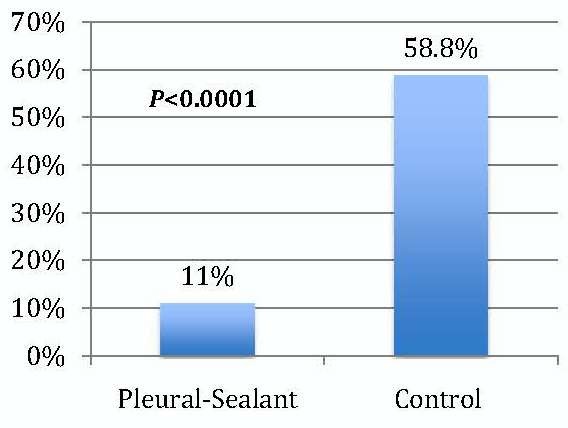
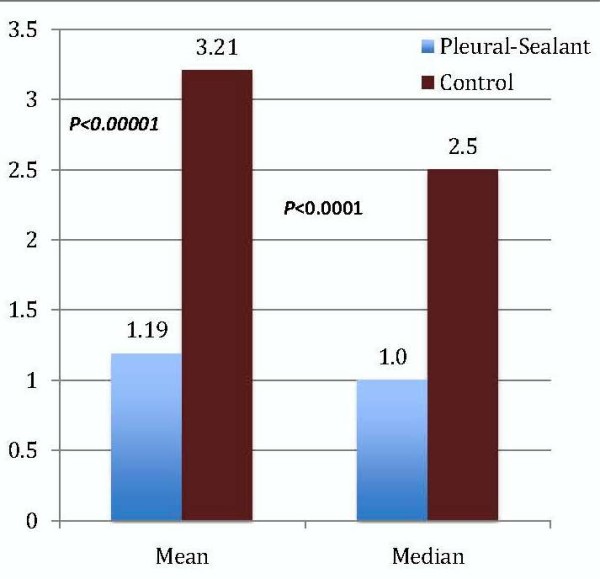
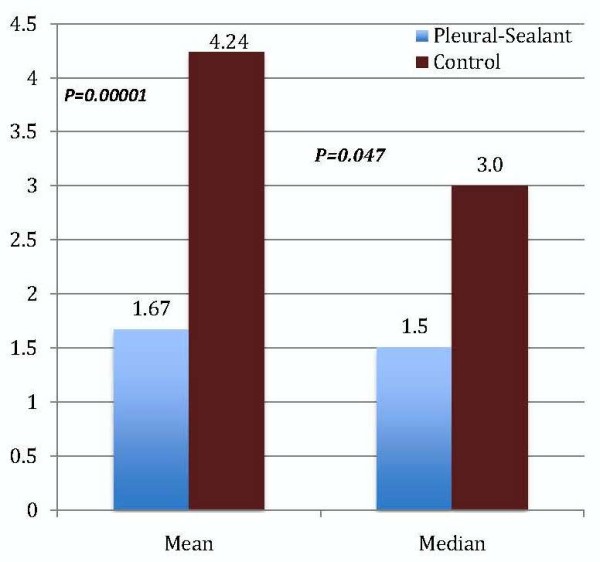
Results: Seventy patients (57.9%) had IOAL. Thirty-six were treated with Progel in addition to standard intra-operative technique (pleural-sealant group; PSG) and 34 patients were treated only with standard technique (control group; CG). The percentage of post-operative air leaks in the PSG was 11% (1.2% >Grade 2 air leak) compared with 58.8% (6% >Grade 2 air leak) in the CG (p <0.0001, Leaks graded from 1 = small air leak to 7 = large air leak). The median chest tube duration was significantly shorter in the PSG compared with the controls (1.0 versus 2.5 days; p < 0.0001). The median length of hospital stay was 50% lower in the PSG compared with the control group (1.5 versus 3.0 days; p = 0.047). There were no significant differences in complications between the two groups.
Conclusions: The results of this single-center, single surgeon, retrospective review demonstrate a significant reduction in IOAL, chest tube duration, and length of hospital stay in the in patients treated with Progel when compared with standard intra-operative closure management alone. They suggest that the use of a pleural sealant is more effective in reducing alveolar air leaks associated with lung resection compared with standard closure techniques alone and may result in both an improved surgical outcome and a reduction in costs associated with prolonged hospital stay.
Figures
References
Publication types
MeSH terms
Substances
LinkOut - more resources
Full Text Sources
