


The ins and outs of human reticulocyte maturation: autophagy and the endosome/exosome pathway
- PMID: 22659916
- PMCID: PMC3429555
- DOI: 10.4161/auto.20648
The ins and outs of human reticulocyte maturation: autophagy and the endosome/exosome pathway
Abstract
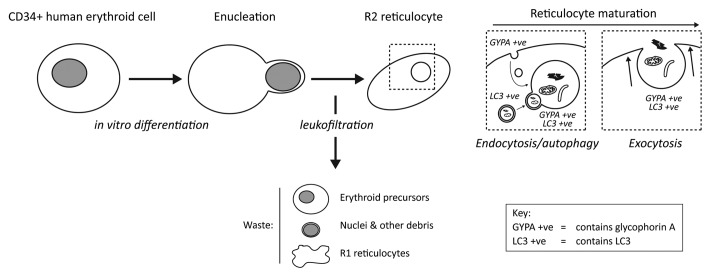
The maturation of reticulocytes into functional erythrocytes is a complex process requiring extensive cytoplasmic and plasma membrane remodeling, cytoskeletal rearrangements and changes to cellular architecture. Autophagy is implicated in the sequential removal of erythroid organelles during erythropoiesis, although how this is regulated during late stages of erythroid differentiation, and the potential contribution of autophagy during reticulocyte maturation, remain unclear. Using an optimized ex vivo differentiation system for human erythropoiesis, we have observed that maturing reticulocytes are characterized by the presence of one or few large vacuolar compartments. These label strongly for glycophorin A (GYPA/GPA) which is internalized from the plasma membrane; however, they also contain organellar remnants (ER, Golgi, mitochondria) and stain strongly for LC3, suggesting that they are endocytic/autophagic hybrid structures. Interestingly, we observed the release of these vacuoles by exocytosis in maturing reticulocytes, and speculate that autophagy is needed to concentrate the final remnants of the reticulocyte endomembrane system in autophagosome/endosome hybrid compartments that are primed to undergo exocytosis.
Keywords: autophagosome; endosome; erythropoiesis; exosome; reticulocyte maturation.
Figures
Comment on
-
Maturing reticulocytes internalize plasma membrane in glycophorin A-containing vesicles that fuse with autophagosomes before exocytosis.Blood. 2012 Jun 28;119(26):6296-306. doi: 10.1182/blood-2011-09-376475. Epub 2012 Apr 6. Blood. 2012. PMID: 22490681 Free PMC article.
Publication types
MeSH terms
Substances
Grants and funding
LinkOut - more resources
Full Text Sources
Other Literature Sources
