


EFFECTS OF ELEVATED ATMOSPHERIC CO(2) ON WATER CHEMISTRY AND MOSQUITO (DIPTERA: CULICIDAE) GROWTH UNDER COMPETITIVE CONDITIONS IN CONTAINER HABITATS
- PMID: 22661767
- PMCID: PMC3363327
- DOI: 10.1653/0015-4040(2005)88[372:EOEACO]2.0.CO;2
EFFECTS OF ELEVATED ATMOSPHERIC CO(2) ON WATER CHEMISTRY AND MOSQUITO (DIPTERA: CULICIDAE) GROWTH UNDER COMPETITIVE CONDITIONS IN CONTAINER HABITATS
Abstract
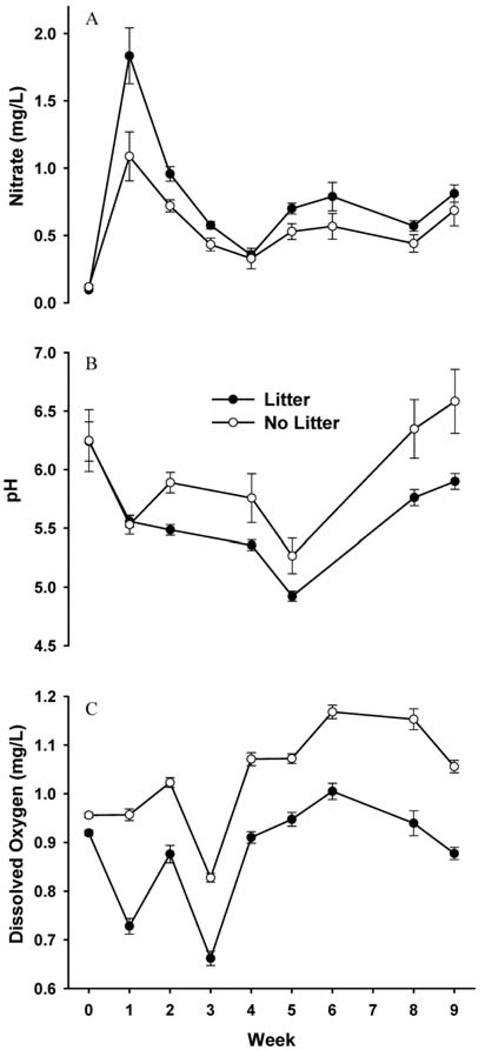
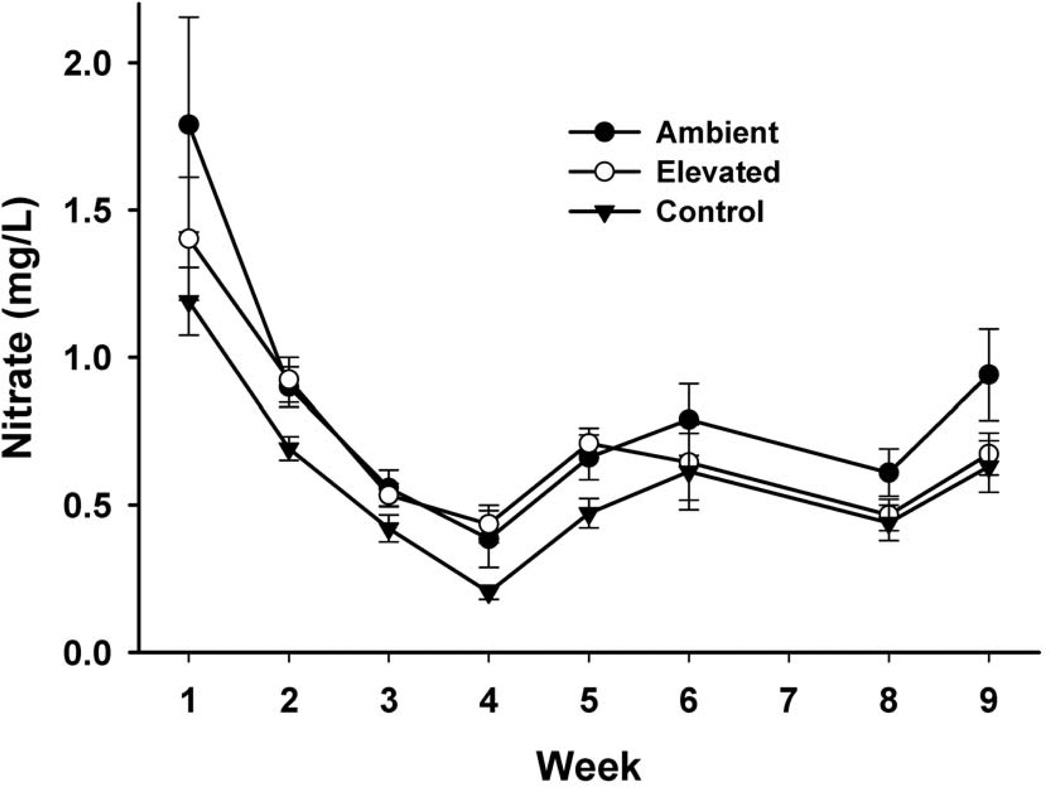
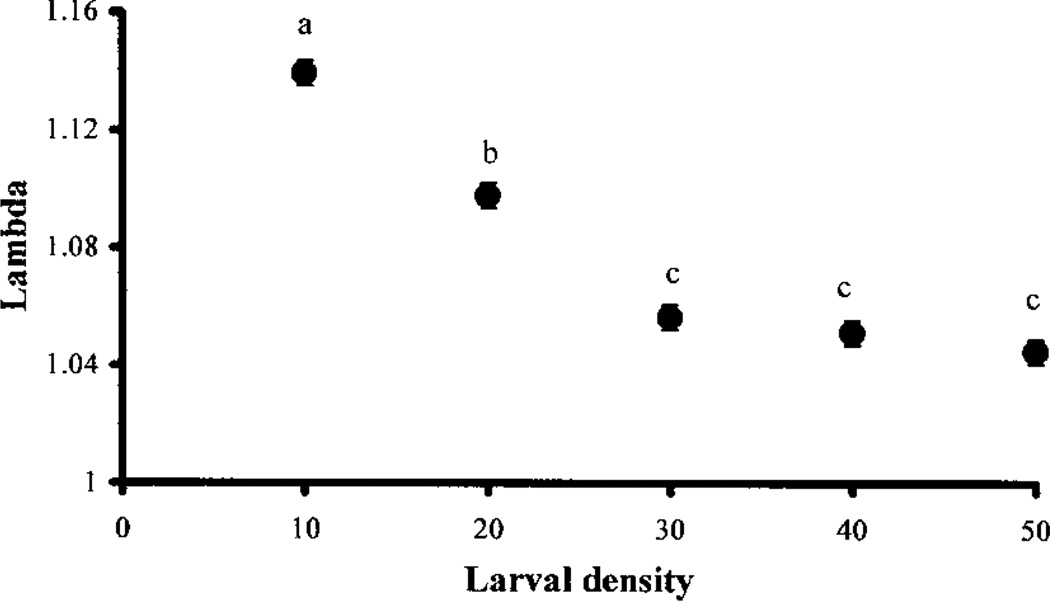
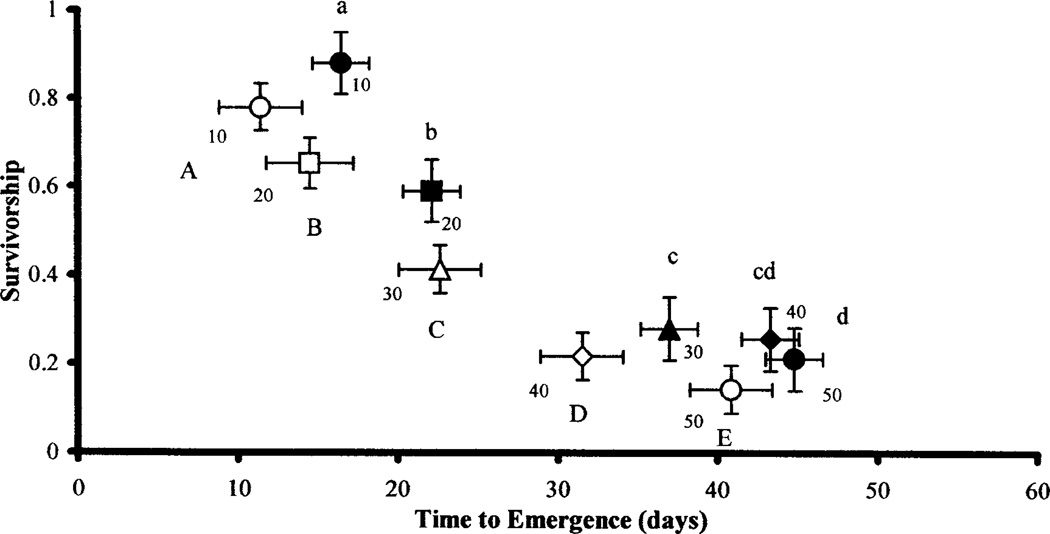
We investigated the direct and indirect effects of elevated atmospheric CO(2) on freshwater container habitats and their larval mosquito occupants. We predicted that a doubling of atmospheric CO(2) would (1) alter the chemical properties of water in this system, (2) slow degradation of leaf litter, and (3) decrease larval growth of Aedes albopictus (Skuse) mosquitoes raised on that litter under competitive conditions. Effects of elevated CO(2) on water quality parameters were not detected, but the presence of leaf litter significantly reduced pH and dissolved oxygen relative to water-filled containers without litter. Degradation rates of oak leaf litter from plants grown under elevated CO(2) atmospheres did not differ from breakdown rates of litter from ambient CO(2) conditions. Litter from plants grown in an elevated CO(2) atmospheres did not influence mosquito population growth, but mosquito production decreased significantly with increasing larval density. Differences among mosquito density treatments influenced survivorship most strongly among male Ae. albopictus and time to emergence most strongly among females, suggesting fundamental sex-determined differences in response to competition. Results of this and other studies indicate that direct and indirect effects of doubled atmospheric CO(2) are minimal in artificial containers with freshwater.
Figures
References
-
- Bazzaz FA. The response of natural ecosystems to the rising global CO2 levels. Ann. Rev. Ecol. Syst. 1990;21:167–196.
-
- Bedhomme S, Agnew P, Sidobre C, Michalakis Y. Sex-specific reaction norms to intraspecific larval competition in the mosquito Aedes aegypti. J. Evol. Biol. 2003;16:721–730. - PubMed
-
- Briegel H, Timmermann SE. Aedes albopictus (Diptera: Culicidae): Physiological aspects of development and reproduction. J. Med. Entomol. 2001;38:566–571. - PubMed
-
- Benzing DH. Bromeliaceae: Profile of an Adaptive Radiation. Cambridge, UK: Cambridge University Press; 2000. p. 690.
-
- Bronstein JL. The origin of bract liquid in a neotropical Heliconia species. Biotropica. 1986;18:111–114.
Grants and funding
LinkOut - more resources
Full Text Sources