


A Latent Growth Mixture Modeling Approach to PTSD Symptoms in Rape Victims
- PMID: 22661909
- PMCID: PMC3365569
- DOI: 10.1177/1534765610395627
A Latent Growth Mixture Modeling Approach to PTSD Symptoms in Rape Victims
Abstract
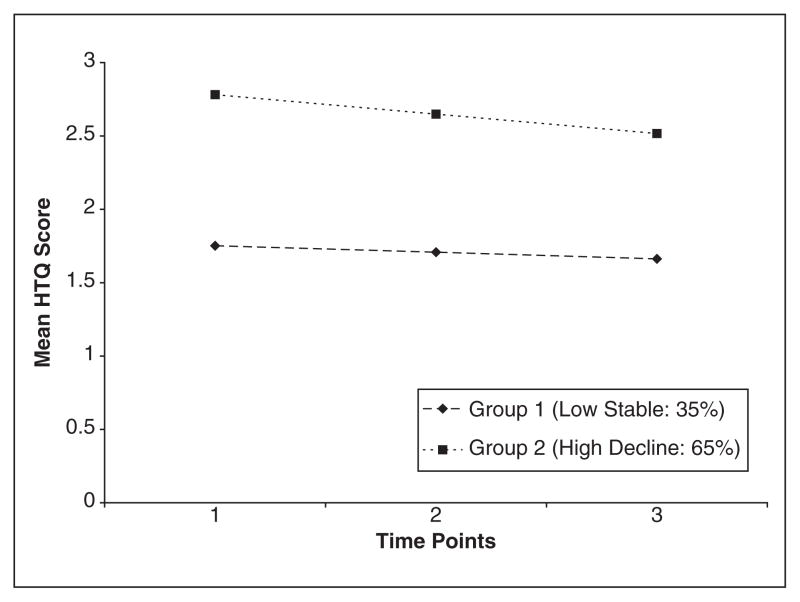
The research literature has suggested that longitudinal changes in posttraumatic stress disorder (PTSD) could be adequately described in terms of one universal trajectory, with individual differences in baseline levels (intercept) and rate of change (slope) being negligible. However, not everyone who has experienced a trauma is diagnosed with PTSD, and symptom severity levels differ between individuals exposed to similar traumas. The current study employed the latent growth mixture modeling technique to test for multiple trajectories using data from a sample of Danish rape victims (N = 255). In addition, the analysis aimed to determine whether a number of explanatory variables could differentiate between the trajectories (age, acute stress disorder [ASD], and perceived social support). Results concluded the existence of two PTSD trajectories. ASD was found to be the only significant predictor of one trajectory characterized by high initial levels of PTSD symptomatology. The present findings confirmed the existence of multiple trajectories with regard to PTSD symptomatology in a way that may be useful to clinicians working with this population.
Conflict of interest statement
The author(s) declared no potential conflicts of interest with respect to the authorship and/or publication of this article.
Figures
References
-
- Akaike H. Factor-analysis and AIC. Psychometrika. 1987;52:317–332.
-
- American Psychiatric Association. Diagnostic and statistical manual of mental disorders. 3. Washington, DC: Author; 1980.
-
- American Psychiatric Association. Diagnostic and statistical manual of mental disorders. 4. Washington, DC: Author; 1994.
-
- Bal S, Crombez G, Van Oost P, Debourdeaudhuij I. The role of social support in well-being and coping with self-reported stressful events in adolescents. Child Abuse & Neglect. 2003;27:1377–1395. - PubMed
-
- Bauer DJ. Observations on the use of growth mixture models in psychological research. Multivariate Behavioral Research. 2007;42:757–786.
Grants and funding
LinkOut - more resources
Full Text Sources