


Inhibition of neuroblastoma tumor growth by targeted delivery of microRNA-34a using anti-disialoganglioside GD2 coated nanoparticles
- PMID: 22662276
- PMCID: PMC3360657
- DOI: 10.1371/journal.pone.0038129
Inhibition of neuroblastoma tumor growth by targeted delivery of microRNA-34a using anti-disialoganglioside GD2 coated nanoparticles
Abstract
Background: Neuroblastoma is one of the most challenging malignancies of childhood, being associated with the highest death rate in paediatric oncology, underlining the need for novel therapeutic approaches. Typically, patients with high risk disease undergo an initial remission in response to treatment, followed by disease recurrence that has become refractory to further treatment. Here, we demonstrate the first silica nanoparticle-based targeted delivery of a tumor suppressive, pro-apoptotic microRNA, miR-34a, to neuroblastoma tumors in a murine orthotopic xenograft model. These tumors express high levels of the cell surface antigen disialoganglioside GD2 (GD(2)), providing a target for tumor-specific delivery.
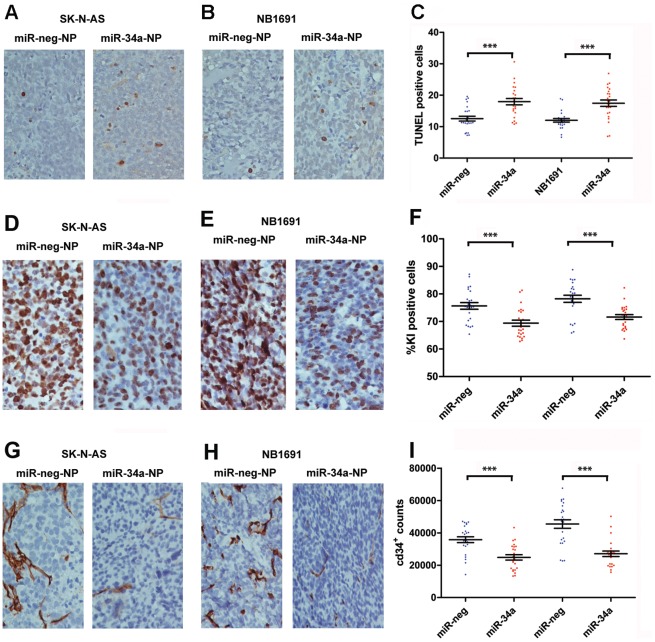
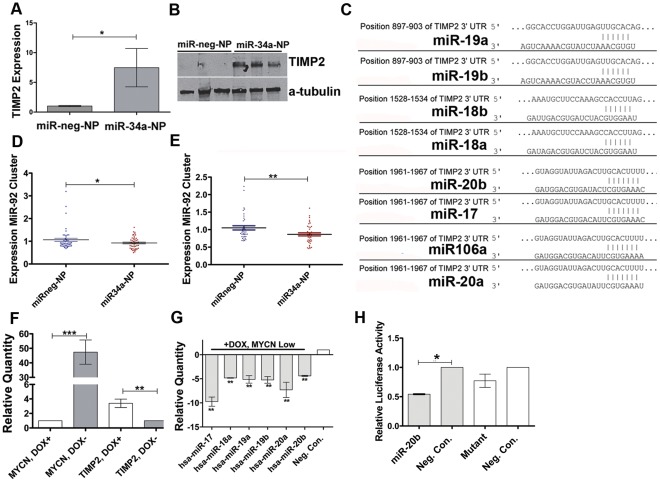
Principal findings: Nanoparticles encapsulating miR-34a and conjugated to a GD(2) antibody facilitated tumor-specific delivery following systemic administration into tumor bearing mice, resulted in significantly decreased tumor growth, increased apoptosis and a reduction in vascularisation. We further demonstrate a novel, multi-step molecular mechanism by which miR-34a leads to increased levels of the tissue inhibitor metallopeptidase 2 precursor (TIMP2) protein, accounting for the highly reduced vascularisation noted in miR-34a-treated tumors.
Significance: These novel findings highlight the potential of anti-GD(2)-nanoparticle-mediated targeted delivery of miR-34a for both the treatment of GD(2)-expressing tumors, and as a basic discovery tool for elucidating biological effects of novel miRNAs on tumor growth.
Conflict of interest statement
Figures
References
-
- Wagner LM, Danks MK. New therapeutic targets for the treatment of high-risk neuroblastoma. J Cell Biochem. 2009;107:46–57. - PubMed
-
- Ritter G, Livingston PO. Ganglioside antigens expressed by human cancer cells. Semin Cancer Biol. 1991;2:401–409. - PubMed
-
- Handgretinger R, Anderson K, Lang P, Dopfer R, Klingebiel T, et al. A phase I study of human/mouse chimeric antiganglioside GD2 antibody ch14.18 in patients with neuroblastoma. Eur J Cancer. 1995;31A:261–267. - PubMed
-
- Yu AL, Uttenreuther-Fischer MM, Huang CS, Tsui CC, Gillies SD, et al. Phase I trial of a human-mouse chimeric anti-disialoganglioside monoclonal antibody ch14.18 in patients with refractory neuroblastoma and osteosarcoma. J Clin Oncol. 1998;16:2169–2180. - PubMed
-
- Zeytin HE, Tripathi PK, Bhattacharya-Chatterjee M, Foon KA, Chatterjee SK. Construction and characterization of DNA vaccines encoding the single-chain variable fragment of the anti-idiotype antibody 1A7 mimicking the tumor-associated antigen disialoganglioside GD2. Cancer Gene Ther. 2000;7:1426–1436. - PubMed
Publication types
MeSH terms
Substances
Grants and funding
LinkOut - more resources
Full Text Sources
Other Literature Sources
Medical
Miscellaneous
