


In vitro assessment of drug resistance in Plasmodium falciparum in five States of India
- PMID: 22664496
- PMCID: PMC3385232
In vitro assessment of drug resistance in Plasmodium falciparum in five States of India
Abstract
Background & objectives: In vitro assays are an important tool to assess baseline sensitivity and monitor the drug response of Plasmodium falciparum over time and place and, therefore, can provide background information for the development and evaluation of drug policies. This study was aimed at determining the in vitro sensitivity of P. falciparum isolates to antimalarials.
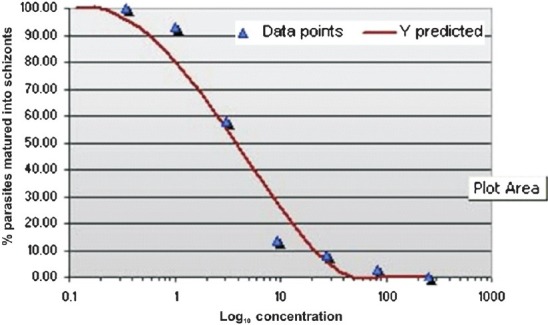
Methods: The in vitro activity of 108 P. falciparum isolates obtained from five States of India was evaluated using WHO microtest (Mark III) to chloroquine, monodesethylamodiaquine, dihydroartesunate and mefloquine. Samples were collected from the States of Orissa, Jharkhand, Karnataka, Goa and Chhattisgarh from September 2007 to August 2009. In addition, representative samples from different States of India cryopreserved and culture adapted in the Malaria Parasite Bank of National Institute of Malaria Research, New Delhi, were also evaluated.
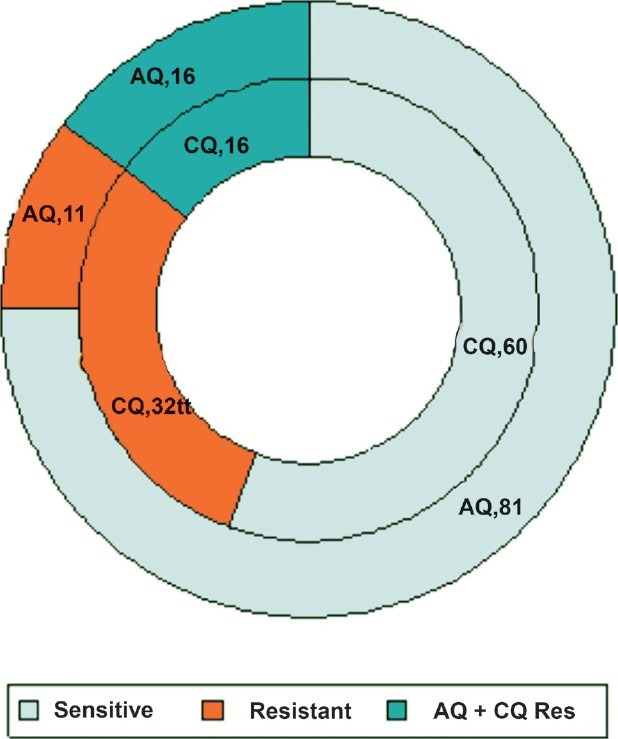
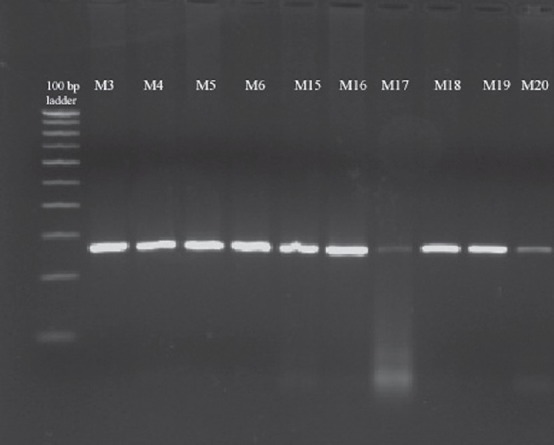
Results: The proportion of isolates resistant to chloroquine and monodesethylamodiaquine was 44.4 and 25 per cent, respectively. Of the 27 isolates resistant to monodesethylamodiaquine, 16 (59.3%) were cross-resistant to chloroquine. No isolate showed resistance to dihydroartesunate and mefloquine. Isolates from Orissa showed the highest degree of resistance to chloroquine and amodiaquine followed by Jharkhand. Forty two isolates were genotyped for pfcrt T76K chloroquine resistant mutation; mutations were seen in 38 (90.47%) isolates.
Interpretation & conclusions: The Indian P. falciparum isolates showed a high degree of resistance to chloroquine followed by monodesethylamodiaquine. No resistance was recorded to mefloquine and dihydroartesunate.
Figures
Comment in
-
In vitro tests for drug resistance in Plasmodium falciparum.Indian J Med Res. 2012 Apr;135(4):456-8. Indian J Med Res. 2012. PMID: 22664491 Free PMC article. No abstract available.
References
-
- Dash AP, Valecha N, Anvikar AR, Kumar A. Malaria in India: Challenges and opportunities. J Biosci. 2008;33:583–92. - PubMed
-
- WHO expert committee on malaria. World Health Organ Tech Rep Ser, No. 892. 2000 - PubMed
-
- Baird JK. Effectiveness of antimalarial drugs. N Engl J Med. 2005;352:1565–77. - PubMed
-
- Sehgal PN, Sharma MID, Sharma SL, Gogai Resistance to chloroquine in falciparum malaria in Assam state. J Commun Dis. 1973;5:175–80.
-
- Valecha N, Joshi H, Mallick PK, Sharma SK, Kumar A, Tyagi PK, et al. Low efficacy of chloroquine: Time to switch over to artemisinin-based combination therapy for falciparum malaria in India. Acta Trop. 2009;111:21–8. - PubMed
Publication types
MeSH terms
Substances
LinkOut - more resources
Full Text Sources