


Fracture resistance of premolars restored by various types and placement techniques of resin composites
- PMID: 22666255
- PMCID: PMC3359818
- DOI: 10.1155/2012/973641
Fracture resistance of premolars restored by various types and placement techniques of resin composites
Abstract
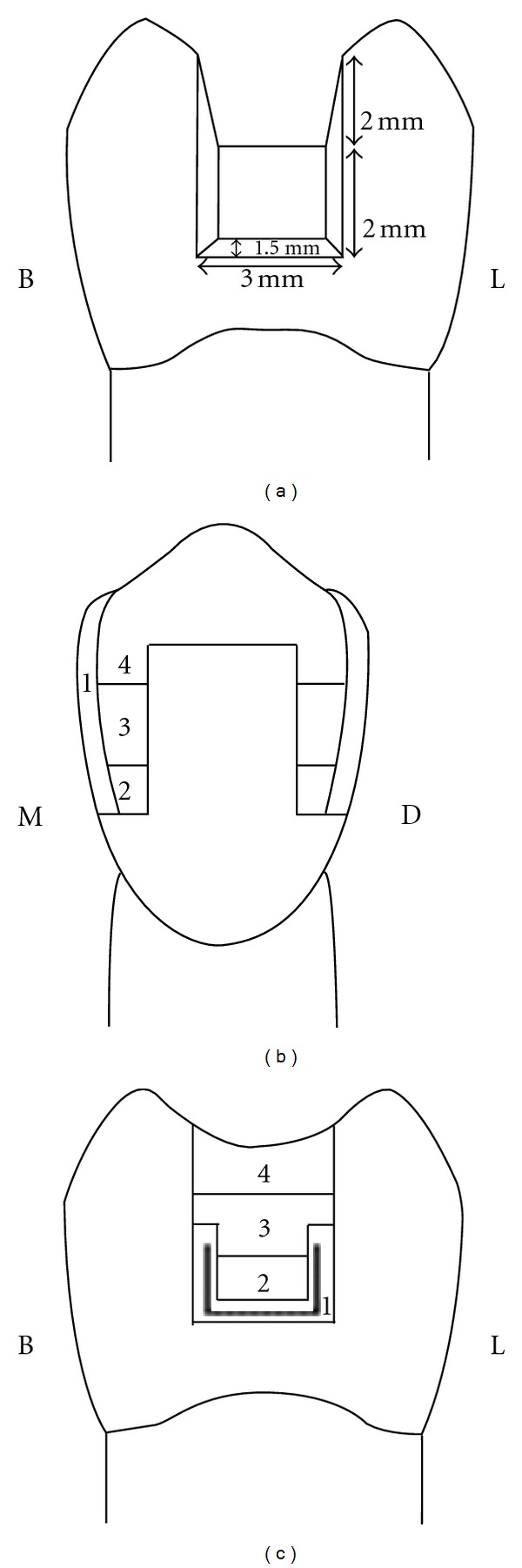
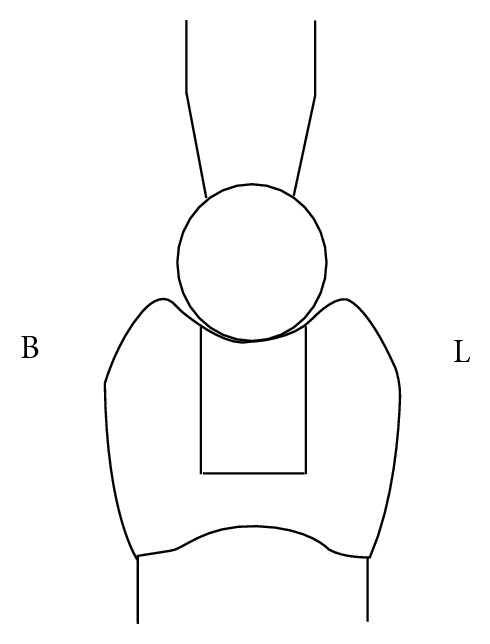
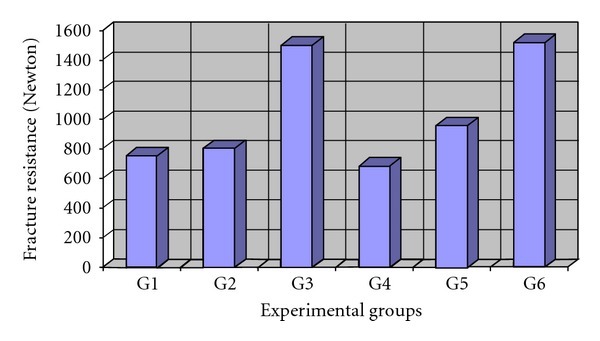
To verify the fracture resistance of premolars with mesioocclusodistal preparations restored by different resin composites and placement techniques. Sixty premolars were randomly divided into two groups based on type of composite resin: Filtek P60 or Nulite F, and then each group was separated into three subgroups: bulk, centripetal, and fiber insert according to the type of placement method (n = 10). Single-bond adhesive system was used as composite bonding according to the manufacturer's instructions. Specimens were restored in Groups 1, 2, and 3 with Filtek P60 and in Groups 4, 5, and 6 with Nulite F. After being stored 24 hours at 37°C, a 4 mm diameter steel sphere in a universal testing machine was applied on tooth buccal and lingual cusps at a cross-head speed of 5 mm/min until fracture occurred. Groups 3 and 6 showed higher fracture resistance than Groups 1, 2, 4, and 5. Among the placement techniques, the fiber insert method had a significant effect, but the type of composite was ineffective. The insertion technique in contrast to the type of material had a significant influence on the fracture resistance of premolar teeth.
Figures
References
-
- Bhardwaj TPN, Solmon P, Parameswaran A. Tooth restored with composite resin-a comparative analysis. Trends in Biomaterials & Artificial Organs. 2002;15:57–60.
-
- Bichacho N. The centripetal build-up for composite resin posterior restorations. Practical Periodontics and Aesthetic Dentistry. 1994;6(3):17–24. - PubMed
-
- Eakle WS. Fracture resistance of teeth restored with class II bonded composite resin. Journal of Dental Research. 1986;65(2):149–153. - PubMed
-
- Siso SH, Hürmüzlü F, Turgut M, Altundaşar E, Serper A, Er K. Fracture resistance of the buccal cusps of root filled maxillary premolar teeth restored with various techniques. International Endodontic Journal. 2007;40(3):161–168. - PubMed
LinkOut - more resources
Full Text Sources
