


MALDI-TOF MS enables the rapid identification of the major molecular types within the Cryptococcus neoformans/C. gattii species complex
- PMID: 22666368
- PMCID: PMC3362595
- DOI: 10.1371/journal.pone.0037566
MALDI-TOF MS enables the rapid identification of the major molecular types within the Cryptococcus neoformans/C. gattii species complex
Abstract
Background: The Cryptococcus neoformans/C. gattii species complex comprises two sibling species that are divided into eight major molecular types, C. neoformans VNI to VNIV and C. gattii VGI to VGIV. These genotypes differ in host range, epidemiology, virulence, antifungal susceptibility and geographic distribution. The currently used phenotypic and molecular identification methods for the species/molecular types are time consuming and expensive. As Matrix-Assisted Laser Desorption Ionization-Time-of-Flight Mass Spectrometry (MALDI-TOF MS) offers an effective alternative for the rapid identification of microorganisms, the objective of this study was to examine its potential for the identification of C. neoformans and C. gattii strains at the intra- and inter-species level.
Methodology: Protein extracts obtained via the formic acid extraction method of 164 C. neoformans/C. gattii isolates, including four inter-species hybrids, were studied.
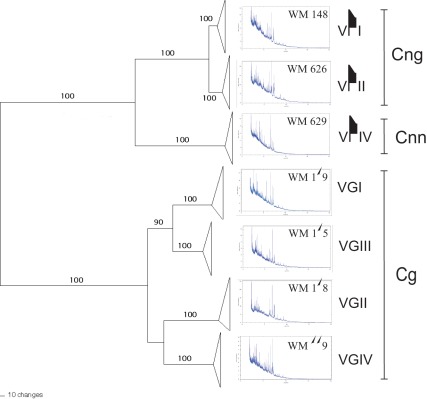
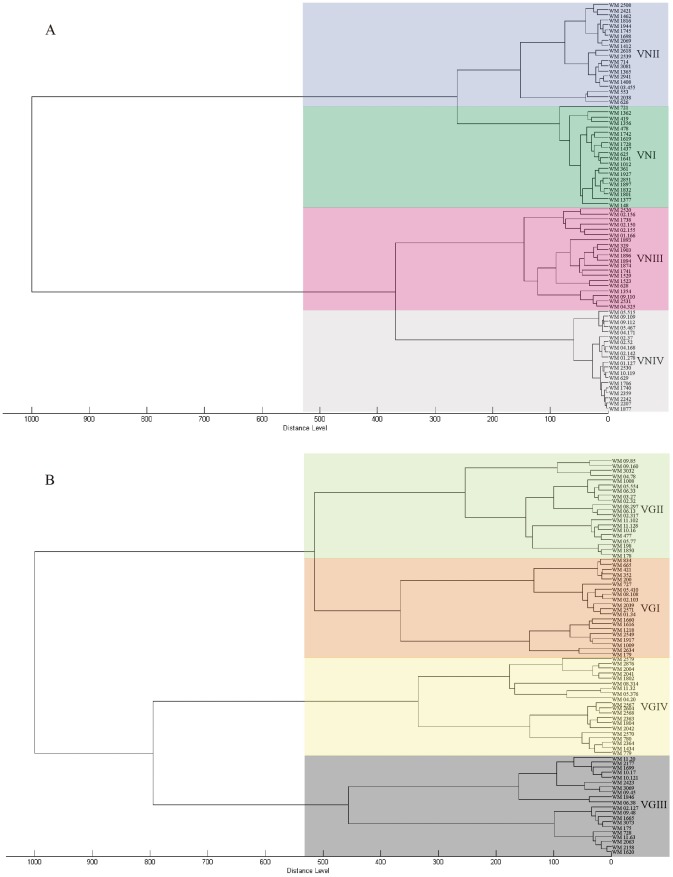
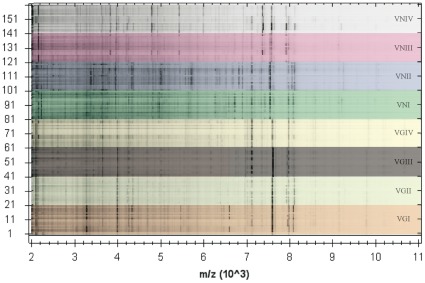
Results: The obtained mass spectra correctly identified 100% of all studied isolates, grouped each isolate according to the currently recognized species, C. neoformans and C. gattii, and detected potential hybrids. In addition, all isolates were clearly separated according to their major molecular type, generating greater spectral differences among the C. neoformans molecular types than the C. gattii molecular types, most likely reflecting a closer phylogenetic relationship between the latter. The number of colonies used and the incubation length did not affect the results. No spectra were obtained from intact yeast cells. An extended validated spectral library containing spectra of all eight major molecular types was established.
Conclusions: MALDI-TOF MS is a rapid identification tool for the correct recognition of the two currently recognized human pathogenic Cryptococcus species and offers a simple method for the separation of the eight major molecular types and the detection of hybrid strains within this species complex in the clinical laboratory. The obtained mass spectra provide further evidence that the major molecular types warrant variety or even species status.
Conflict of interest statement
Figures
References
-
- Kwon-Chung KJ, Boekhout T, Wickes BL, Fell JW. Heitman J, Kozel TR, Kwon-Chung KJ, Perfect JR, Casadevall A (2011) Cryptococcus: From Human Pathogen to Model Yeast Washington, DC. ASM Press; 2011. Systematic of the genus Cryptococcus and its type species C. neoformans. pp. 3–15.
-
- Bovers M, Hagen F, Boekhout T. Diversity of the Cryptococcus neoformans-Cryptococcus gattii species complex. Rev Iberoam Micol. 2008;25:S4–S12. - PubMed
-
- Park BJ, Wannemuehler KA, Marston BJ, Govender N, Pappas PG, et al. AIDS 23; 2009. Estimation of the current global burden of cryptococcal meningitis among persons living with HIV/AIDS. pp. 525–530. - PubMed
-
- Byrnes EJ, Bartlett KH, Perfect JR, Heitman J. Microbes Infect; 2011. Cryptococcus gattii: an emerging fungal pathogen infecting humans and animals. doi: 10.1016/j.micinf.2011.05.009. - DOI - PMC - PubMed
MeSH terms
LinkOut - more resources
Full Text Sources
Other Literature Sources
Research Materials
