


Metagenomic and metatranscriptomic analysis of microbial community structure and gene expression of activated sludge
- PMID: 22666477
- PMCID: PMC3364235
- DOI: 10.1371/journal.pone.0038183
Metagenomic and metatranscriptomic analysis of microbial community structure and gene expression of activated sludge
Erratum in
-
Correction: Metagenomic and Metatranscriptomic Analysis of Microbial Community Structure and Gene Expression of Activated Sludge.PLoS One. 2020 Nov 30;15(11):e0243233. doi: 10.1371/journal.pone.0243233. eCollection 2020. PLoS One. 2020. PMID: 33253304 Free PMC article.
Abstract
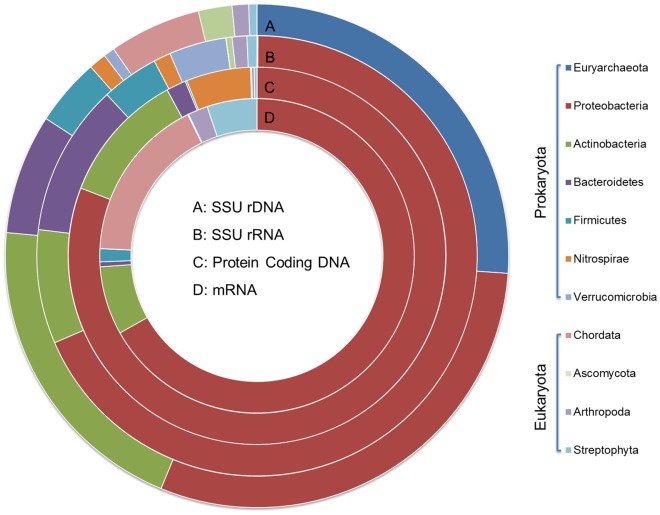
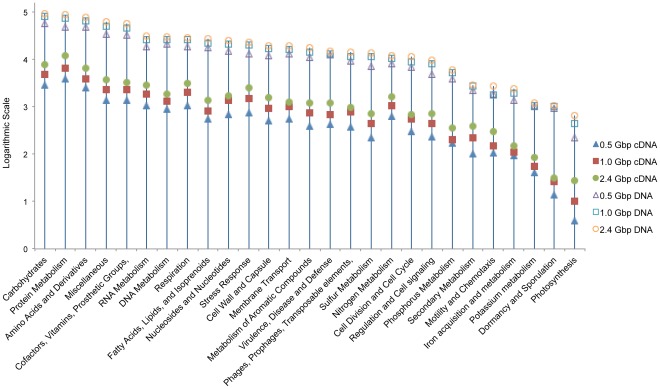
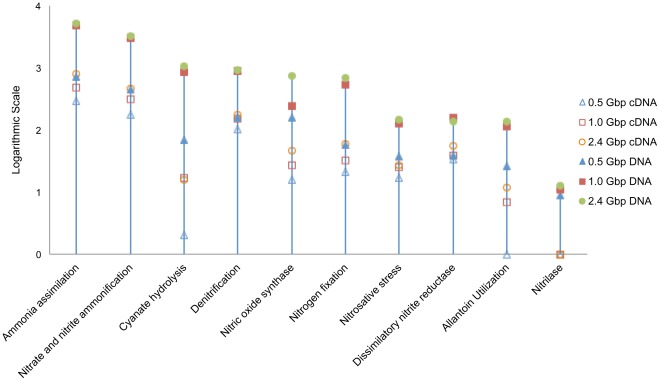
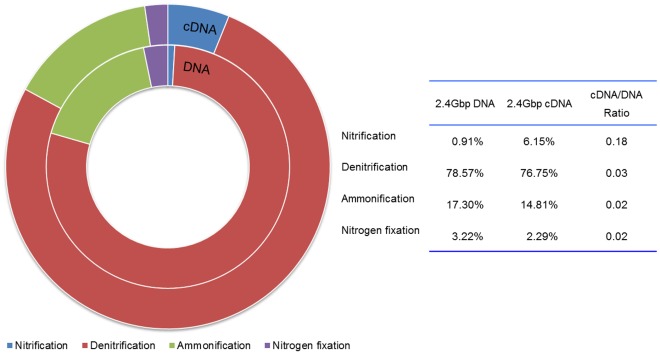
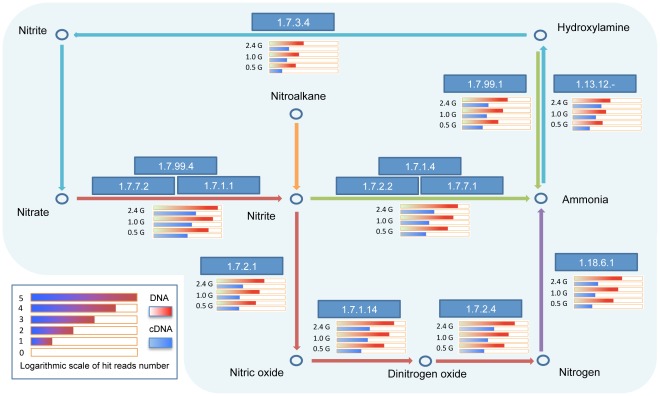
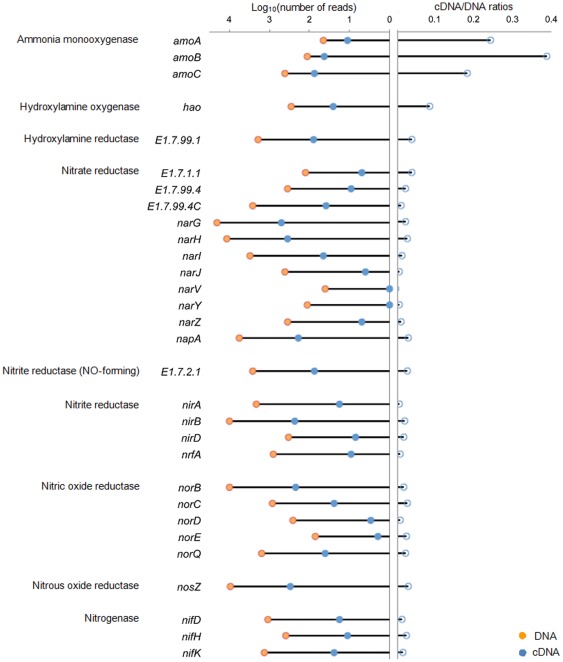
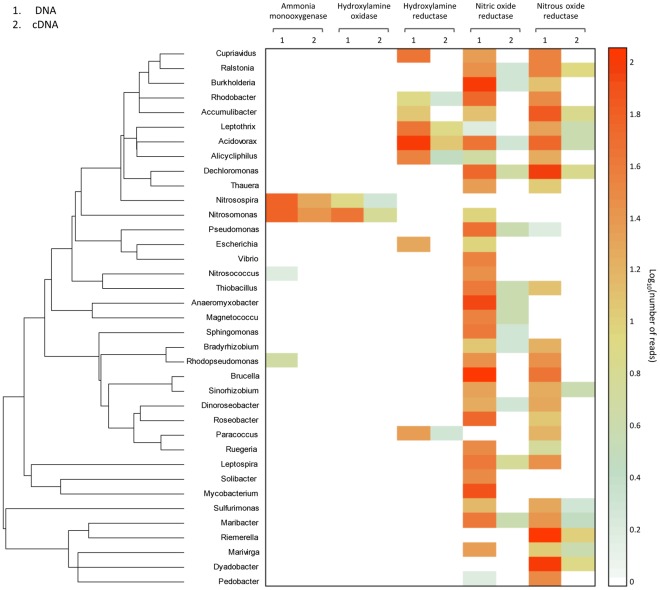
The present study applied both metagenomic and metatranscriptomic approaches to characterize microbial structure and gene expression of an activated sludge community from a municipal wastewater treatment plant in Hong Kong. DNA and cDNA were sequenced by Illumina Hi-seq2000 at a depth of 2.4 Gbp. Taxonomic analysis by MG-RAST showed bacteria were dominant in both DNA and cDNA datasets. The taxonomic profile obtained by BLAST against SILVA SSUref database and annotation by MEGAN showed that activated sludge was dominated by Proteobacteria, Actinobacteria, Bacteroidetes, Firmicutes and Verrucomicrobia phyla in both DNA and cDNA datasets. Global gene expression annotation based on KEGG metabolism pathway displayed slight disagreement between the DNA and cDNA datasets. Further gene expression annotation focusing on nitrogen removal revealed that denitrification-related genes sequences dominated in both DNA and cDNA datasets, while nitrifying genes were also expressed in relative high levels. Specially, ammonia monooxygenase and hydroxylamine oxidase demonstrated the high cDNA/DNA ratios in the present study, indicating strong nitrification activity. Enzyme subunits gene sequences annotation discovered that subunits of ammonia monooxygenase (amoA, amoB, amoC) and hydroxylamine oxygenase had higher expression levels compared with subunits of the other enzymes genes. Taxonomic profiles of selected enzymes (ammonia monooxygenase and hydroxylamine oxygenase) showed that ammonia-oxidizing bacteria present mainly belonged to Nitrosomonas and Nitrosospira species and no ammonia-oxidizing Archaea sequences were detected in both DNA and cDNA datasets.
Conflict of interest statement
Figures

References
-
- Gittel A, Mussmann M, Sass H, Cypionka H, Konneke M. Identity and abundance of active sulfate-reducing bacteria in deep tidal flat sediments determined by directed cultivation and CARD-FISH analysis. Environ Microbiol. 2008;10:2645–2658. - PubMed
-
- Zhang T, Fang HH. Applications of real-time polymerase chain reaction for quantification of microorganisms in environmental samples. Appl Microbiol Biotechnol. 2006;70:281–289. - PubMed
-
- Zhang T, Zhang M, Zhang X, Fang HH. Tetracycline resistance genes and tetracycline resistant lactose-fermenting Enterobacteriaceae in activated sludge of sewage treatment plants. Environ Sci Technol. 2009;43:3455–3460. - PubMed
-
- Xia S, Duan L, Song Y, Li J, Piceno YM, et al. Bacterial community structure in geographically distributed biological wastewater treatment reactors. Environ Sci Technol. 2010;44:7391–7396. - PubMed
Publication types
MeSH terms
Substances
LinkOut - more resources
Full Text Sources
Other Literature Sources
Research Materials
