


Dengue infections in travellers
- PMID: 22668447
- PMCID: PMC3381444
- DOI: 10.1179/2046904712Z.00000000050
Dengue infections in travellers
Abstract
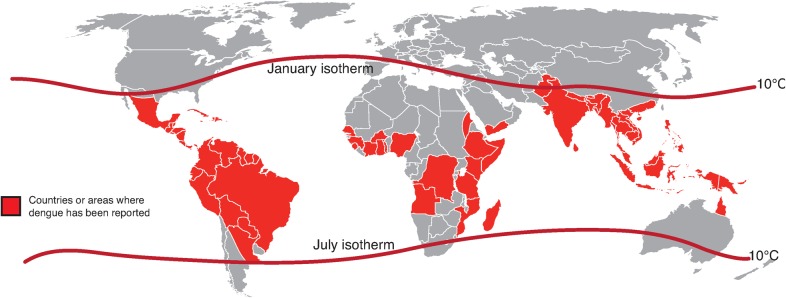
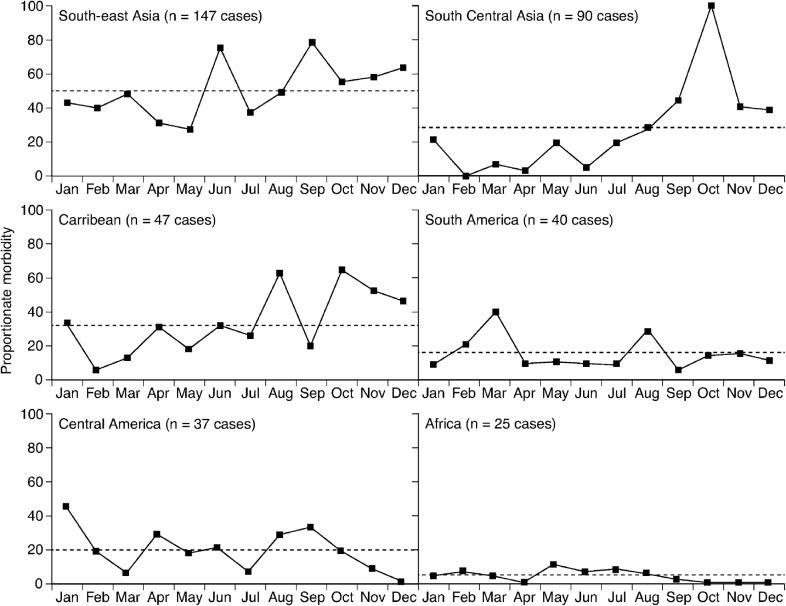
Dengue has been designated a major international public health problem by the World Health Organization (WHO). It is endemic in most tropical and sub-tropical countries, which are also popular tourist destinations. Travellers are not only at significant risk of acquiring dengue but they also contribute to its spread to non-endemic regions. Furthermore, they may serve as sentinels to alert the international community to epidemics in dengue-endemic regions. GeoSentinel, a global surveillance network, monitors all travel-related illnesses and estimates that dengue accounts for 2% of all illness in travellers returning from dengue-endemic regions. In fact, in travellers returning from South-east Asia, dengue is now a more frequent cause of febrile illness than malaria. Dengue-infected travellers returning home to countries where the vector exists can place the local population at risk of further spread of the disease with subsequent autochthonous cycles of infection. The true incidence of dengue amongst travellers may be underestimated because of variability in reporting requirements in different countries and under-diagnosis owing to the non-specific clinical presentation of the disease. Risk factors for acquiring dengue include duration of stay, season of travel and epidemic activity at the destination. Any pre-travel advice on the risks of developing dengue infections should consider these factors.
Figures
References
-
- World Health Organization. Dengue and Dengue Haemorrhagic Fever; fact sheet 117, 2009 [cited 28 November 2011]. Available from: www.who.int/mediacentre/factsheets/fs117/en/
-
- World Health Organization. Infectious diseases of potential risk for travellers. In: International Travel and Health [cited 19 December 2011]. Available from: http://www.who.int/ith/chapters/en/index.html.
-
- Wilder-Smith A, Schwartz E. Dengue in travelers. N Engl J Med. 2005;353:924–32. - PubMed
-
- World Tourism Organization, UNWTO. International tourists to hit 1·8 billion by 2030 [updated 11 October 2011, cited 28 November 2011]. Available from: http://media.unwto.org/en/press-release/2011-10-11/international-tourist....
-
- Wilder-Smith A, Gubler DJ. Geographic expansion of dengue: the impact of international travel. Med Clin North Am. 2008;92:1377–90. - PubMed
Publication types
MeSH terms
LinkOut - more resources
Full Text Sources
Medical
