


The differing roles of the frontal cortex in fluency tests
- PMID: 22669082
- PMCID: PMC3381725
- DOI: 10.1093/brain/aws142
The differing roles of the frontal cortex in fluency tests
Abstract
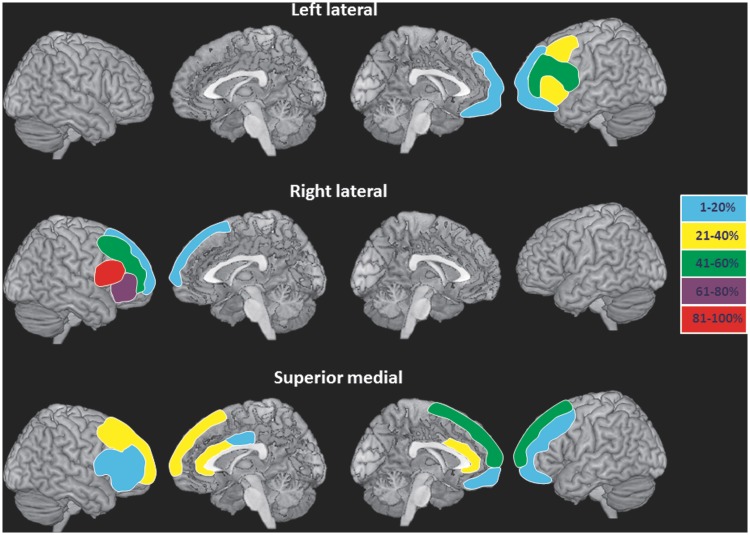
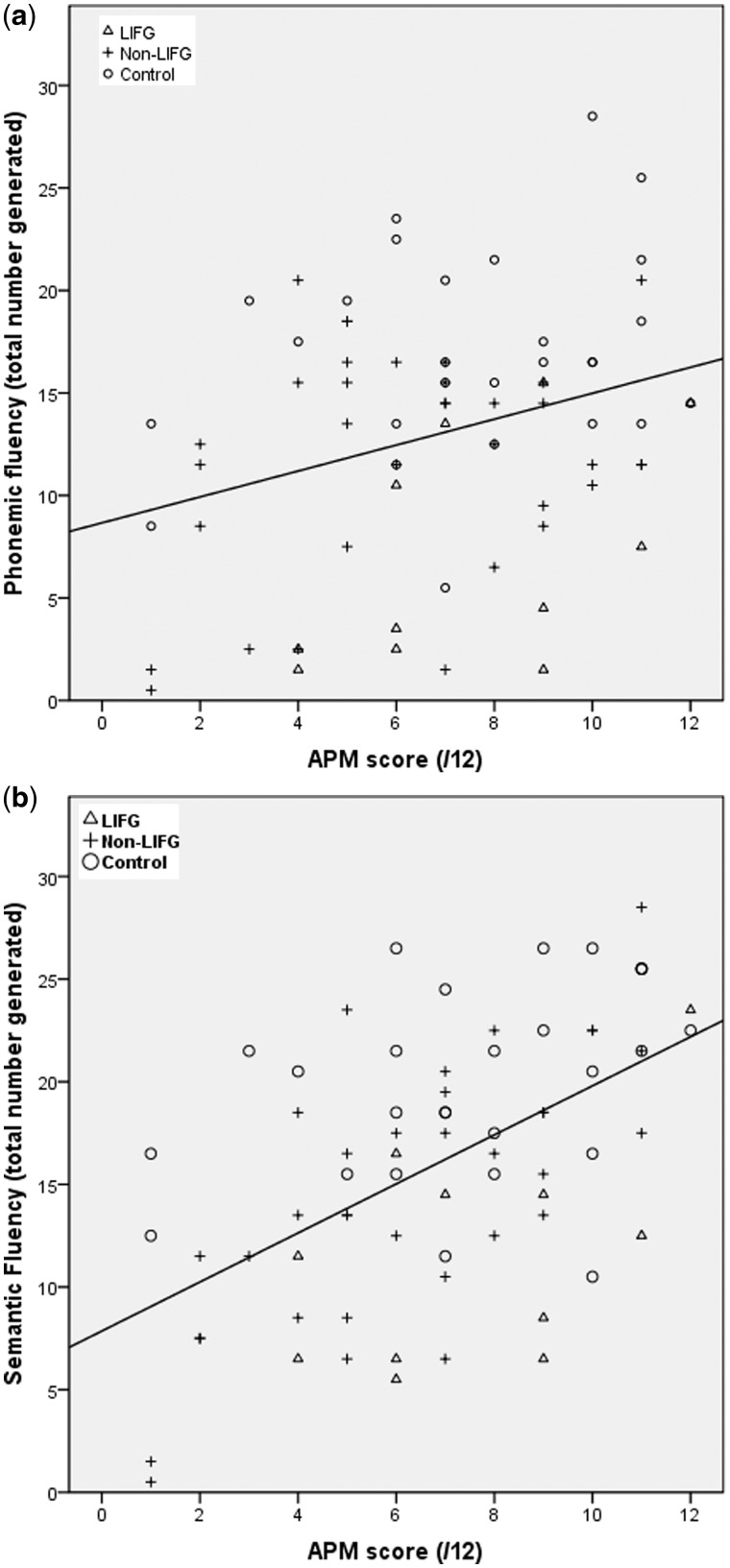
Fluency tasks have been widely used to tap the voluntary generation of responses. The anatomical correlates of fluency tasks and their sensitivity and specificity have been hotly debated. However, investigation of the cognitive processes involved in voluntary generation of responses and whether generation is supported by a common, general process (e.g. fluid intelligence) or specific cognitive processes underpinned by particular frontal regions has rarely been addressed. This study investigates a range of verbal and non-verbal fluency tasks in patients with unselected focal frontal (n=47) and posterior (n=20) lesions. Patients and controls (n=35) matched for education, age and sex were administered fluency tasks including word (phonemic/semantic), design, gesture and ideational fluency as well as background cognitive tests. Lesions were analysed by standard anterior/posterior and left/right frontal subdivisions as well as a finer-grained frontal localization method. Thus, patients with right and left lateral lesions were compared to patients with superior medial lesions. The results show that all eight fluency tasks are sensitive to frontal lobe damage although only the phonemic word and design fluency tasks were specific to the frontal region. Superior medial patients were the only group to be impaired on all eight fluency tasks, relative to controls, consistent with an energization deficit. The most marked fluency deficits for lateral patients were along material specific lines (i.e. left-phonemic and right-design). Phonemic word fluency that requires greater selection was most severely impaired following left inferior frontal damage. Overall, our results support the notion that frontal functions comprise a set of specialized cognitive processes, supported by distinct frontal regions.
Figures
References
-
- Alvarez JA, Emory E. Executive function and the frontal lobes: a meta-analytic review. Neuropsychol Rev. 2006;16:17–42. - PubMed
-
- Baldo JV, Shimamura AP. Letter and category fluency in patients with frontal lobe lesions. Neuropsychology. 1998;12:259–67. - PubMed
-
- Baldo JV, Shimamura AP, Delis DC, Kramer J, Kaplan E. Verbal and design fluency in patients with frontal lobe lesions. J Int Neuropsychol Soc. 2001;7:586–96. - PubMed
-
- Baldo JV, Schwartz S, Wilkins D, Dronkers NF. Role of frontal versus temporal Cortex in verbal fluency as revealed by voxel-based lesion symptom mapping. J Int Neuropsychol Soc. 2006;12(6):896–900. - PubMed
-
- Benton AL. Differential behavioural effects in frontal lobe disease. Neuropsychologia. 1968;6:53–60.
Publication types
MeSH terms
Grants and funding
LinkOut - more resources
Full Text Sources
Miscellaneous
