


A randomized, double-blind, placebo-controlled, trial of lamotrigine therapy in bipolar disorder, depressed or mixed phase and cocaine dependence
- PMID: 22669171
- PMCID: PMC3442350
- DOI: 10.1038/npp.2012.90
A randomized, double-blind, placebo-controlled, trial of lamotrigine therapy in bipolar disorder, depressed or mixed phase and cocaine dependence
Abstract
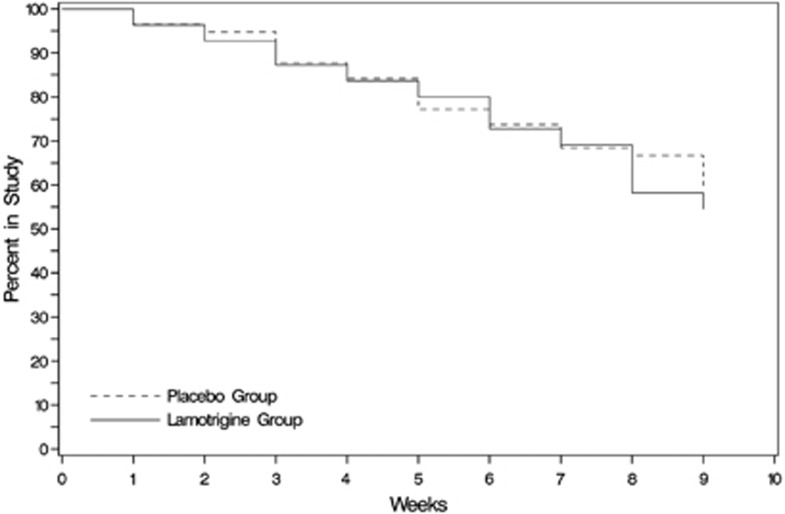
Bipolar disorder is associated with very high rates of substance dependence. Cocaine use is particularly common. However, limited data are available on the treatment of this population. A 10-week, randomized, double-blind, placebo-controlled trial of lamotrigine was conducted in 120 outpatients with bipolar disorder, depressed or mixed mood state, and cocaine dependence. Other substance use was not exclusionary. Cocaine use was quantified weekly by urine drug screens and participant report using the timeline follow-back method. Mood was assessed with the Hamilton rating scale for depression, quick inventory of depressive symptomatology self-report, and young mania rating scale. Cocaine craving was assessed with the cocaine-craving questionnaire. Data were analyzed using a random regression analysis that used all available data from participants with at least one postbaseline assessment (n=112). Lamotrigine and placebo groups were similar demographically (age 45.1±7.3 vs 43.5±10.0 years, 41.8% vs 38.6% women). Urine drug screens (primary outcome measure) and mood symptoms were not significantly different between groups. However, dollars spent on cocaine showed a significant initial (baseline to week 1, p=0.01) and by-week (weeks 1-10, p=0.05) decrease in dollars spent on cocaine, favoring lamotrigine. Few positive trials of medications for cocaine use, other than stimulant replacement, have been reported, and none have been reported for bipolar disorder. Reduction in amount of cocaine use by self-report with lamotrigine suggests that a standard treatment for bipolar disorder may reduce cocaine use. A study limitation was weekly assessment of urine drug screens that decreased the ability to detect between-group differences.
Figures
References
-
- Aagaard J, Vestergaard P. Predictors of outcome in prophylactic lithium treatment: a 2-year prospective study. J Affect Disord. 1990;18:259–266. - PubMed
-
- Albanese MJ, Pies R. The bipolar patient with comorbid substance use disorder: recognition and management. CNS Drugs. 2004;18:585–596. - PubMed
-
- Bauer MS, Altshuler L, Evans DR, Beresford T, Williford WO, Hauger R. Prevalence and distinct correlates of anxiety, substance, and combined comorbidity in a multi-site public sector sample with bipolar disorder. J Affect Disord. 2005;85:301–315. - PubMed
-
- Bauer MS, Williford WO, Dawson EE, Akiskal HS, Altshuler L, Fye C, et al. Principles of effectiveness trials and their implementation in VA Cooperative Study #430: ‘reducing the efficacy-effectiveness gap in bipolar disorder'. J Affect Disord. 2001;67:61–78. - PubMed
-
- Berger SP, Winhusen TM, Somoza EC, Harrer JM, Mezinskis JP, Leiderman DB, et al. A medication screening trial evaluation of reserpine, gabapentin and lamotrigine pharmacotherapy of cocaine dependence. Addiction. 2005;100 (Suppl 1:58–67. - PubMed
Publication types
MeSH terms
Substances
LinkOut - more resources
Full Text Sources
Other Literature Sources
Medical
