Herb-drug interactions: an overview of systematic reviews
- PMID: 22670731
- PMCID: PMC3575928
- DOI: 10.1111/j.1365-2125.2012.04350.x
Herb-drug interactions: an overview of systematic reviews
Abstract
Objectives: The aim of this overview of systematic reviews (SRs) is to evaluate critically the evidence regarding interactions between herbal medicinal products (HMPs) and synthetic drugs.
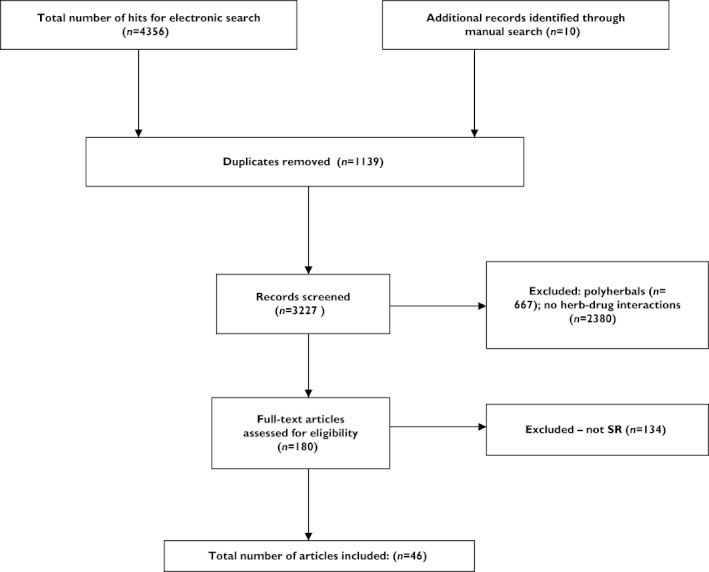
Methods: Four electronic databases were searched to identify relevant SRs.
Results: Forty-six SRs of 46 different HMPs met our inclusion criteria. The vast majority of SRs were of poor methodological quality. The majority of these HMPs were not associated with severe herb-drug interactions. Serious herb-drug interactions were noted for Hypericum perforatum and Viscum album. The most severe interactions resulted in transplant rejection, delayed emergence from anaesthesia, cardiovascular collapse, renal and liver toxicity, cardiotoxicity, bradycardia, hypovolaemic shock, inflammatory reactions with organ fibrosis and death. Moderately severe interactions were noted for Ginkgo biloba, Panax ginseng, Piper methysticum, Serenoa repens and Camellia sinensis. The most commonly interacting drugs were antiplatelet agents and anticoagulants.
Conclusion: The majority of the HMPs evaluated in SRs were not associated with drug interactions with serious consequences. However, the poor quality and the scarcity of the primary data prevent firm conclusions.
© 2012 The Authors. British Journal of Clinical Pharmacology © 2012 The British Pharmacological Society.
References
-
- Hunt KJ, Ernst E. Patients' use of CAM: results from the Health Survey for England 2005. Focus Altern Complement Ther. 2010;15:101–3.
-
- Merritt‐Charles L. The prevalence of herbal medicine use among surgical patients in Trinidad. Focus Altern Complement Ther. 2011;16:266–70.
-
- Paul JH, Seaforth CE. Harmful plants in Caribbean folk medicine. Focus Altern Complement Ther. 2011;16:261–5.
-
- Ernst E. Possible interactions between synthetic and herbal medicinal products. Part 1: a systematic review of the indirect evidence. Perfusion. 2000;13:4–6.
-
- Ernst E, Pittler MH, Wider B, Boddy K. 2nd. Elsevier Mosby; 2006. The Desktop Guide to Complementary and Alternative Medicine edn. Edinburgh:
Publication types
MeSH terms
Substances
LinkOut - more resources
Full Text Sources
Other Literature Sources
Miscellaneous