


Toll-like receptor 9 activation: a novel mechanism linking placenta-derived mitochondrial DNA and vascular dysfunction in pre-eclampsia
- PMID: 22671429
- PMCID: PMC4004352
- DOI: 10.1042/CS20120130
Toll-like receptor 9 activation: a novel mechanism linking placenta-derived mitochondrial DNA and vascular dysfunction in pre-eclampsia
Abstract
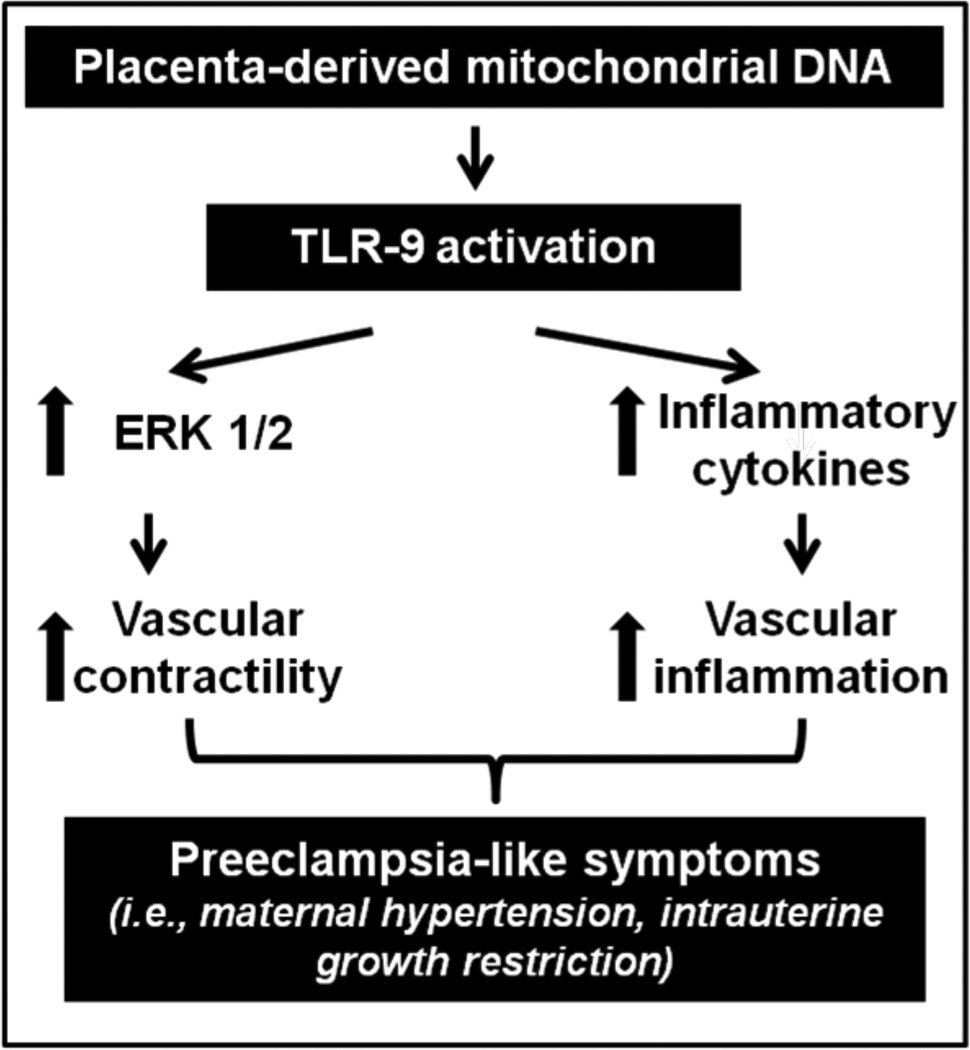
Emerging evidence suggests that in addition to being the 'power houses' of our cells, mitochondria facilitate effector responses of the immune system. Cell death and injury result in the release of mtDNA (mitochondrial DNA) that acts via TLR9 (Toll-like receptor 9), a pattern recognition receptor of the immune system which detects bacterial and viral DNA but not vertebrate DNA. The ability of mtDNA to activate TLR9 in a similar fashion to bacterial DNA stems from evolutionarily conserved similarities between bacteria and mitochondria. mtDNA may be the trigger of systemic inflammation in pathologies associated with abnormal cell death. PE (pre-eclampsia) is a hypertensive disorder of pregnancy with devastating maternal and fetal consequences. The aetiology of PE is unknown and removal of the placenta is the only effective cure. Placentas from women with PE show exaggerated necrosis of trophoblast cells, and circulating levels of mtDNA are higher in pregnancies with PE. Accordingly, we propose the hypothesis that exaggerated necrosis of trophoblast cells results in the release of mtDNA, which stimulates TLR9 to mount an immune response and to produce systemic maternal inflammation and vascular dysfunction that lead to hypertension and IUGR (intra-uterine growth restriction). The proposed hypothesis implicates mtDNA in the development of PE via activation of the immune system and may have important preventative and therapeutic implications, because circulating mtDNA may be potential markers of early detection of PE, and anti-TLR9 treatments may be promising in the management of the disease.
Conflict of interest statement
The authors declare no conflict of interest.
Figures
References
-
- Report of the National High Blood Pressure Education Program Working Group on High Blood Pressure in Pregnancy. Am J Obstet Gynecol. 2000;1:S1–S22. - PubMed
-
- Roberts JM, Gammill HS. Preeclampsia: recent insights. Hypertension. 2005;6:1243–1249. - PubMed
-
- Verlohren S, Geusens N, Morton J, Verhaegen I, Hering L, Herse F, Dudenhausen JW, Muller DN, Luft FC, Cartwright JE, Davidge ST, Pijnenborg R, Dechend R. Inhibition of trophoblast-induced spiral artery remodeling reduces placental perfusion in rat pregnancy. Hypertension. 2010;2:304–310. - PubMed
-
- Walsh SK, English FA, Johns EJ, Kenny LC. Plasma-mediated vascular dysfunction in the reduced uterine perfusion pressure model of preeclampsia: a microvascular characterization. Hypertension. 2009;2:345–351. - PubMed
Publication types
MeSH terms
Substances
Grants and funding
LinkOut - more resources
Full Text Sources
Medical
