


Reversible induction of phantom auditory sensations through simulated unilateral hearing loss
- PMID: 22675466
- PMCID: PMC3366980
- DOI: 10.1371/journal.pone.0035238
Reversible induction of phantom auditory sensations through simulated unilateral hearing loss
Abstract
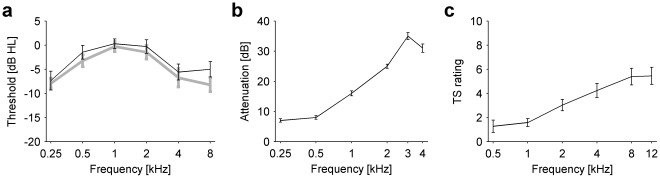
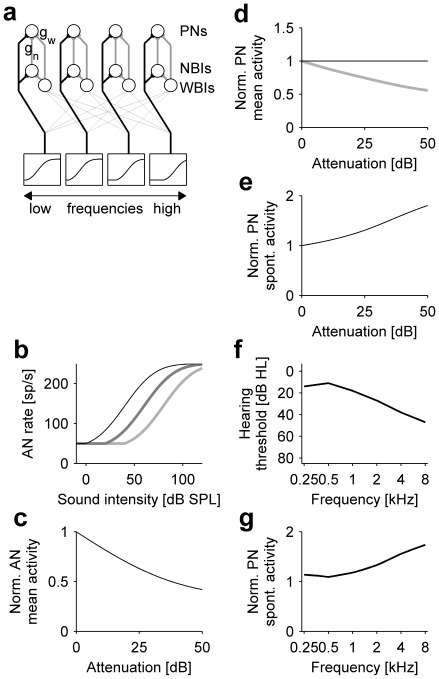
Tinnitus, a phantom auditory sensation, is associated with hearing loss in most cases, but it is unclear if hearing loss causes tinnitus. Phantom auditory sensations can be induced in normal hearing listeners when they experience severe auditory deprivation such as confinement in an anechoic chamber, which can be regarded as somewhat analogous to a profound bilateral hearing loss. As this condition is relatively uncommon among tinnitus patients, induction of phantom sounds by a lesser degree of auditory deprivation could advance our understanding of the mechanisms of tinnitus. In this study, we therefore investigated the reporting of phantom sounds after continuous use of an earplug. 18 healthy volunteers with normal hearing wore a silicone earplug continuously in one ear for 7 days. The attenuation provided by the earplugs simulated a mild high-frequency hearing loss, mean attenuation increased from <10 dB at 0.25 kHz to >30 dB at 3 and 4 kHz. 14 out of 18 participants reported phantom sounds during earplug use. 11 participants presented with stable phantom sounds on day 7 and underwent tinnitus spectrum characterization with the earplug still in place. The spectra showed that the phantom sounds were perceived predominantly as high-pitched, corresponding to the frequency range most affected by the earplug. In all cases, the auditory phantom disappeared when the earplug was removed, indicating a causal relation between auditory deprivation and phantom sounds. This relation matches the predictions of our computational model of tinnitus development, which proposes a possible mechanism by which a stabilization of neuronal activity through homeostatic plasticity in the central auditory system could lead to the development of a neuronal correlate of tinnitus when auditory nerve activity is reduced due to the earplug.
Conflict of interest statement
Figures
References
-
- Axelsson A, Ringdahl A. Tinnitus - a study of its prevalence and characteristics. Br J Audiol. 1989;23:53–62. - PubMed
-
- Nicolas-Puel C, Faulconbridge RL, Guitton M, Puel JL, Mondain M, et al. Characteristics of tinnitus and etiology of associated hearing loss: a study of 123 patients. The international tinnitus journal. 2002;8:37–44. - PubMed
-
- Kaltenbach JA, Zacharek MA, Zhang J, Frederick S. Activity in the dorsal cochlear nucleus of hamsters previously tested for tinnitus following intense tone exposure. Neurosci Lett. 2004;355:121–125. - PubMed
Publication types
MeSH terms
LinkOut - more resources
Full Text Sources
Research Materials
Miscellaneous
