


Dietary whey protein lessens several risk factors for metabolic diseases: a review
- PMID: 22676328
- PMCID: PMC3393628
- DOI: 10.1186/1476-511X-11-67
Dietary whey protein lessens several risk factors for metabolic diseases: a review
Abstract
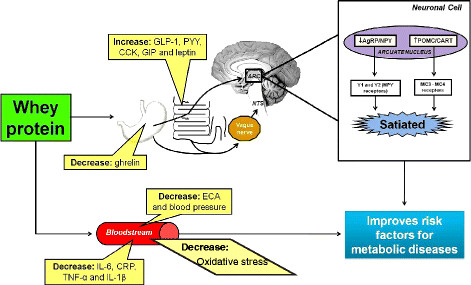
Obesity and type 2 diabetes mellitus (DM) have grown in prevalence around the world, and recently, related diseases have been considered epidemic. Given the high cost of treatment of obesity/DM-associated diseases, strategies such as dietary manipulation have been widely studied; among them, the whey protein diet has reached popularity because it has been suggested as a strategy for the prevention and treatment of obesity and DM in both humans and animals. Among its main actions, the following activities stand out: reduction of serum glucose in healthy individuals, impaired glucose tolerance in DM and obese patients; reduction in body weight; maintenance of muscle mass; increases in the release of anorectic hormones such as cholecystokinin, leptin, and glucagon like-peptide 1 (GLP-1); and a decrease in the orexigenic hormone ghrelin. Furthermore, studies have shown that whey protein can also lead to reductions in blood pressure, inflammation, and oxidative stress.
Figures
References
-
- WHO. Global strategy on diet, physical activity and health: obesity and overweight. World Health Organization, Geneva; 2012. http://www.who.int/dietphysicalactivity/publications/facts/obesity/en/
-
- Gigante DP, Moura EC, Sardinha LM. Prevalence of overweight and obesity and associated factors, Brazil, 2006. Rev Saude Publica. 2009;43(Suppl 2):83–89. - PubMed
Publication types
MeSH terms
Substances
LinkOut - more resources
Full Text Sources
Other Literature Sources
Medical
