


A systematic review of complications and failures associated with medial patellofemoral ligament reconstruction for recurrent patellar dislocation
- PMID: 22679297
- PMCID: PMC3615712
- DOI: 10.1177/0363546512442330
A systematic review of complications and failures associated with medial patellofemoral ligament reconstruction for recurrent patellar dislocation
Abstract
Background: Patellofemoral instability affects activities of daily living and hinders athletic participation. Over the past 2 decades, more attention has been paid to medial patellofemoral ligament (MPFL) reconstruction for the treatment of recurrent patellar dislocations/subluxations. Numerous techniques have been reported; however, there is no consensus regarding optimal reconstruction.
Purpose: This study sought to report on the various techniques for MPFL reconstruction described in the literature and to assess the rate of complications associated with the procedure.
Study design: Meta-analysis.
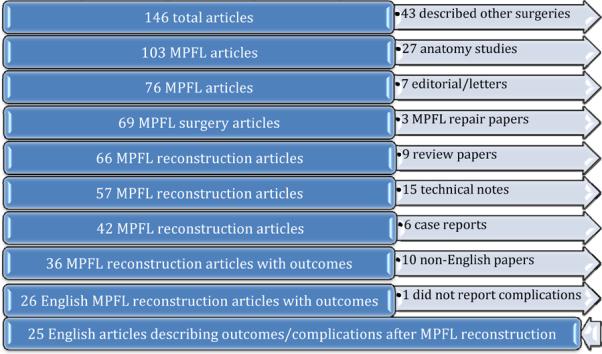
Methods: A systematic review of the literature was performed in early October 2010 using keywords "medial patellofemoral ligament," "MPFL," "reconstruction," "complication(s)," and "failure(s)." Articles meeting the inclusion criteria were reviewed. Graft choice, surgical technique, outcome measures, and complications were recorded and organized in a database. Descriptive statistical analysis was performed on the data collected.
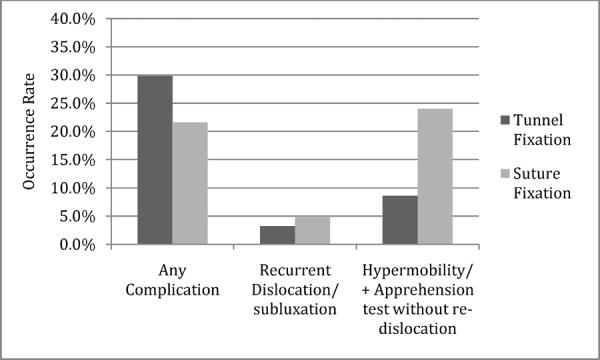
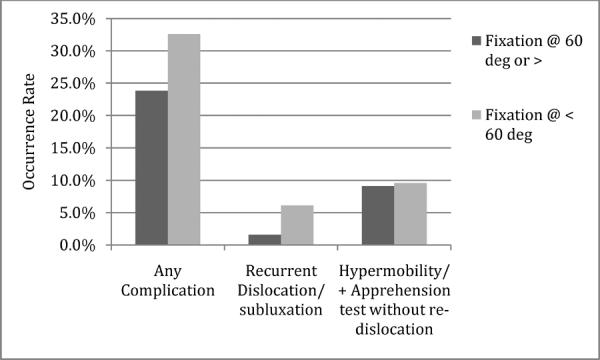
Results: Twenty-five articles were identified and reviewed. A total of 164 complications occurred in 629 knees (26.1%). These adverse events ranged from minor to major including patellar fracture, failures, clinical instability on postoperative examination, loss of knee flexion, wound complications, and pain. Twenty-six patients returned to the operating room for additional procedures.
Conclusion: Medial patellofemoral ligament reconstruction has a high rate of success for patients with patellofemoral instability; however, the complication rate of 26.1% associated with this procedure is not trivial. This study quantified complications and documented the variety of complications reported in outcomes-based literature.
Figures
References
-
- Ahmad CS, Brown GD, Stein BS. The docking technique for medial patellofemoral ligament reconstruction: surgical technique and clinical outcome. Am J Sports Med. 2009;37(10):2021–2027. - PubMed
-
- Amis AA, Firer P, Mountney J, Senavongse W, Thomas NP. Anatomy and biomechanics of the medial patellofemoral ligament. Knee. 2003;10(3):215–220. - PubMed
-
- Baldwin JL. The anatomy of the medial patellofemoral ligament. Am J Sports Med. 2009;37(12):2355–2361. - PubMed
-
- Beasley LS, Vidal AF. Traumatic patellar dislocation in children and adolescents: treatment update and literature review. Curr Opin Pediatr. 2004;16(1):29–36. - PubMed
-
- Carson WG, Jr., James SL, Larson RL, Singer KM, Winternitz WW. Patellofemoral disorders: physical and radiographic evaluation. Part II: Radiographic examination. Clin Orthop Relat Res. 1984;(185):178–186. - PubMed
Publication types
MeSH terms
Grants and funding
LinkOut - more resources
Full Text Sources
Miscellaneous
