


Relationship of negative affect and outcome of an opioid therapy trial among low back pain patients
- PMID: 22681407
- PMCID: PMC3869183
- DOI: 10.1111/j.1533-2500.2012.00575.x
Relationship of negative affect and outcome of an opioid therapy trial among low back pain patients
Abstract
Objectives: Patients with chronic noncancer pain frequently report symptoms of depression and anxiety (negative affect), which are associated with higher ratings of pain intensity and a greater likelihood of being prescribed chronic opioid therapy. The purpose of this secondary analysis was to test the hypothesis that initial levels of negative affect can predict treatment-related outcomes in a double-blind, placebo-controlled study of extended-release (ER) hydromorphone among opioid-tolerant patients with chronic low back pain.
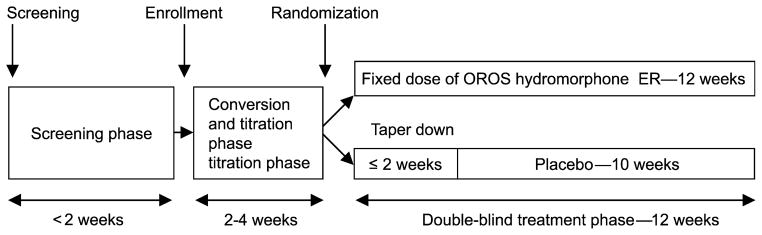
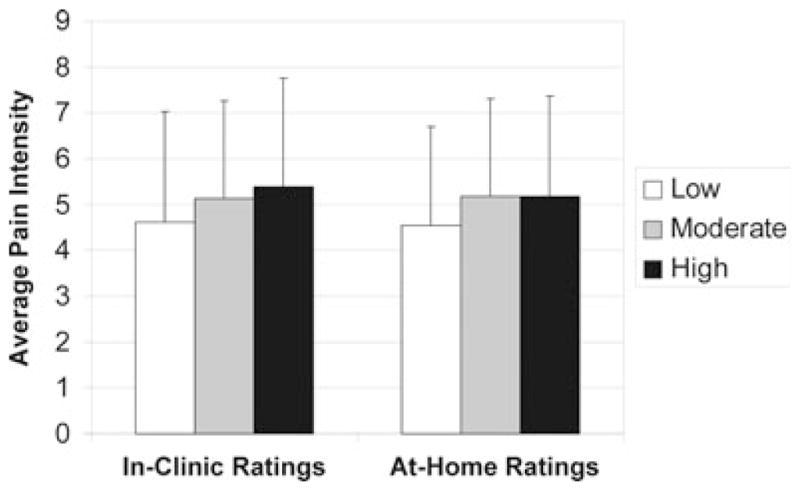
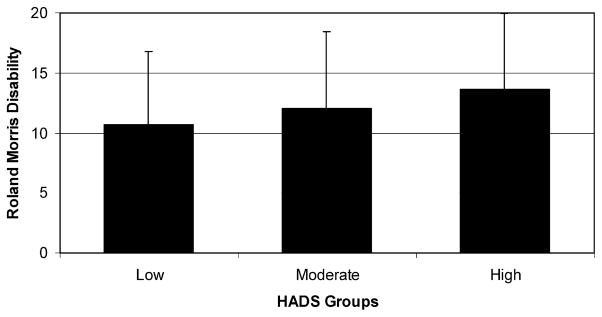
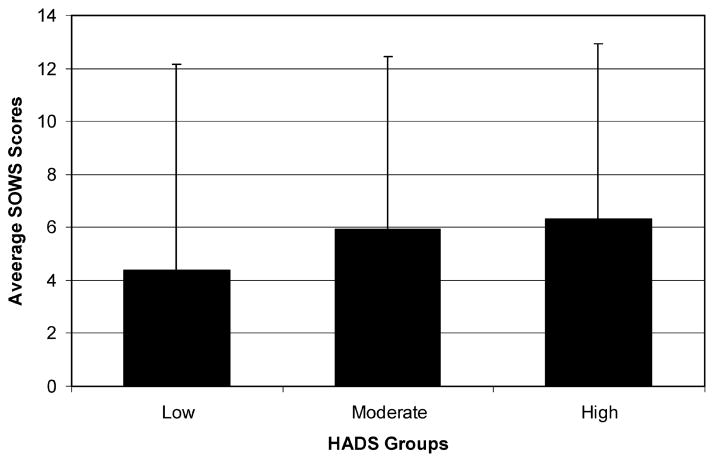
Methods: Four hundred fifty-nine (N = 459) patients participated in the titration/conversion phase of a multicenter study, of which 268 were randomized to receive once-daily hydromorphone or placebo. All patients completed the Hospital Anxiety and Depression Scale (HADS) at baseline and were divided evenly into Low (N = 157), Moderate (N = 155), and High (N = 147) negative affect groups based on their scores. Group differences in numerical pain intensity measures at home and in the clinic, Roland-Morris Disability ratings, and measures of symptoms from the Subjective Opiate Withdrawal Scale (SOWS) throughout the trial were analyzed.
Results: Two hundred sixty-eight of the initial 459 subjects who entered the 2 to 4-week titration/conversion phase (pretreatment) were successfully randomized to either placebo or ER hydromorphone; a total of 110 patients then completed this double-blind phase of the study. Those in the Moderate and High negative affect groups tended to drop out more often during the titration/conversion phase because of the adverse effects or lack of efficacy of their prescribed opioid than those in the Low negative mood group (P < 0.05). Overall, those patients in the Moderate and High groups reported significantly higher pain intensity scores in at-home and in-clinic pain intensity ratings (P < 0.05), greater disability on the Roland-Morris Scale (P < 0.01), and more withdrawal symptoms on the SOWS (P < 0.05) than those in the Low group. Higher negative affect scores also predicted less favorable ratings of the study drug during the titration phase (P < 0.05). Interestingly, the High negative affect group showed the most improvement in pain in the placebo condition (P < 0.05).
Conclusions: Negative affect is associated with diminished benefit during a trial of opioid therapy and is predictive of dropout in a controlled clinical trial.
© 2012 The Authors. Pain Practice © 2012 World Institute of Pain.
Figures
References
-
- Garofalo JP, Polatin P. Low back pain: an epidemic in industrialized countries. In: Gatchel RJ, Turk DC, editors. Psychosocial Factors in Pain: Clinical Perspectives. New York: The Guilford Press; 1999. pp. 164–174.
-
- Fordyce WE. Back Pain in the Workplace: Management of Disability in Nonspecific conditions. Seattle: IASP Press; 1995. - PubMed
-
- Ehrlich GE. Back pain. J Rheumatol Suppl. 2003;67:26–31. - PubMed
-
- Frymoyer JW, Cats-Baril WL. An overview of the incidences and costs of low back pain. Orthop Clin North Am. 1991;22:263–271. - PubMed
-
- Institute of Medicine. Consensus Report. Washington DC: Jun 29, 2011. Relieving Pain in America: A Blueprint for Transforming Prevention, Care, Education, and Research.
Publication types
MeSH terms
Substances
Grants and funding
LinkOut - more resources
Full Text Sources
