


Predictors of utilization of an IVR self-monitoring program by problem drinkers with recent natural resolutions
- PMID: 22682100
- PMCID: PMC4477637
- DOI: 10.1016/j.drugalcdep.2012.04.022
Predictors of utilization of an IVR self-monitoring program by problem drinkers with recent natural resolutions
Abstract
Background: As part of a randomized controlled trial, problem drinkers who recently initiated natural recovery on their own were offered access to an interactive voice response (IVR) self-monitoring (SM) system as a sobriety maintenance tool during early recovery when relapse risk is high. Because observed IVR utilization was variable, predictors of utilization were evaluated to inform knowledge of populations likely to access and use IVR services.
Methods: Participants were 87 untreated community-dwelling adults who recently initiated sobriety following longstanding high-risk drinking practices and alcohol-related problems (M=16.58 years, SD=10.95). Baseline interviews assessed pre-resolution drinking practices and problems, and behavioral economic (BE) measures of reward preferences (delay discounting, pre-resolution monetary allocation). Participants had IVR access for 24 weeks to report daily drinking and to hear weekly recovery-focused messages.
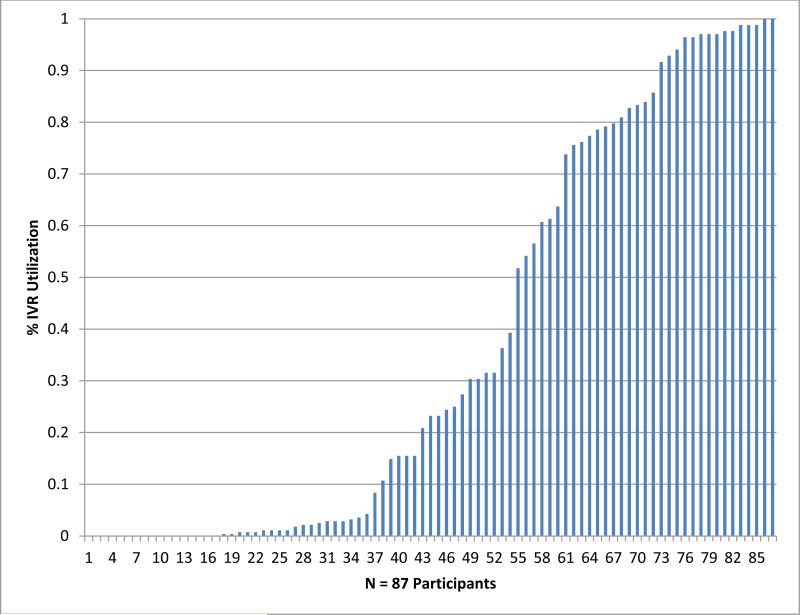
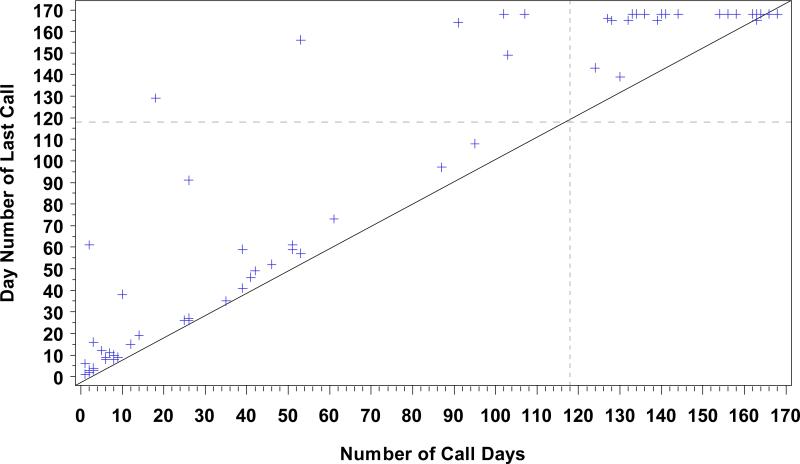
Results: IVR use ranged from 0 to 100%. Frequent (n=28), infrequent (n=42), and non-caller (n=17) groups were identified. Non-callers tended to be younger and to report heavier pre-resolution drinking. Frequent callers (≥70% of IVR days) tended to be older, male non-smokers with higher/stable socio-economic status and lower delay discounting compared to infrequent callers. Premature drop-out typically occurred fairly abruptly and was related to extended binge drinking.
Conclusions: Characteristics common in the untreated problem drinker population were associated with higher IVR utilization. This large under-served population segment can be targeted for lower intensity alcohol interventions using an IVR platform.
Copyright © 2012 Elsevier Ireland Ltd. All rights reserved.
Figures
References
-
- Abu-Hasaballah K, James A, Aseltine RH., Jr. Lessons and pitfalls of interactive voice response in medical research. Contemp. Clin. Trials. 2007;28:593–602. - PubMed
-
- Aharonovich E, Hatzenbuehlerm ML, Johnston B, O'Leary A, Morgenstern J, Wainberg ML, Yao P, Helzer JE, Hasin DS. A low-cost, sustainable intervention for drinking reduction in the HIV primary care setting. AIDS Care. 2006;18:561–568. - PubMed
-
- American Psychiatric Association . Diagnostic and Statistical Manual of Mental Disorders. 4th ed. American Psychiatric Association; Washington, D.C.: 1994.
-
- Bickel WK, Marsch LA. Toward a behavioral economic understanding of drug dependence: delay discounting processes. Addiction. 2001;96:73–86. - PubMed
Publication types
MeSH terms
Grants and funding
LinkOut - more resources
Full Text Sources
Medical
Research Materials
