


Positive and negative signaling through SLAM receptors regulate synapse organization and thresholds of cytolysis
- PMID: 22683123
- PMCID: PMC3389133
- DOI: 10.1016/j.immuni.2012.05.017
Positive and negative signaling through SLAM receptors regulate synapse organization and thresholds of cytolysis
Abstract
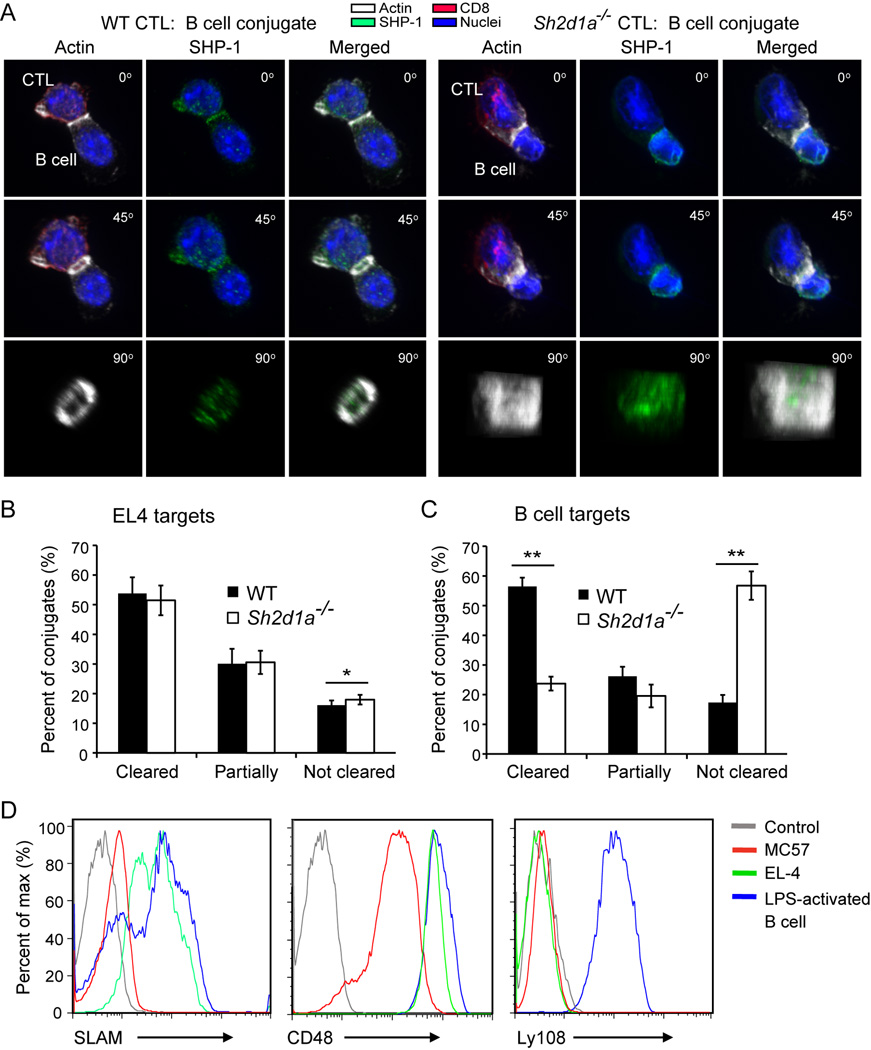
X-linked lymphoproliferative syndrome, characterized by fatal responses to Epstein-Barr virus infection, is caused by mutations affecting the adaptor SAP, which links SLAM family receptors to downstream signaling. Although cytotoxic defects in SAP-deficient T cells are documented, the mechanism remains unclear. We show that SAP-deficient murine CD8(+) T cells exhibited normal cytotoxicity against fibrosarcoma targets, yet had impaired adhesion to and killing of B cell and low-avidity T cell targets. SAP-deficient cytotoxic lymphocytes showed specific defects in immunological synapse organization with these targets, resulting in inefficient actin clearance. In the absence of SAP, signaling through the SLAM family members Ly108 and 2B4 resulted in increased recruitment of the SHP-1 phosphatase, associated with altered SHP-1 localization and decreased activation of Src kinases at the synapse. Hence, SAP and SLAM receptors regulate positive and negative signals required for organizing the T cell:B cell synapse and setting thresholds for cytotoxicity against distinct cellular targets.
Copyright © 2012 Elsevier Inc. All rights reserved.
Figures




References
-
- Bottino C, Falco M, Parolini S, Marcenaro E, Augugliaro R, Sivori S, Landi E, Biassoni R, Notarangelo LD, Moretta L, Moretta A. NTB-A, a novel SH2D1A-associated surface molecule contributing to the inability of natural killer cells to kill Epstein-Barr virus-infected B cells in X-linked lymphoproliferative disease. J Exp Med. 2001;194:235–246. - PMC - PubMed
-
- Brossard C, Feuillet V, Schmitt A, Randriamampita C, Romao M, Raposo G, Trautmann A. Multifocal structure of the T cell - dendritic cell synapse. Europ J Immunol. 2005;35:1741–1753. - PubMed
Publication types
MeSH terms
Substances
Grants and funding
LinkOut - more resources
Full Text Sources
Other Literature Sources
Molecular Biology Databases
Research Materials
Miscellaneous
