


Circulating microRNAs in exosomes indicate hepatocyte injury and inflammation in alcoholic, drug-induced, and inflammatory liver diseases
- PMID: 22684891
- PMCID: PMC3486954
- DOI: 10.1002/hep.25873
Circulating microRNAs in exosomes indicate hepatocyte injury and inflammation in alcoholic, drug-induced, and inflammatory liver diseases
Abstract
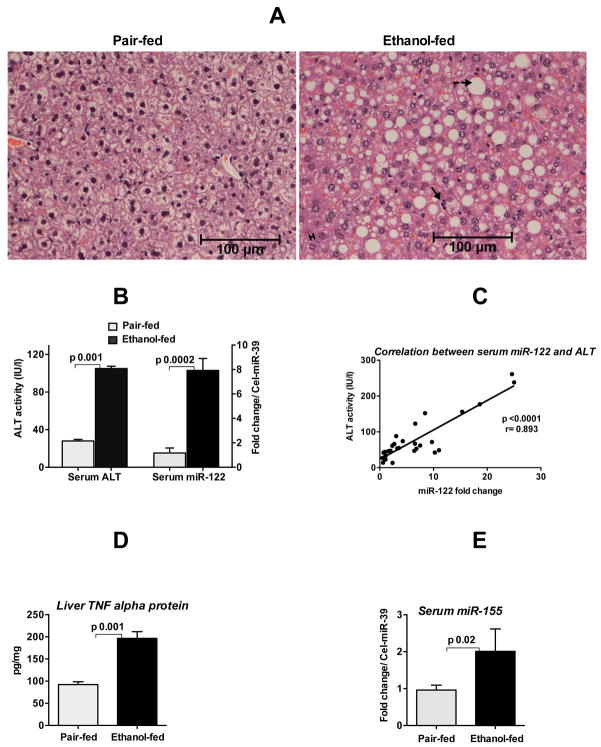
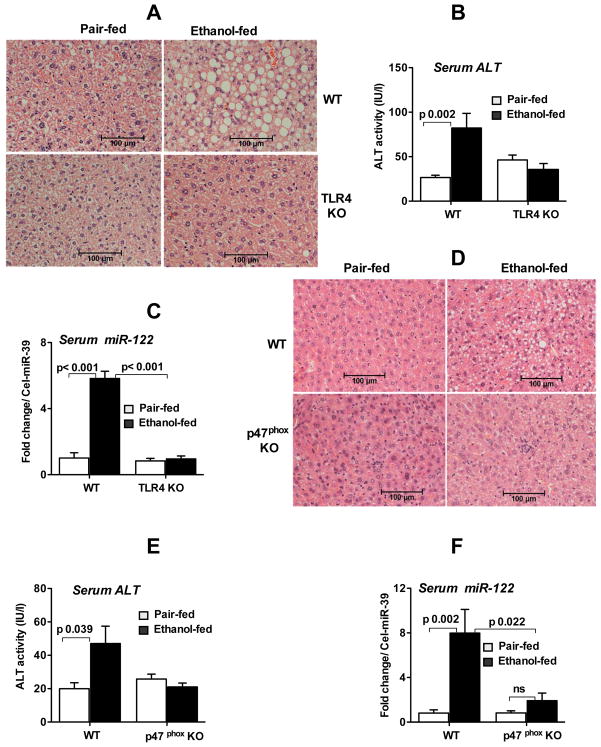
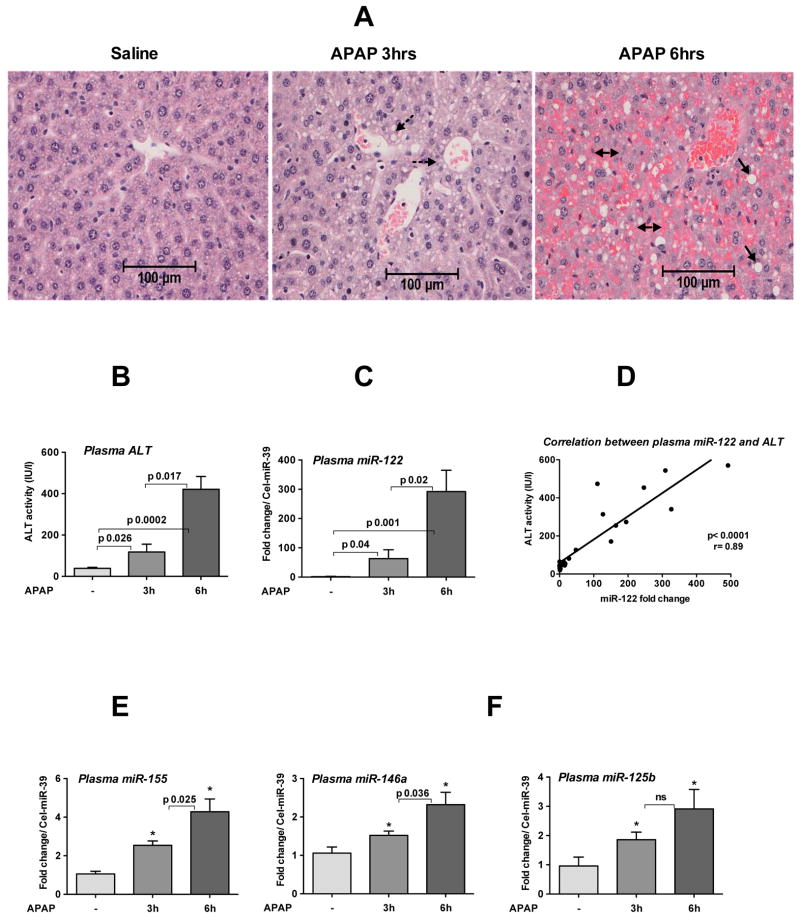
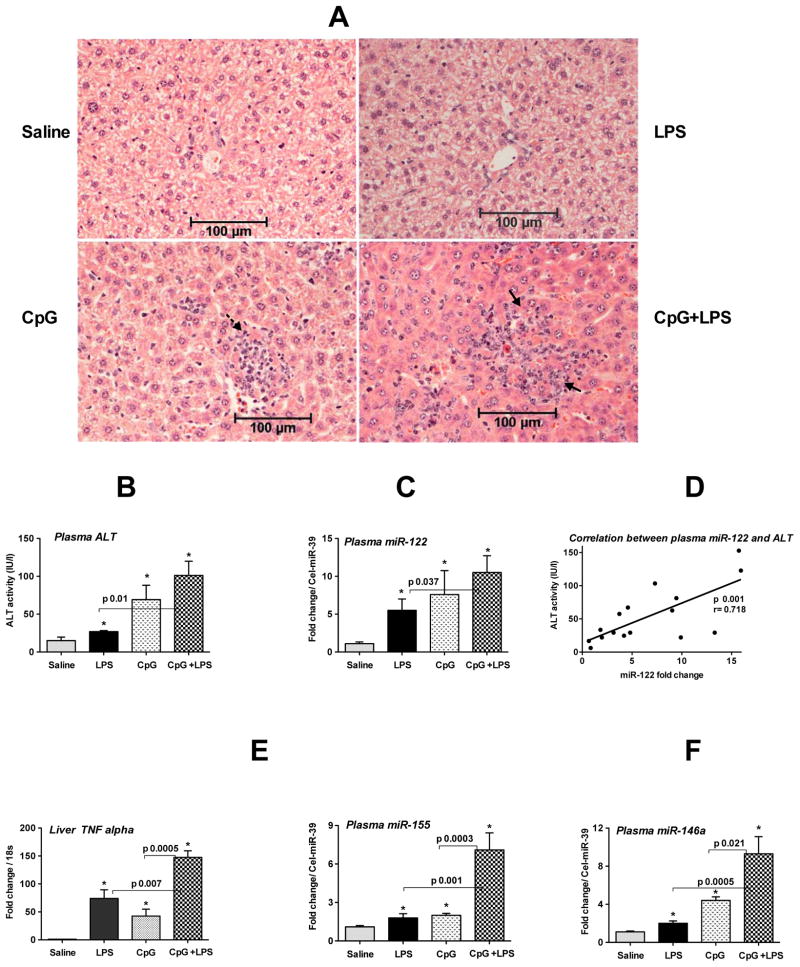
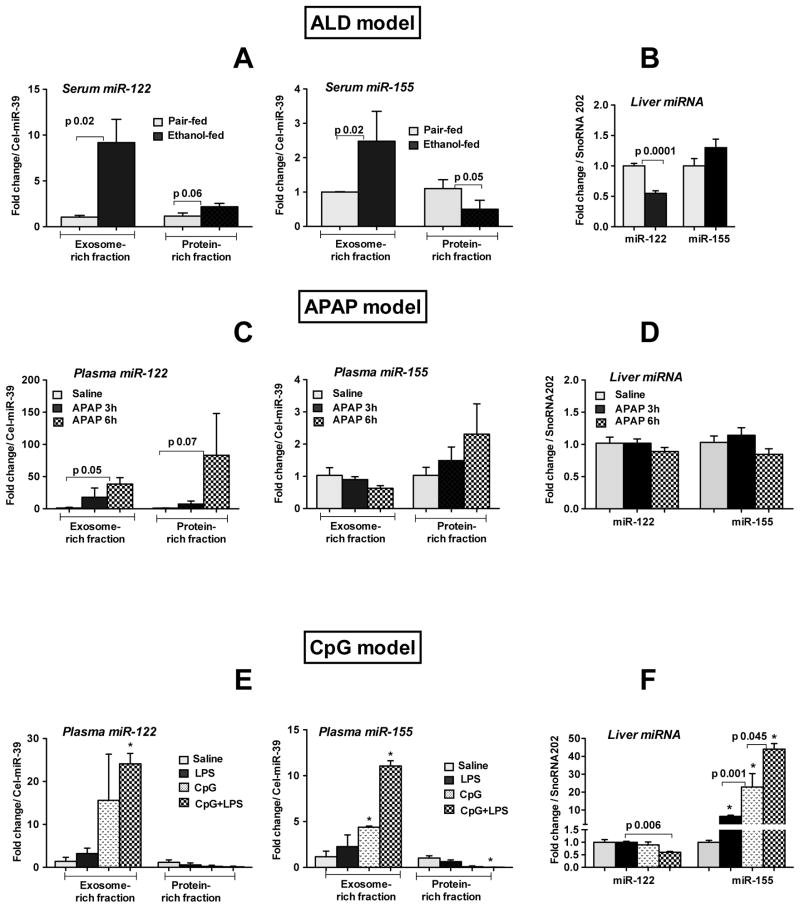
MicroRNAs are fine tuners of diverse biological responses and are expressed in various cell types of the liver. Here we hypothesized that circulating microRNAs (miRNAs) may serve as biomarkers of liver damage and inflammation. We studied miRNA-122, which is abundant in hepatocytes, and miR-155, -146a, and -125b, which regulate inflammation in immune cells in mouse models of alcoholic liver disease (ALD), drug (acetaminophen, APAP)-induced liver injury (DILI), and Toll-like receptor (TLR) 9+4 ligand-induced inflammatory cell-mediated liver damage. We found that serum/plasma miR-122 correlated with alanine aminotransferase (ALT) increases in the liver damage caused by alcohol, APAP, and TLR9 (CpG)+4 (LPS) ligands. MiR-155, a regulator of inflammation, was increased in serum/plasma in alcoholic and inflammatory liver injury. Alcohol failed to increase serum miR-122 in TLR4-deficient and p47phox-deficient mice that were protected from ALD. We found the most robust increase in plasma miR-122 in DILI and it correlated with the highest ALT levels. Consistent with the massive inflammatory cell infiltration in the liver, plasma miR-155 and miR-146a were significantly elevated after CpG+LPS administration. We show for the first time that, depending on the type of liver injury, circulating miRNAs are associated either with the exosome-rich or protein-rich compartments. In ALD and in inflammatory liver injury, serum/plasma miR-122 and miR-155 were predominantly associated with the exosome-rich fraction, whereas in DILI/APAP injury these miRNAs were present in the protein-rich fraction.
Conclusion: Our results suggest that circulating miRNAs may serve as biomarkers to differentiate between hepatocyte injury and inflammation and the exosome versus protein association of miRNAs may provide further specificity to mechanisms of liver pathology.
Copyright © 2012 American Association for the Study of Liver Diseases.
Figures
Comment in
-
Circulating MicroRNA-122 signature in nonalcoholic fatty liver disease and cardiovascular disease: a new endocrine system in metabolic syndrome.Hepatology. 2013 Jun;57(6):2545-7. doi: 10.1002/hep.26116. Epub 2013 Mar 6. Hepatology. 2013. PMID: 23111985 No abstract available.
-
Reply: To PMID 22684891.Hepatology. 2013 Jun;57(6):2547. doi: 10.1002/hep.26111. Epub 2013 May 28. Hepatology. 2013. PMID: 23112144 No abstract available.
References
-
- Ambros V. The functions of animal microRNAs. Nature. 2004;7006:350–355. - PubMed
-
- Chen X, Ba Y, Ma L, Cai X, Yin Y, Wang K, et al. Characterization of microRNAs in serum: a novel class of biomarkers for diagnosis of cancer and other diseases. Cell Res. 2008;10:997–1006. - PubMed
-
- Ji F, Yang B, Peng X, Ding H, You H, Tien P. Circulating microRNAs in hepatitis B virus-infected patients. J Viral Hepat. 2011;7:e242–51. - PubMed
Publication types
MeSH terms
Substances
Grants and funding
LinkOut - more resources
Full Text Sources
Other Literature Sources
Medical