


The genetics of osteosarcoma
- PMID: 22685381
- PMCID: PMC3364016
- DOI: 10.1155/2012/627254
The genetics of osteosarcoma
Abstract
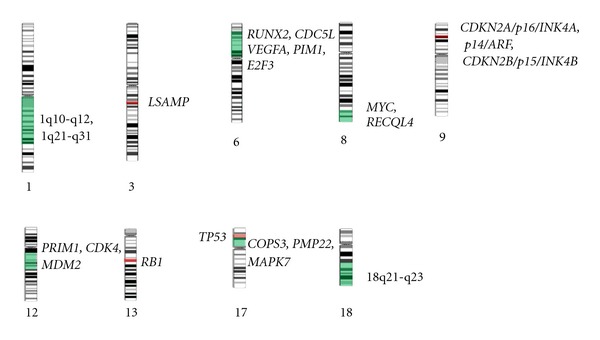
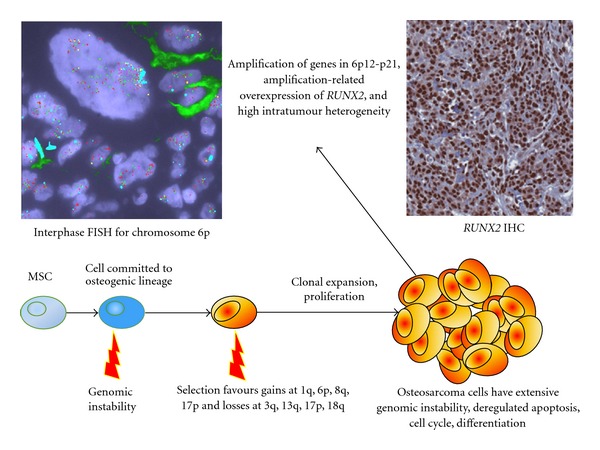
Osteosarcoma is a primary bone malignancy with a particularly high incidence rate in children and adolescents relative to other age groups. The etiology of this often aggressive cancer is currently unknown, because complicated structural and numeric genomic rearrangements in cancer cells preclude understanding of tumour development. In addition, few consistent genetic changes that may indicate effective molecular therapeutic targets have been reported. However, high-resolution techniques continue to improve knowledge of distinct areas of the genome that are more commonly associated with osteosarcomas. Copy number gains at chromosomes 1p, 1q, 6p, 8q, and 17p as well as copy number losses at chromosomes 3q, 6q, 9, 10, 13, 17p, and 18q have been detected by numerous groups, but definitive oncogenes or tumour suppressor genes remain elusive with respect to many loci. In this paper, we examine studies of the genetics of osteosarcoma to comprehensively describe the heterogeneity and complexity of this cancer.
Figures
References
-
- Raymond AK, Ayala AG, Knuutila S. Conventional osteosarcoma. In: Fletcher CDM, Unni KK, Mertens F, editors. Pathology and Genetics of Tumours of Soft Tissue and Bone. Lyon, France: IARC Press; 2002. pp. 264–270.
-
- Longhi A, Errani C, De Paolis M, Mercuri M, Bacci G. Primary bone osteosarcoma in the pediatric age: state of the art. Cancer Treatment Reviews. 2006;32(6):423–436. - PubMed
-
- Fuchs B, Pritchard DJ. Etiology of osteosarcoma. Clinical Orthopaedics and Related Research. 2002;(397):40–52. - PubMed
LinkOut - more resources
Full Text Sources
