


Vascular Aging in Women: is Estrogen the Fountain of Youth?
- PMID: 22685434
- PMCID: PMC3368545
- DOI: 10.3389/fphys.2012.00165
Vascular Aging in Women: is Estrogen the Fountain of Youth?
Abstract
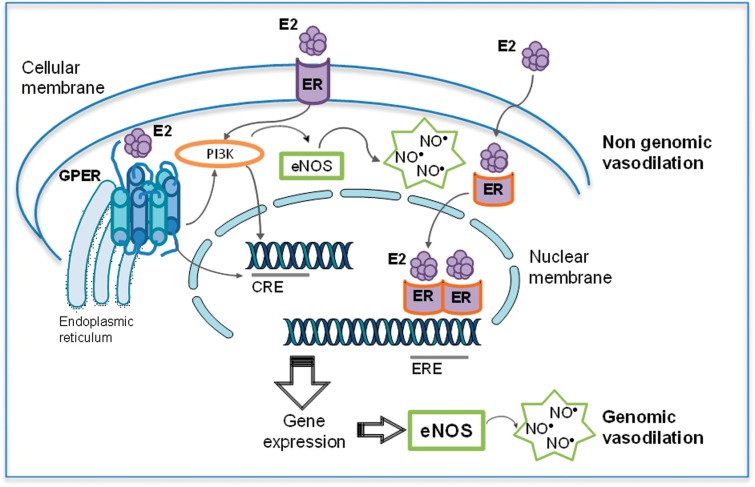
Aging is associated with structural and functional changes in the vasculature, including endothelial dysfunction, arterial stiffening and remodeling, impaired angiogenesis, and defective vascular repair, and with increased prevalence of atherosclerosis. Cardiovascular risk is similar for older men and women, but lower in women during their fertile years. This age- and sex-related difference points to estrogen as a protective factor because menopause is marked by the loss of endogenous estrogen production. Experimental and some clinical studies have attributed most of the protective effects of estrogen to its modulatory action on vascular endothelium. Estrogen promotes endothelial-derived NO production through increased expression and activity of endothelial nitric oxide synthase, and modulates prostacyclin and thromboxane A(2) release. The thromboxane A(2) pathway is key to regulating vascular tone in females. Despite all the experimental evidence, some clinical trials have reported no cardiovascular benefit from estrogen replacement therapy in older postmenopausal women. The "Timing Hypothesis," which states that estrogen-mediated vascular benefits occur only before the detrimental effects of aging are established in the vasculature, offers a possible explanation for these discrepancies. Nevertheless, a gap remains in current knowledge of cardiovascular aging mechanisms in women. This review comprises clinical and experimental data on the effects of aging, estrogens, and hormone replacement therapy on vascular function of females. We aim to clarify how menopause and aging contribute jointly to vascular aging and how estrogen modulates vascular response at different ages.
Keywords: endothelium; estradiol; menopause; nitric oxide; vascular protection.
Figures
References
-
- Arnal J. F., Clamens S., Pechet C., Negre-Salvayre A., Allera C., Girolami J. P., Salvayre R., Bayard F. (1996). Ethinylestradiol does not enhance the expression of nitric oxide synthase in bovine endothelial cells but increases the release of bioactive nitric oxide by inhibiting superoxide anion production. Proc. Natl. Acad. Sci. U.S.A. 93, 4108–4113 10.1073/pnas.93.9.4108 - DOI - PMC - PubMed
-
- Bairey Merz C. N., Shaw L. J., Reis S. E., Bittner V., Kelsey S. F., Olson M., Johnson B. D., Pepine C. J., Mankad S., Sharaf B. L., Rogers W. J., Pohost G. M., Lerman A., Quyyumi A. A., Sopko G. (2006). Insights from the NHLBI-sponsored women’s ischemia syndrome evaluation (WISE) study: part II: gender differences in presentation, diagnosis, and outcome with regard to gender-based pathophysiology of atherosclerosis and macrovascular and microvascular coronary disease. J. Am. Coll. Cardiol. 47, S21–S29 10.1016/j.jacc.2004.12.084 - DOI - PubMed
LinkOut - more resources
Full Text Sources
Miscellaneous
