


Therapeutic plasma exchange decreases levels of routinely used cardiac and inflammatory biomarkers
- PMID: 22685586
- PMCID: PMC3369845
- DOI: 10.1371/journal.pone.0038573
Therapeutic plasma exchange decreases levels of routinely used cardiac and inflammatory biomarkers
Abstract
Background: Therapeutic plasma exchange (TPE) plays a key role in the management of various diseases, from thrombotic thrombocytopenic purpura and Goodpasture's syndrome to cardiac allograft rejection. In many of these disease states cardiac and inflammatory involvement is common and biomarkers are routinely used for diagnosis or assessment of therapeutic success. The effect of TPE on biomarkers used in the clinical routine has not been investigated.
Methods: TPE was initiated for established clinical conditions in 21 patients. Troponin T, NT-proBNP, C-reactive protein, procalcitonin and routine chemistry were drawn before and after TPE, as well as before and after the 2(nd) TPE. The total amount of these markers in the waste bag was also analyzed.
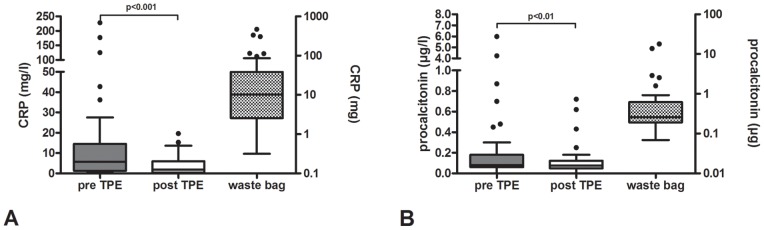
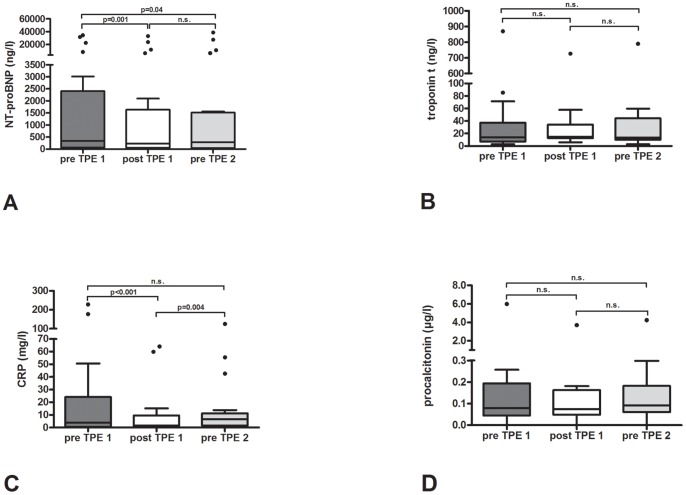
Results: In 21 patients 42 TPEs were performed. The procedure reduced plasma levels of the examined biomarkers: 23% for NT-proBNP (pre vs. post: 4637±10234 ng/l to 3565±8295 ng/l, p<0.001), 64% for CRP (21.9±47.0 mg/l vs. 7.8±15.8 mg/l, p<0.001) and 31% for procalcitonin (0.39±1.1 µg/l vs. 0.27±0.72 µg/l, p=0.004). TPE also tended to reduce plasma levels of troponin T by about 14% (60.7±175.5 ng/l vs. 52.2±141.3 ng/l), however this difference was not statistical significant (p=0.95). There was a significant correlation between the difference of pre TPE levels to post TPE levels of all examined biomarkers and the total amount of the removed biomarker in the collected removed plasma.
Conclusions: TPE significantly reduces plasma levels of inflammatory and cardiac biomarkers. Therefore, post TPE levels of cardiac and inflammatory biomarkers should be viewed with caution.
Conflict of interest statement
Figures

References
-
- Abel JL, Rowntree LG, Turner BB. Plasma removal with return of corpuscles (plasmaphaeresis). J Pharmacol Exp Ther. 1914;5:625–641. - PubMed
-
- Ward DM. Conventional apheresis therapies: a review. J Clin Apher. 2011;26:230–238. - PubMed
-
- Okafor C, Ward DM, Mokrzycki MH, Weinstein R, Clark P, et al. Introduction and overview of therapeutic apheresis. J Clin Apher. 2010;25:240–249. - PubMed
-
- Szczepiorkowski ZM, Winters JL, Bandarenko N, Kim HC, Linenberger ML, et al. Guidelines on the use of therapeutic apheresis in clinical practice – evidence-based approach from the Apheresis Applications Committee of the American Society for Apheresis. J Clin Apher. 2010;25:83–177. - PubMed
-
- Registry GE-H. The German 2011 epidemic of Shiga toxin-producing E. Coli – the nephrological view. Nephrol Dial Transplant. 2011;26:2723–2726. - PubMed
Publication types
MeSH terms
Substances
LinkOut - more resources
Full Text Sources
Medical
Research Materials
Miscellaneous
