


Chronic inflammation and pain in a tumor necrosis factor receptor (TNFR) (p55/p75-/-) dual deficient murine model
- PMID: 22687964
- PMCID: PMC3376023
- DOI: 10.1016/j.trsl.2011.10.003
Chronic inflammation and pain in a tumor necrosis factor receptor (TNFR) (p55/p75-/-) dual deficient murine model
Abstract
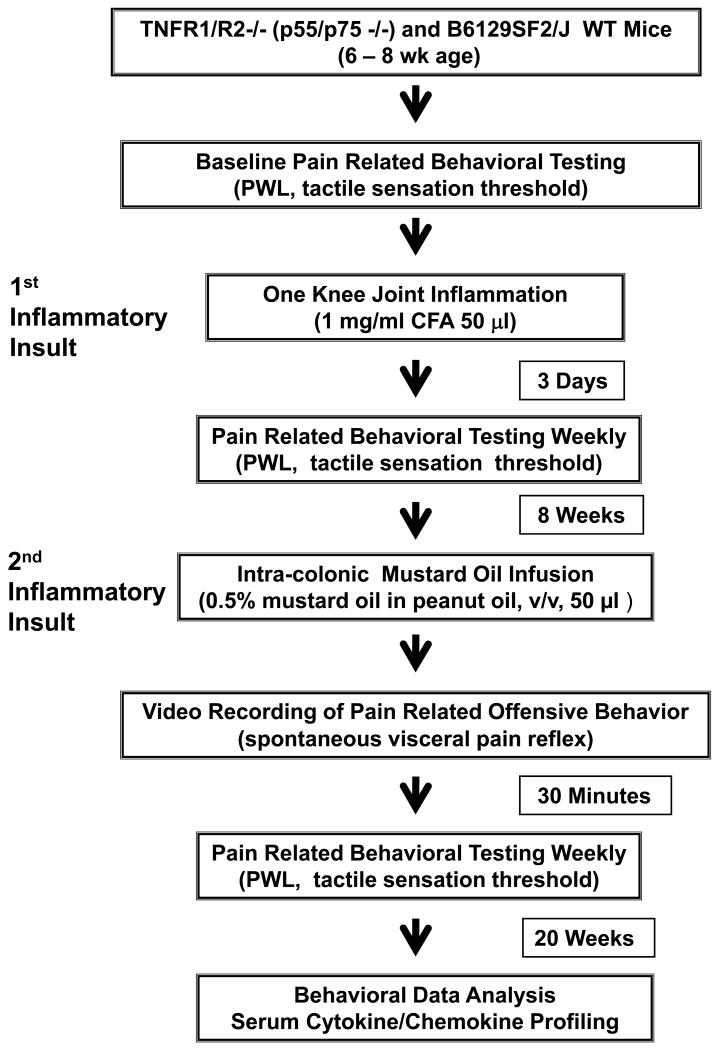
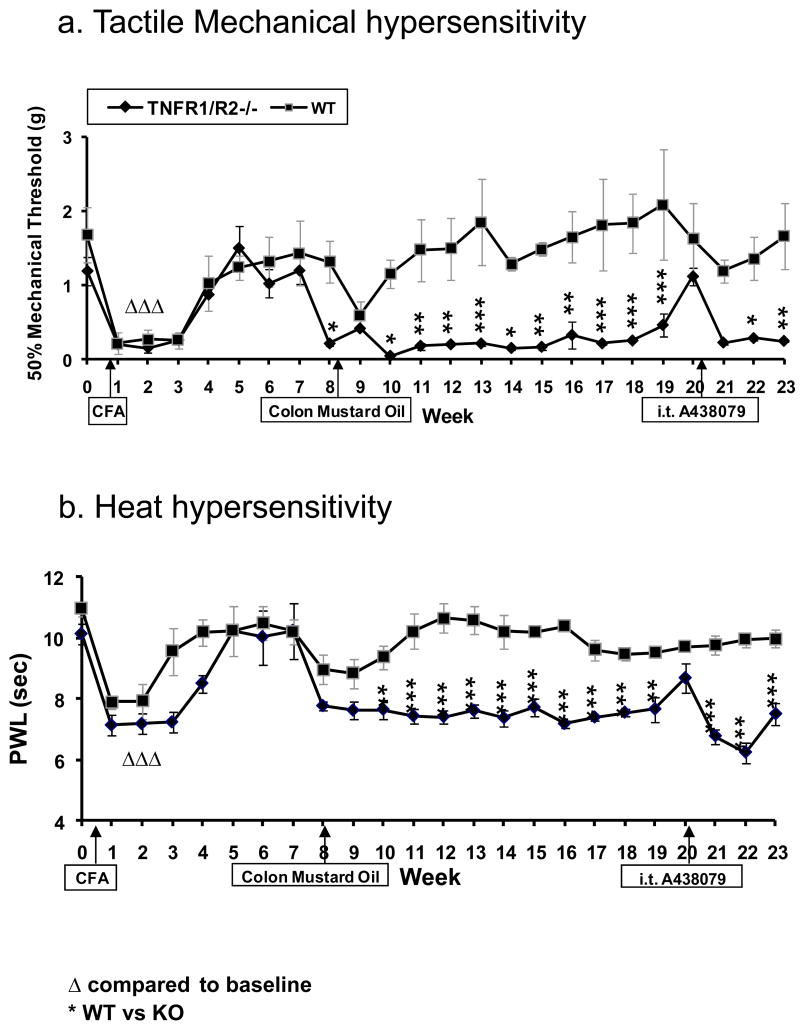
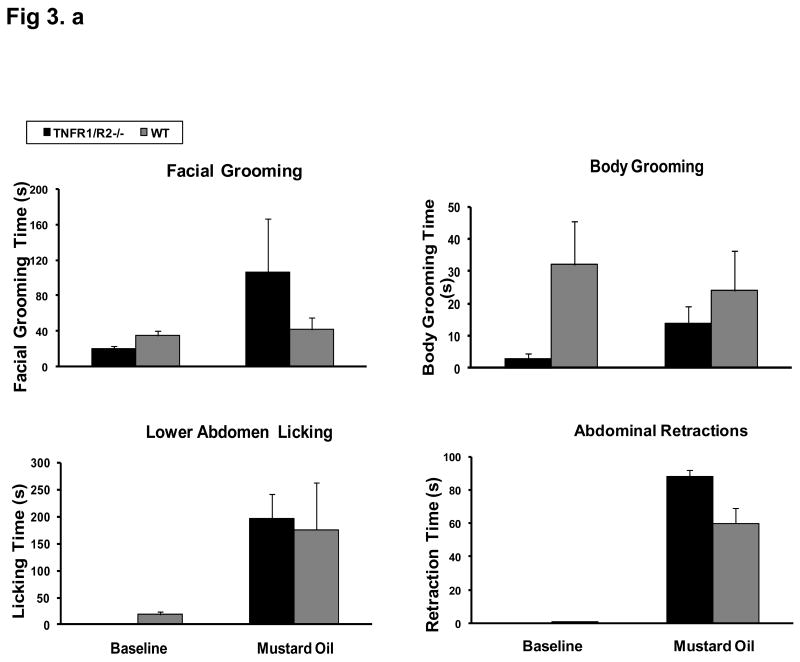
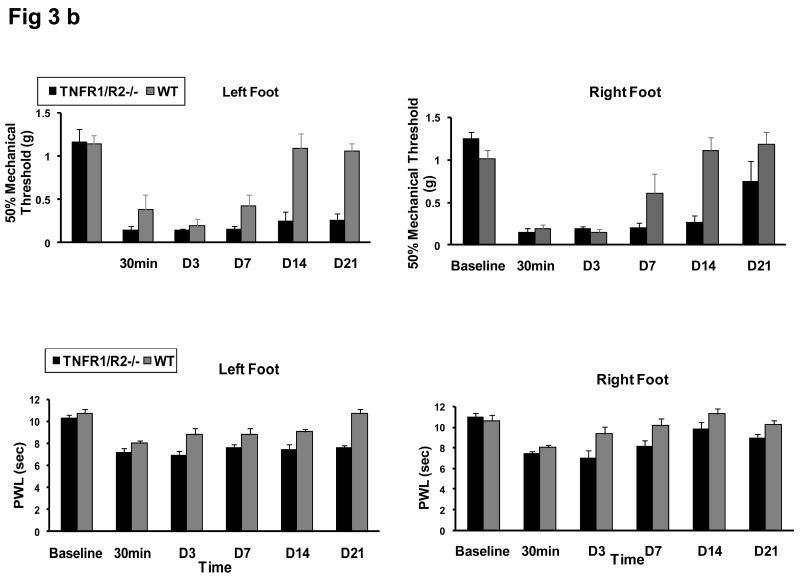
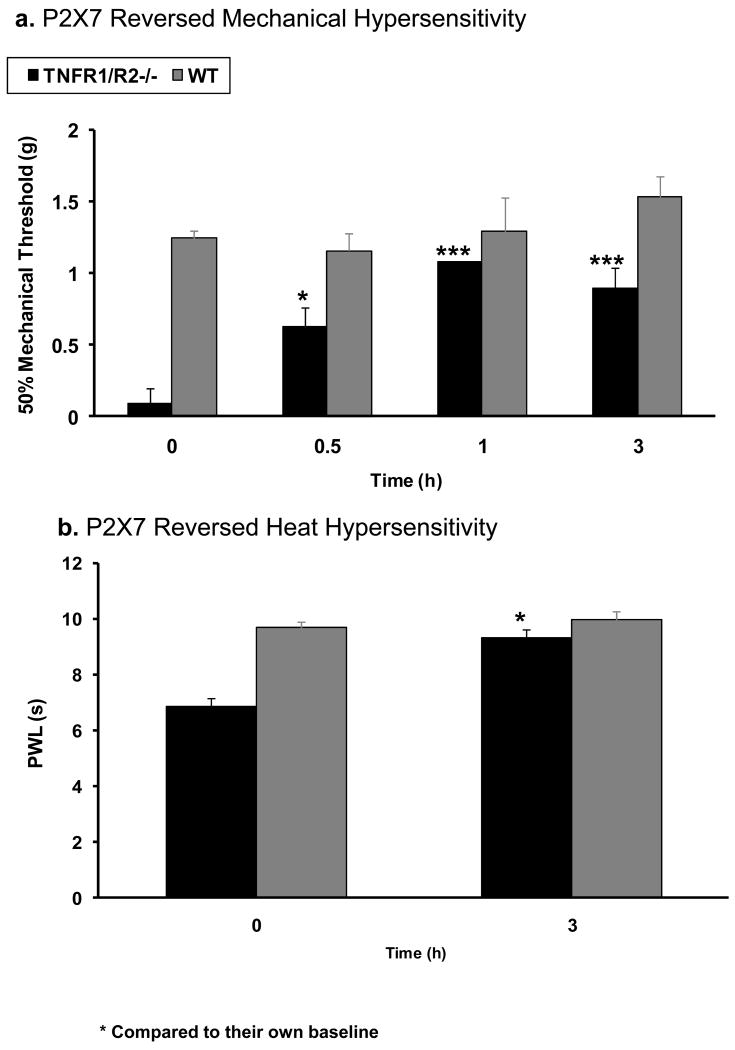
Many aspects of tissue damage after acute or chronic inflammatory reactions can be attributed directly to the concomitant biosynthesis and release of inducible early proinflammatory cytokine tumor necrosis factor alpha (TNFα). Conversely, systemic inflammation is impacted by the consequences of tissue damage. Dysregulated TNFα contributes to numerous pathophysiologic conditions including inflammatory bowel disease (IBD) and arthritis. Inflammatory stimuli trigger proteolytic cleavage and shedding of extracellular domains of TNFα receptors giving rise to 2 soluble fragments (p55 soluble tumor necrosis factor receptor 1 (sTNFR1) and p75 sTNFR2) that block the additional binding, activity, and synthesis of TNFα. We hypothesized that absence of sTNFR inhibitory feedback control would result in accumulated high levels of TNFα and other inflammatory factors promoting the cardinal signs of chronic inflammation and pain. The current study reports a translational murine model of chronic arthritis precipitated by 2 consecutive inflammatory insults. The "double hit" procedures provoke a chronic inflammatory response and pain-related behaviors in mice that are dually deficient in p55 (TNFR1) and p75 (TNFR2). The inflammation- and pain-related behaviors are transient in similarly treated wild-type (WT) mice. The complete Freund's adjuvant (CFA) method was used initially to induce knee joint inflammation, tactile mechanical and heat hypersensitivity, and gait disturbance. After these transient effects of the insult were resolved, a recrudescence persisting at least through 23 weeks was promoted by gastrointestinal (GI) insult with dilute intracolonic mustard oil (MO) only in the mutant mice and was reversed by a P2X7 antagonist. A serum proteome profiling analysis revealed high levels of serum inflammatory factors TNFα, regulated upon activation normally T-cell expressed and secreted (RANTES), chemokine (C-X-C motif) ligand 9 [CXCL9 (MIG)], chemokine (C-X-C motif) ligand 10 [CXCL10 (IP-10)], and chemokine (C-C motif) ligand 2 [CCL2 (MCP-1)]. These data suggest that impaired signaling of TNFα as a result of the deficit of the 2 protective soluble p55 and p75 sTNFR inhibitory factors plays a pivotal role in the reactivation of the immune response to GI insult that can produce recrudescence of inflammatory injury and a chronic pain state through promotion of high levels of serum inflammatory factors.
Copyright © 2012 Mosby, Inc. All rights reserved.
Conflict of interest statement
The authors confirm that no potential conflicts of interest exist. All authors have read the journal's policy on disclosure of potential conflicts of interest.
Figures
References
-
- Staite ND, Cutshaw LG, Dunn CJ. The effects of sensitization protocols on arthritic responses in antigen-induced arthritis. Agents Actions. 1989;27(3-4):338–340. - PubMed
-
- Kagari T, Doi H, Shimozato T. The importance of IL-1 beta and TNF-alpha, and the noninvolvement of IL-6, in the development of monoclonal antibody-induced arthritis. J Immunol. 2002;169:1459–66. - PubMed
Publication types
MeSH terms
Substances
Grants and funding
LinkOut - more resources
Full Text Sources
Medical
Research Materials
Miscellaneous
