


Fully integrated artificial pancreas in type 1 diabetes: modular closed-loop glucose control maintains near normoglycemia
- PMID: 22688340
- PMCID: PMC3425406
- DOI: 10.2337/db11-1445
Fully integrated artificial pancreas in type 1 diabetes: modular closed-loop glucose control maintains near normoglycemia
Abstract
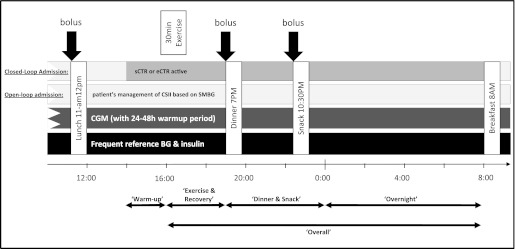
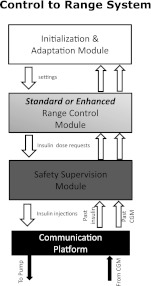
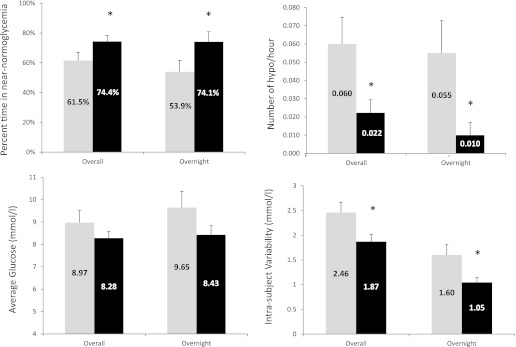
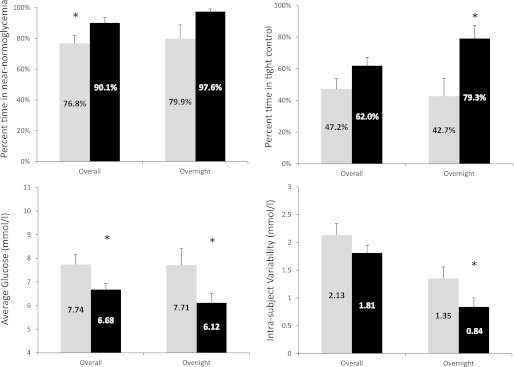
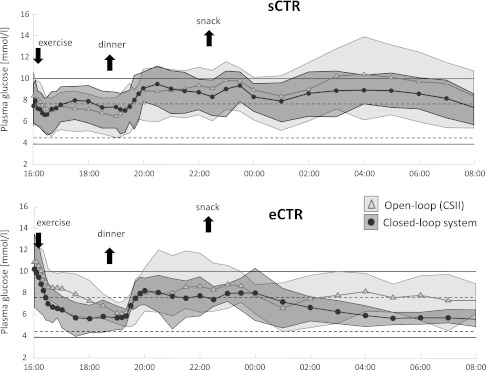
Integrated closed-loop control (CLC), combining continuous glucose monitoring (CGM) with insulin pump (continuous subcutaneous insulin infusion [CSII]), known as artificial pancreas, can help optimize glycemic control in diabetes. We present a fundamental modular concept for CLC design, illustrated by clinical studies involving 11 adolescents and 27 adults at the Universities of Virginia, Padova, and Montpellier. We tested two modular CLC constructs: standard control to range (sCTR), designed to augment pump plus CGM by preventing extreme glucose excursions; and enhanced control to range (eCTR), designed to truly optimize control within near normoglycemia of 3.9-10 mmol/L. The CLC system was fully integrated using automated data transfer CGM→algorithm→CSII. All studies used randomized crossover design comparing CSII versus CLC during identical 22-h hospitalizations including meals, overnight rest, and 30-min exercise. sCTR increased significantly the time in near normoglycemia from 61 to 74%, simultaneously reducing hypoglycemia 2.7-fold. eCTR improved mean blood glucose from 7.73 to 6.68 mmol/L without increasing hypoglycemia, achieved 97% in near normoglycemia and 77% in tight glycemic control, and reduced variability overnight. In conclusion, sCTR and eCTR represent sequential steps toward automated CLC, preventing extremes (sCTR) and further optimizing control (eCTR). This approach inspires compelling new concepts: modular assembly, sequential deployment, testing, and clinical acceptance of custom-built CLC systems tailored to individual patient needs.
Figures
Comment in
-
The artificial pancreas.Diabetes. 2012 Sep;61(9):2221-4. doi: 10.2337/db12-0647. Diabetes. 2012. PMID: 22923649 Free PMC article. No abstract available.
References
-
- The Diabetes Control and Complications Trial Research Group The effect of intensive treatment of diabetes on the development and progression of long-term complications in insulin-dependent diabetes mellitus. N Engl J Med 1993;329:977–986 - PubMed
-
- Polonsky KS, Given BD, Hirsch LJ, et al. Abnormal patterns of insulin secretion in non-insulin-dependent diabetes mellitus. N Engl J Med 1988;318:1231–1239 - PubMed
-
- Mastrototaro JJ. The MiniMed continuous glucose monitoring system. Diabetes Technol Ther 2000;2(Suppl. 1):S13–S18 - PubMed
-
- Bode BW. Clinical utility of the continuous glucose monitoring system. Diabetes Technol Ther 2000;2(Suppl. 1):S35–S41 - PubMed
-
- Feldman B, Brazg R, Schwartz S, Weinstein R. A continuous glucose sensor based on wired enzyme technology—results from a 3-day trial in patients with type 1 diabetes. Diabetes Technol Ther 2003;5:769–779 - PubMed
Publication types
MeSH terms
Substances
Grants and funding
LinkOut - more resources
Full Text Sources
Other Literature Sources
Medical
