Review
. 2012 Jun;76(2):115-58.
doi: 10.1128/MMBR.05018-11.

Biology of the heat shock response and protein chaperones: budding yeast (Saccharomyces cerevisiae) as a model system

Affiliations
Review

Biology of the heat shock response and protein chaperones: budding yeast (Saccharomyces cerevisiae) as a model system

Jacob Verghese et al. Microbiol Mol Biol Rev. 2012 Jun.

Abstract

The eukaryotic heat shock response is an ancient and highly conserved transcriptional program that results in the immediate synthesis of a battery of cytoprotective genes in the presence of thermal and other environmental stresses. Many of these genes encode molecular chaperones, powerful protein remodelers with the capacity to shield, fold, or unfold substrates in a context-dependent manner. The budding yeast Saccharomyces cerevisiae continues to be an invaluable model for driving the discovery of regulatory features of this fundamental stress response. In addition, budding yeast has been an outstanding model system to elucidate the cell biology of protein chaperones and their organization into functional networks. In this review, we evaluate our understanding of the multifaceted response to heat shock. In addition, the chaperone complement of the cytosol is compared to those of mitochondria and the endoplasmic reticulum, organelles with their own unique protein homeostasis milieus. Finally, we examine recent advances in the understanding of the roles of protein chaperones and the heat shock response in pathogenic fungi, which is being accelerated by the wealth of information gained for budding yeast.


Figures
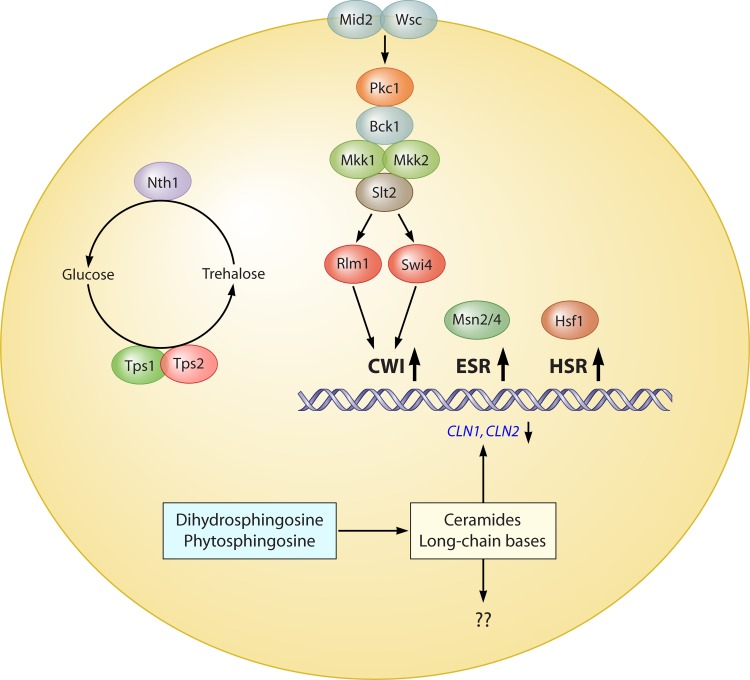
Fig 1
Fig 1
Physiological effects of heat shock. Immediate consequences of thermal stress are depicted as described in the text. Relevant proteins are depicted as colored balls. Three response pathways are shown to be induced by heat shock: the CWI (cell wall integrity) pathway, the ESR (environmental stress response), and the HSR (heat shock response). The physiological effects of ceramide and long-chain base synthesis and accumulation after heat shock are unknown.
Fig 2
Fig 2
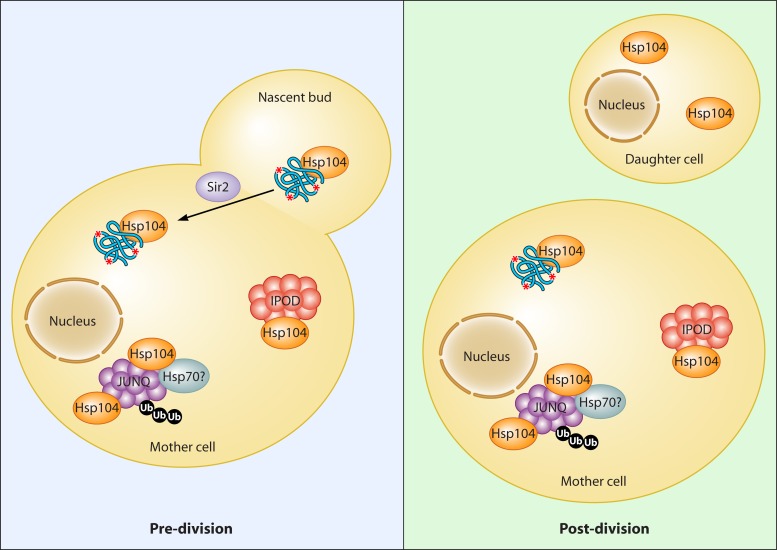
Asymmetric distribution of damaged proteins during growth. Budding (predivision) and budded (postdivision) cells are depicted, with the net retention of damaged proteins in the mother cell resulting from Sir2-dependent transport. The two recently described “compartments” of protein aggregation, JUNQ and IPOD, are shown with known or suspected associated chaperones. Ub, ubiquitin; red asterisk, carbonylation or other protein damage; blue squiggle, unfolded protein.
Fig 3
Fig 3
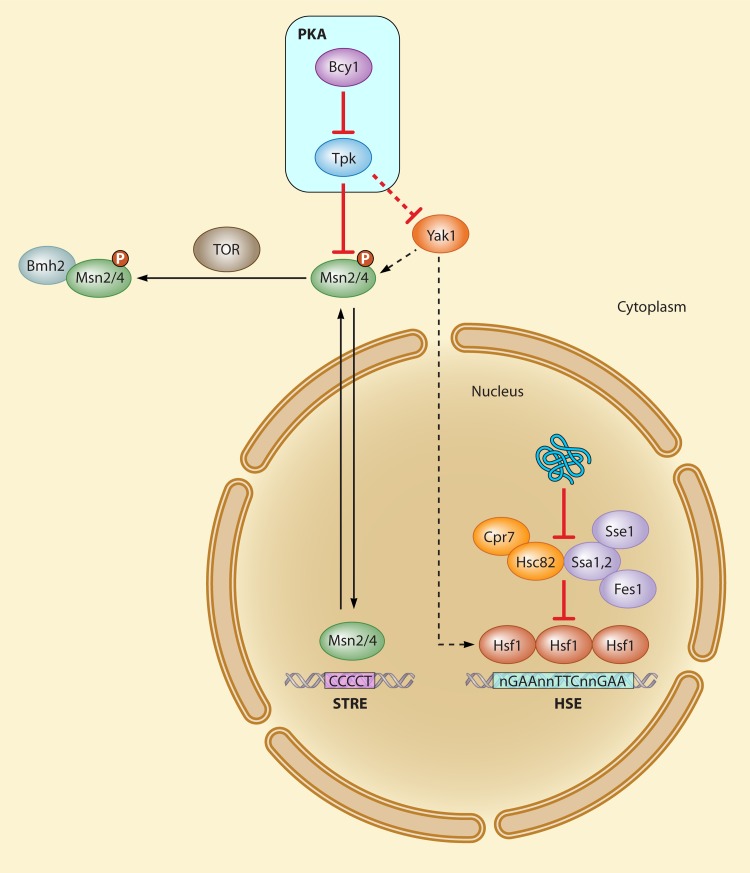
Hsf1 and Msn2/4, primary modulators of the heat shock response. Dashed lines represent postulated interactions of the Yak1 kinase in the regulation of both Msn2/4 and Hsf1. Red lines indicate regulatory interactions of protein kinase A. P, phosphorylation; STRE, stress response element; HSE, heat shock element.
Fig 4
Fig 4
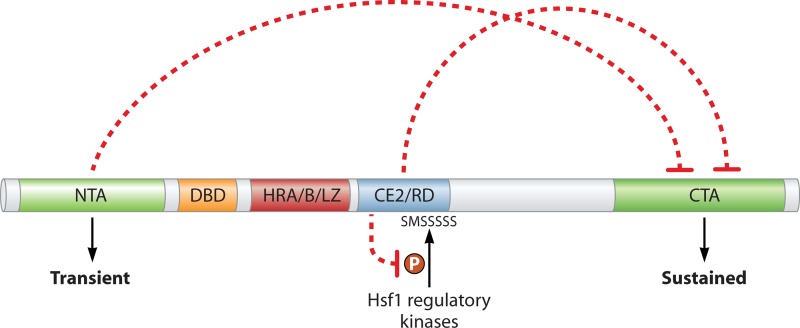
Architecture and regulation of yeast Hsf1. Relevant domains of the budding yeast transcription factor are indicated. Dashed lines represent regulatory relationships between the NTA (amino-terminal transactivation domain) and the CE2 (control element 2)/RD (regulatory domain) on the CTA (carboxy-terminal transactivation domain). The serine-rich region within the RD is phosphorylated by unknown kinases to promote the repression of the CTA through CE2. As described in the text, the NTA promotes a transient transcriptional response, whereas the CTA is responsible for sustained responses. DBD, DNA-binding domain; HRA/B/LZ, heptad repeats A and B, also called the leucine zipper; P, phosphorylation.
Fig 5
Fig 5
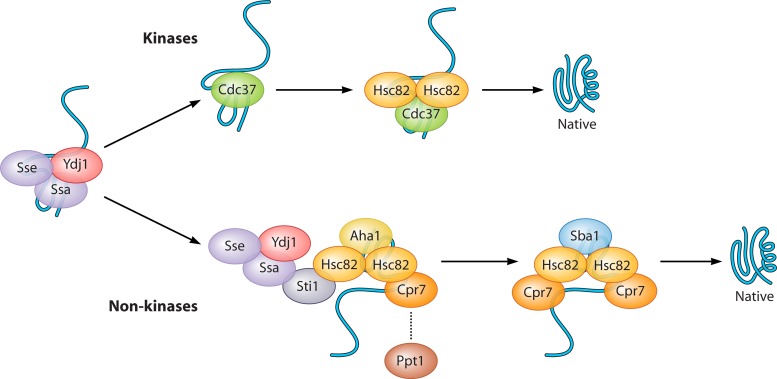
The Hsp90 folding cycle. Yeast proteins participating in the Hsp90 folding cycle are indicated. The complexes depicted are from known yeast protein interactions or inferred from in vitro reconstitution experiments with metazoan counterparts, as described in the text. Unfolded client proteins are indicated by the wavy blue line, and the native folded state is labeled. Kinase clients are thought to mature through a Cdc37-specific pathway (kinases), while nearly all other clients proceed through the multichaperone pathway (nonkinases). The cyclophilin homolog Cpr7 (also Cpr6 [see the text]) is a TPR domain-containing protein that competes for binding with other TPR cofactors, including the phosphatase Ppt1, shown by the dashed line.
Fig 6
Fig 6
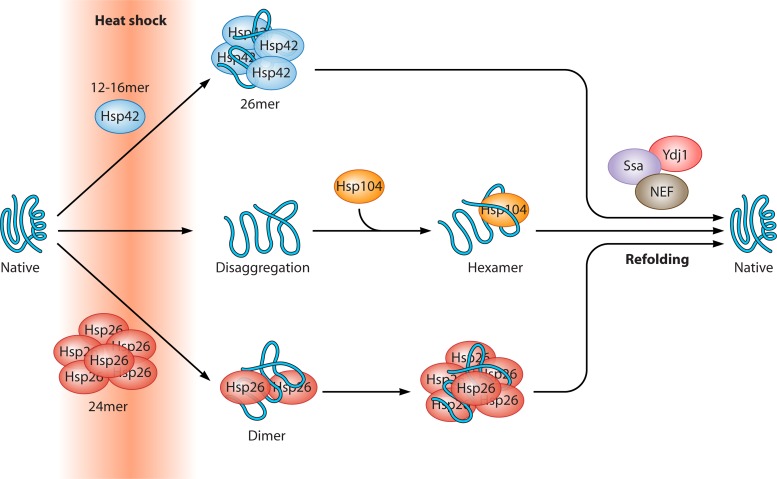
The cytosolic disaggregation and refolding machinery. The native protein is shown to be unfolded by heat shock (depicted as a salmon rectangle), which also causes changes in the sHsp oligomerization status. The constitutive Ssa Hsp70 chaperones partner with the J protein Ydj1 and at least one nucleotide exchange factor (NEF) to promote the refolding of disaggregated (Hsp104 pathway) or unfolded but protected (Hsp42 and Hsp26) proteins.
Fig 7
Fig 7
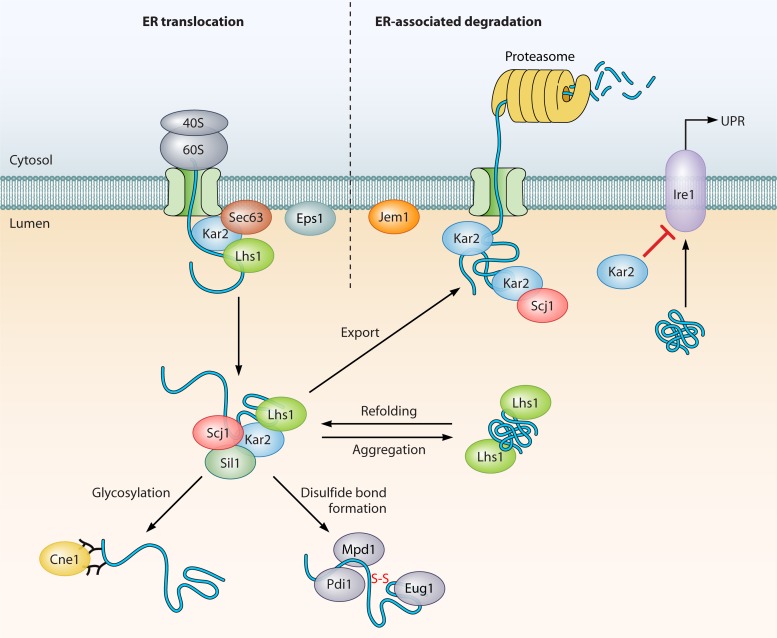
The ER chaperome. ER chaperones and associated cofactors are depicted, along with their respective roles in ER protein biogenesis. Gray 40S and 60S subunits depict docked ribosomes. S-S, disulfide bond; UPR, unfolded protein response.
Fig 8
Fig 8
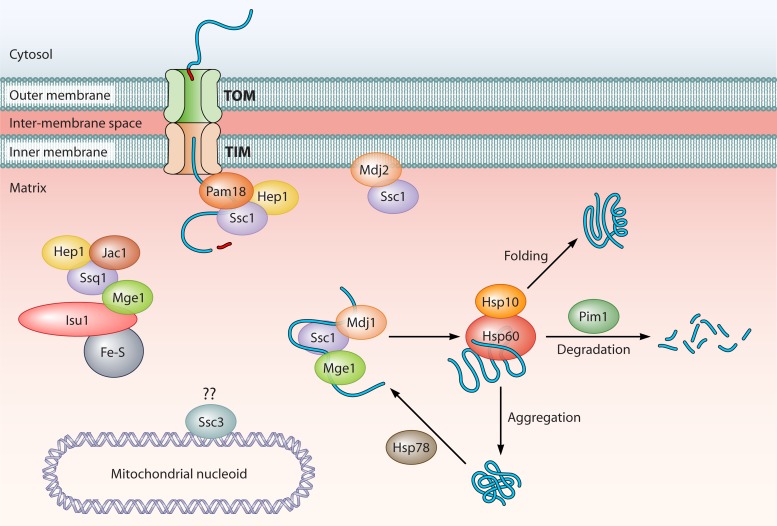
The mitochondrial chaperome. Chaperones and cofactors of the mitochondrion are shown. OM, outer membrane; IM, inner membrane; IMS, intermembrane space; TOM, transporter outer membrane complex; TIM, transporter inner membrane complex.
None
None
None
None

References

    1. Abbas-Terki T, Donze O, Briand PA, Picard D. 2001. Hsp104 interacts with Hsp90 cochaperones in respiring yeast. Mol. Cell. Biol. 21:7569–7575 - PMC - PubMed
    1. Abbas-Terki T, Donze O, Picard D. 2000. The molecular chaperone Cdc37 is required for Ste11 function and pheromone-induced cell cycle arrest. FEBS Lett. 467:111–116 - PubMed
    1. Aguilaniu H, Gustafsson L, Rigoulet M, Nystrom T. 2003. Asymmetric inheritance of oxidatively damaged proteins during cytokinesis. Science 299:1751–1753 - PubMed
    1. Ahn SG, Thiele DJ. 2003. Redox regulation of mammalian heat shock factor 1 is essential for Hsp gene activation and protection from stress. Genes Dev. 17:516–528 - PMC - PubMed
    1. Akerfelt M, Morimoto RI, Sistonen L. 2010. Heat shock factors: integrators of cell stress, development and lifespan. Nat. Rev. Mol. Cell Biol. 11:545–555 - PMC - PubMed

Publication types

MeSH terms

Substances

LinkOut - more resources