


Tolerance induction after organ transplantation, "delayed tolerance," via the mixed chimerism approach: planting flowers in a battle field
- PMID: 22690270
- PMCID: PMC3370927
- DOI: 10.4161/chim.20096
Tolerance induction after organ transplantation, "delayed tolerance," via the mixed chimerism approach: planting flowers in a battle field
Abstract
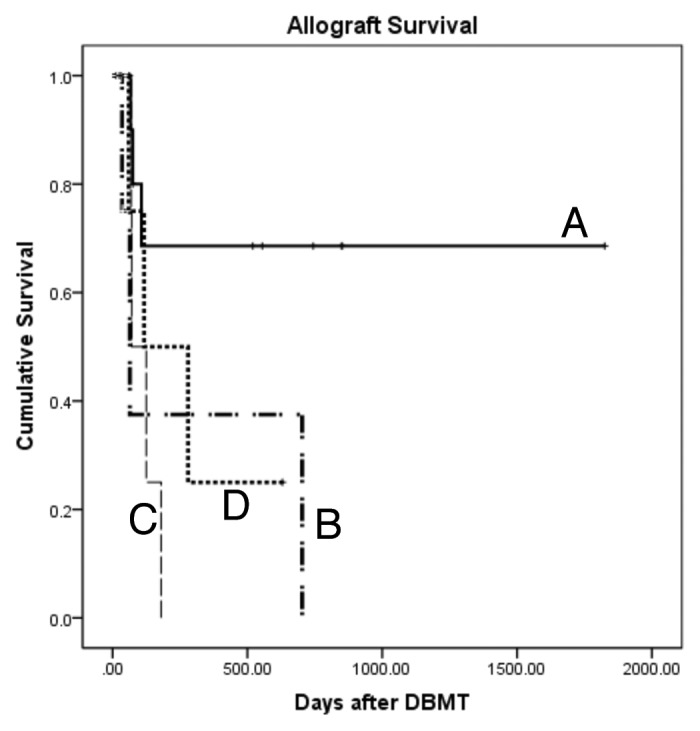
We have previously reported that peri-transplant conditioning leads to successful induction of renal allograft tolerance via the mixed chimerism approach in nonhuman primates (NHP) and humans. However, this strategy requires treatments beginning six days prior to transplantation, which limits its relevance only to living donor transplant recipients. To extend the clinical applicability of this approach, we developed a novel regimen “delayed tolerance,” with which the recipient initially undergoes organ transplantation with conventional immunosuppression, followed by conditioning and donor bone marrow transplantation (DBMT) at a later date. This approach might be likened to “planting flowers in a battle field.” That is, the recipient’s immunologic environment after organ transplantation is like a battlefield filled with hostile innate and adaptive immune-responses directed against donor antigeneic specificities. Implanting fragile donor hematopoietic progenitors into this environment and encouraging them to bloom in this vicious field requires special treatments.
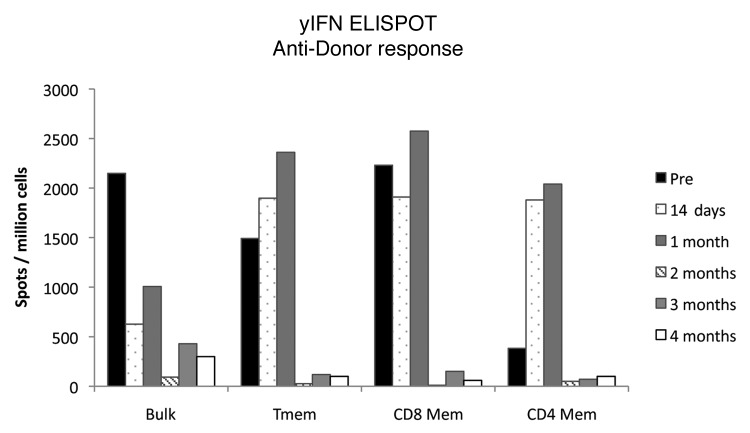
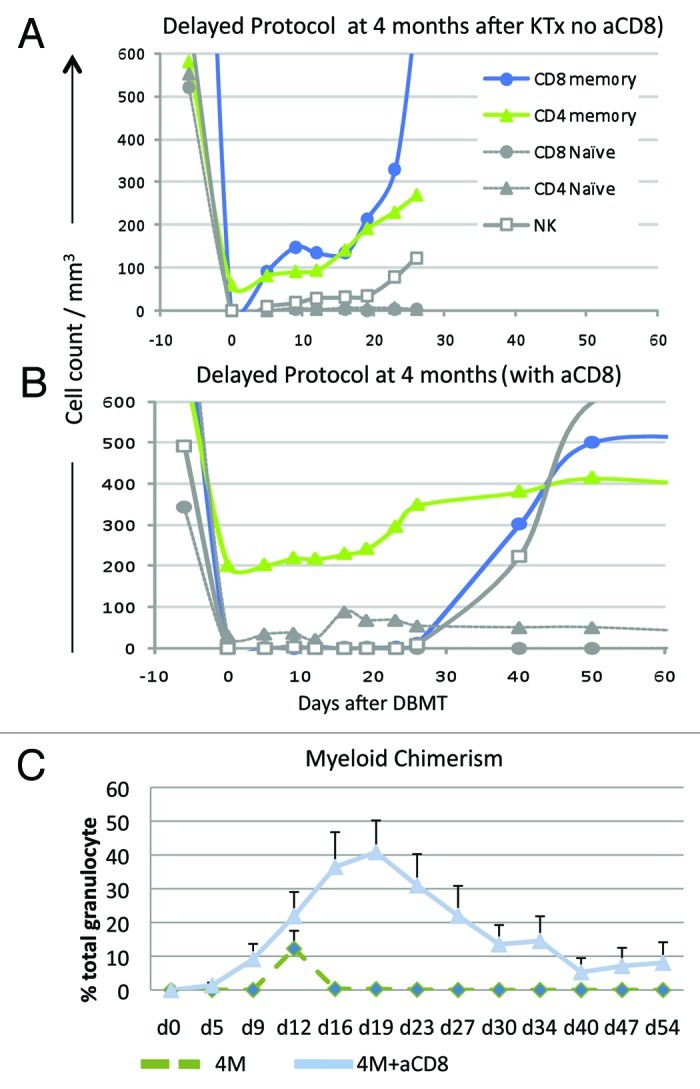
In our NHP studies recently published in The American Journal of Transplantation, we showed that such “delayed tolerance,” in fact, can be induced in NHP through the mixed chimerism approach, if specific modifications to overcome/avoid donor-specific memory T cell responses are provided. These modifications include adequate depletion of CD8 memory T cells and timing of donor bone marrow administration to minimize levels of pro-inflammatory cytokines. This article addendum will provide a short summary of the original paper with our additional insights and interpretations.
Keywords: bone marrow transplantation; chimerism; kidney transplantation; memory T cell; tolerance.
Figures
Comment on
-
Overcoming memory T-cell responses for induction of delayed tolerance in nonhuman primates.Am J Transplant. 2012 Feb;12(2):330-40. doi: 10.1111/j.1600-6143.2011.03795.x. Epub 2011 Nov 4. Am J Transplant. 2012. PMID: 22053723 Free PMC article.
References
-
- Tomita Y, Khan A, Sykes M. Role of intrathymic clonal deletion and peripheral anergy in transplantation tolerance induced by bone marrow transplantation in mice conditioned with a nonmyeloablative regimen. J Immunol. 1994;153:1087–98. - PubMed
-
- Kawai T, Cosimi AB, Colvin RB, Powelson J, Eason J, Kozlowski T, et al. Mixed allogeneic chimerism and renal allograft tolerance in cynomolgus monkeys. Transplantation. 1995;59:256–62. - PubMed
Publication types
Grants and funding
LinkOut - more resources
Full Text Sources
Other Literature Sources
Research Materials
