


Ubiquitous Hepatocystis infections, but no evidence of Plasmodium falciparum-like malaria parasites in wild greater spot-nosed monkeys (Cercopithecus nictitans)
- PMID: 22691606
- PMCID: PMC3751399
- DOI: 10.1016/j.ijpara.2012.05.004
Ubiquitous Hepatocystis infections, but no evidence of Plasmodium falciparum-like malaria parasites in wild greater spot-nosed monkeys (Cercopithecus nictitans)
Abstract
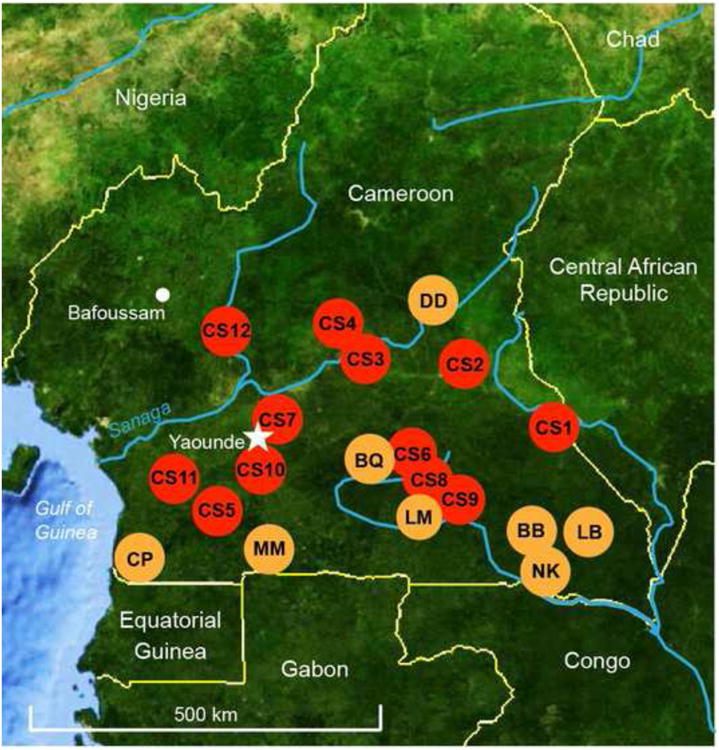
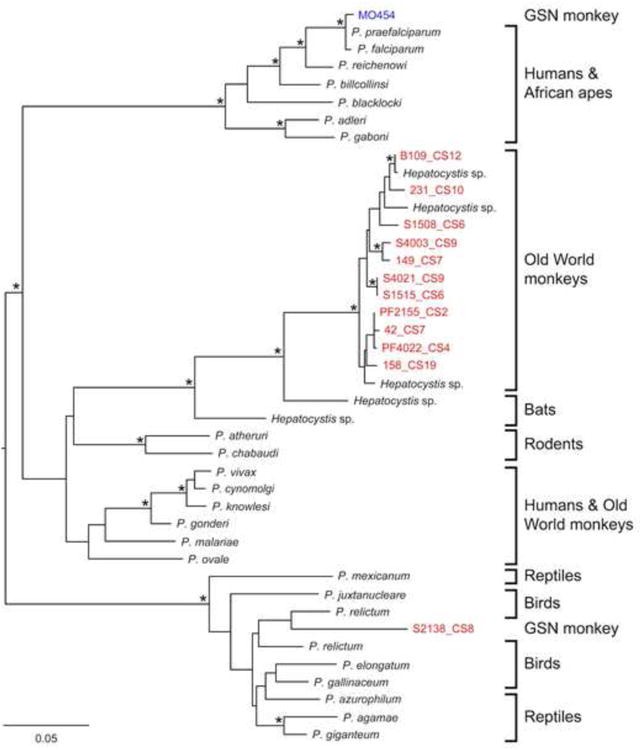
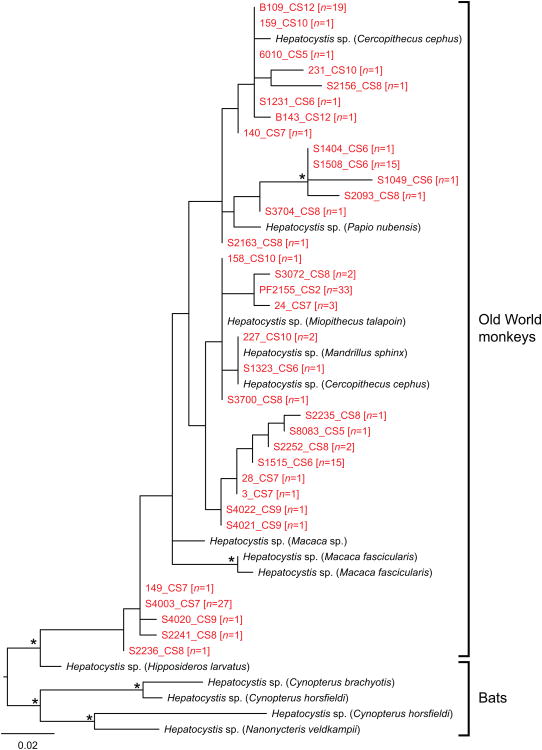
Western gorillas (Gorilla gorilla) have been identified as the natural reservoir of the parasites that were the immediate precursor of Plasmodium falciparum infecting humans. Recently, a P. falciparum-like sequence was reported in a sample from a captive greater spot-nosed monkey (Cercopithecus nictitans), and was taken to indicate that this species may also be a natural reservoir for P. falciparum-related parasites. To test this hypothesis we screened blood samples from 292 wild C. nictitans monkeys that had been hunted for bushmeat in Cameroon. We detected Hepatocystis spp. in 49% of the samples, as well as one sequence from a clade of Plasmodium spp. previously found in birds, lizards and bats. However, none of the 292 wild C. nictitans harbored P. falciparum-like parasites.
Copyright © 2012 Australian Society for Parasitology Inc. Published by Elsevier Ltd. All rights reserved.
Figures
References
-
- Duval L, Fourment M, Nerrienet E, Rousset D, Sadeuh SA, Goodman SM, Andriaholinirina NV, Randrianarivelojosia M, Paul RE, Robert V, Ayala FJ, Ariey F. African apes as reservoirs of Plasmodium falciparum and the origin and diversification of the Laverania subgenus. Proc Natl Acad Sci USA. 2010;107:10561–10566. - PMC - PubMed
-
- Greenwood BM, Bojang K, Whitty CJ, Targett GA. Malaria. Lancet. 2005;365:1487–1498. - PubMed
Publication types
MeSH terms
Grants and funding
LinkOut - more resources
Full Text Sources
Miscellaneous
