


Early hospital readmission is a predictor of one-year mortality in community-dwelling older Medicare beneficiaries
- PMID: 22692634
- PMCID: PMC3475824
- DOI: 10.1007/s11606-012-2116-3
Early hospital readmission is a predictor of one-year mortality in community-dwelling older Medicare beneficiaries
Abstract
Background: Hospital readmission within thirty days is common among Medicare beneficiaries, but the relationship between rehospitalization and subsequent mortality in older adults is not known.
Objective: To compare one-year mortality rates among community-dwelling elderly hospitalized Medicare beneficiaries who did and did not experience early hospital readmission (within 30 days), and to estimate the odds of one-year mortality associated with early hospital readmission and with other patient characteristics.
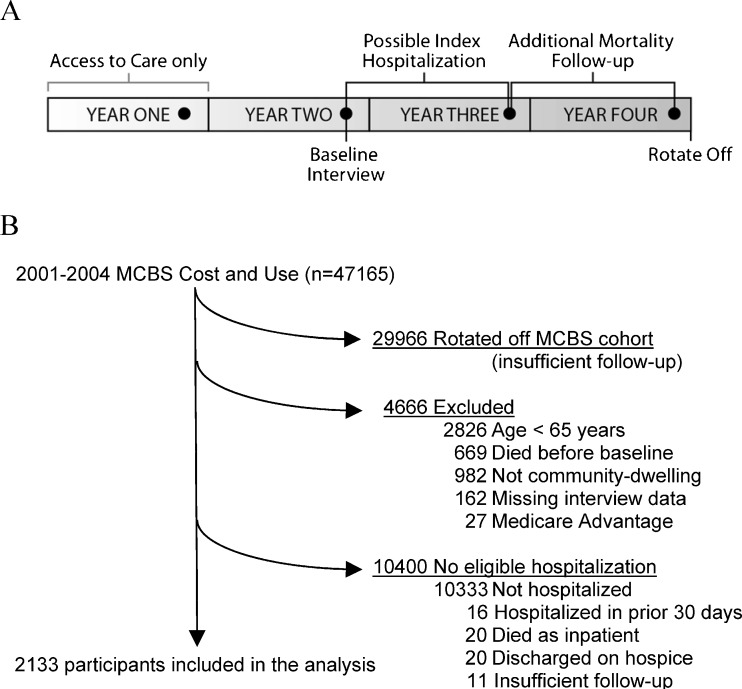
Design and participants: A cohort study of 2133 hospitalized community-dwelling Medicare beneficiaries older than 64 years, who participated in the nationally representative Cost and Use Medicare Current Beneficiary Survey between 2001 and 2004, with follow-up through 2006.
Main measure: One-year mortality after index hospitalization discharge.
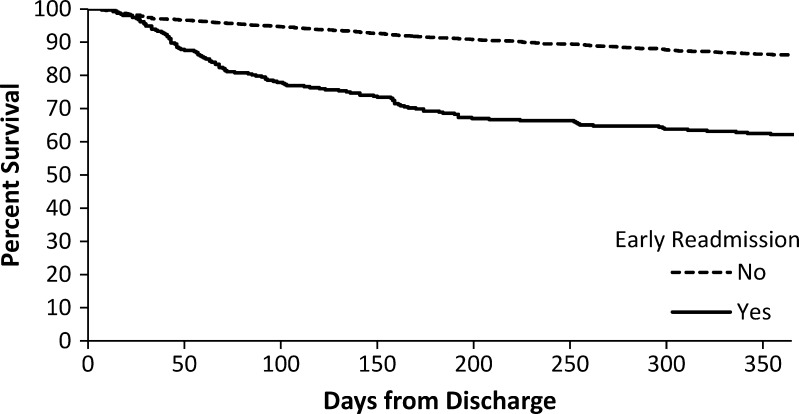
Key results: Three hundred and four (13.7 %) hospitalized beneficiaries had an early hospital readmission. Those with early readmission had higher one-year mortality (38.7 %) than patients who were not readmitted (12.1 %; p<0.001). Early readmission remained independently associated with mortality after adjustment for sociodemographic factors, health and functional status, medical comorbidity, and index hospitalization-related characteristics [HR (95 % CI) 2.97 (2.24-3.92)]. Other patient characteristics independently associated with mortality included age [1.03 (1.02-1.05) per year], low income [1.39 (1.04-1.86)], limited self-rated health [1.60 (1.20-2.14)], two or more recent hospitalizations [1.47 (1.01-2.15)], mobility difficulty [1.51 (1.03-2.20)], being underweight [1.62 (1.14-2.31)], and several comorbid conditions, including chronic lung disease, cancer, renal failure, and weight loss. Hospitalization-related factors independently associated with mortality included longer length of stay, discharge to a skilled nursing facility for post-acute care, and primary diagnoses of infections, cancer, acute myocardial infarction, and heart failure.
Conclusions: Among community-dwelling older adults, early hospital readmission is a marker for notably increased risk of one-year mortality. Providers, patients, and families all might respond profitably to an early readmission by reviewing treatment plans and goals of care.
Figures
References
Publication types
MeSH terms
Grants and funding
LinkOut - more resources
Full Text Sources
Medical
Molecular Biology Databases
