


A pragmatic approach using magnetic resonance imaging to treat ischemic strokes of unknown onset time in a thrombolytic trial
- PMID: 22693129
- PMCID: PMC3464959
- DOI: 10.1161/STROKEAHA.111.630947
A pragmatic approach using magnetic resonance imaging to treat ischemic strokes of unknown onset time in a thrombolytic trial
Abstract
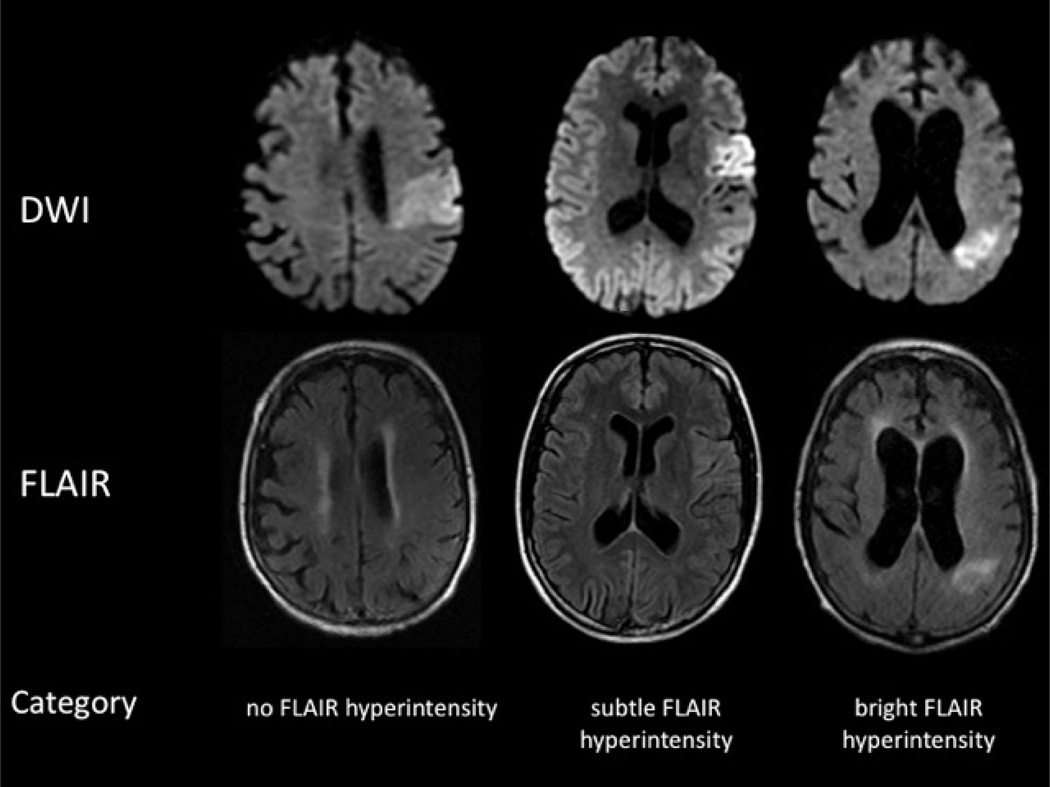
Background and purpose: Toward the goal of designing a clinical trial using imaging parameters to treat stroke patients with unknown onset time, we investigated the timing of changes on MRI in patients with well-defined stroke onset.
Methods: Hypothesis-generating (n=85) and confirmatory (n=111) samples were scored by blinded readers for fluid-attenuated inversion recovery (FLAIR) hyperintensity in diffusion-positive regions. Reader-measured signal intensity ratio (SIR) of the lesion to contralateral tissue was compared with SIR measured by coregistration.
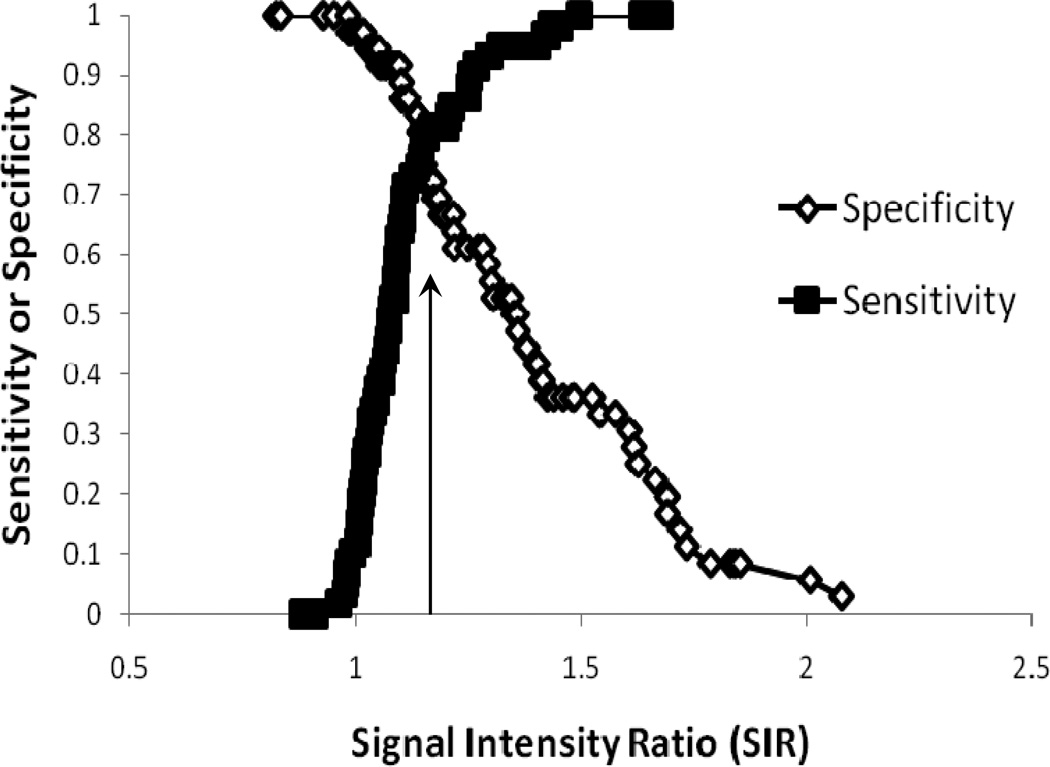
Results: Lesion conspicuity increased with time on FLAIR (P=0.006). Qualitative assessment of FLAIR-negative vs FLAIR hyperintensity (k=0.7091; 95% CI, 0.61-0.81) showed good interrater agreement. Subtle hyperintensity was less reliably categorized (k=0.59; 95% CI, 0.47-0.71). Reader-measured SIR <1.15 can identify patients within the treatable time window of 4.5 hours (positive predictive value=0.90). The SIR was greater for right hemisphere lesions (P=0.04) for a given reported time from stroke symptom onset.
Conclusions: The SIR on FLAIR provides a quantitative tool to identify early ischemic strokes. In developing SIR thresholds, right hemisphere lesions may confound the accurate estimate of stroke onset time. Image coregistration for thrombolytic trial enrollment is not necessary. A SIR <1.15 on FLAIR yields a practical estimate of stroke onset within 4.5 hours.
Figures
References
-
- Zivin JA. Acute stroke therapy with tissue plasminogen activator (tPA) since it was approved by the U.S. Food and Drug administration (FDA) Ann Neurol. 2009;66:6–10. - PubMed
-
- Allen NB, Myers D, Watanabe E, Dostal J, Sama D, Goldstein LB, et al. Utilization of intravenous tissue plasminogen activator for ischemic stroke: Are there sex differences? Cerebrovasc Dis. 2009;27:254–258. - PubMed
-
- Todo K, Moriwaki H, Saito K, Tanaka M, Oe H, Naritomi H. Early CT findings in unknown-onset and wake-up strokes. Cerebrovasc Dis. 2006;21:367–371. - PubMed
-
- Adams HP, Jr, Effron MB, Torner J, Davalos A, Frayne J, Teal P, et al. Emergency administration of abciximab for treatment of patients with acute ischemic stroke: Results of an international phase III trial: Abciximab in emergency treatment of stroke trial (AbESTT-II) Stroke. 2008;39:87–99. - PubMed
Publication types
MeSH terms
Grants and funding
LinkOut - more resources
Full Text Sources
Other Literature Sources
Medical
