


Dissociable influences of auditory object vs. spatial attention on visual system oscillatory activity
- PMID: 22693642
- PMCID: PMC3367912
- DOI: 10.1371/journal.pone.0038511
Dissociable influences of auditory object vs. spatial attention on visual system oscillatory activity
Abstract
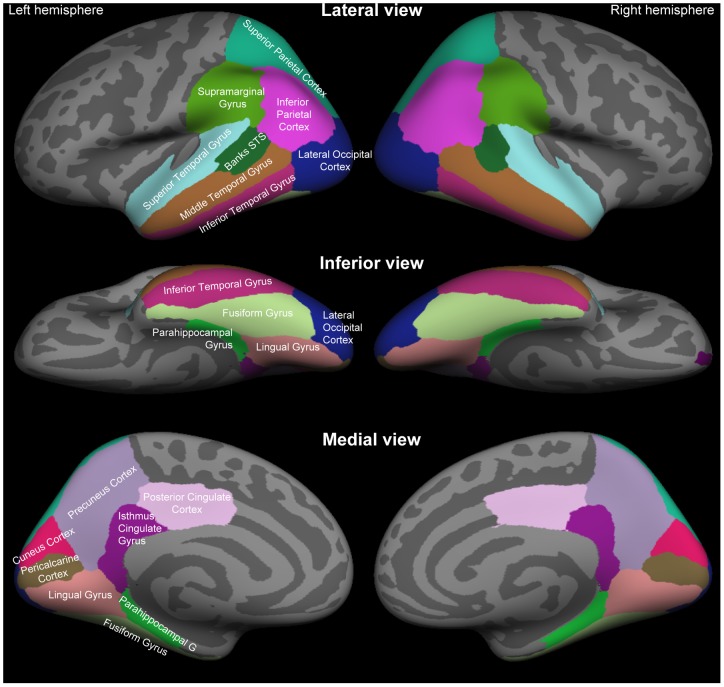
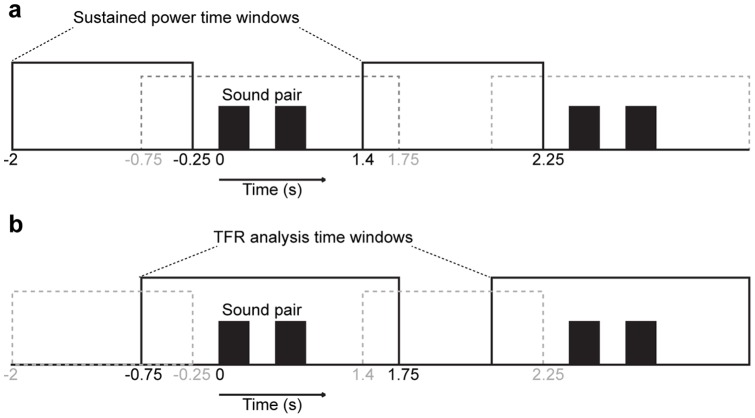
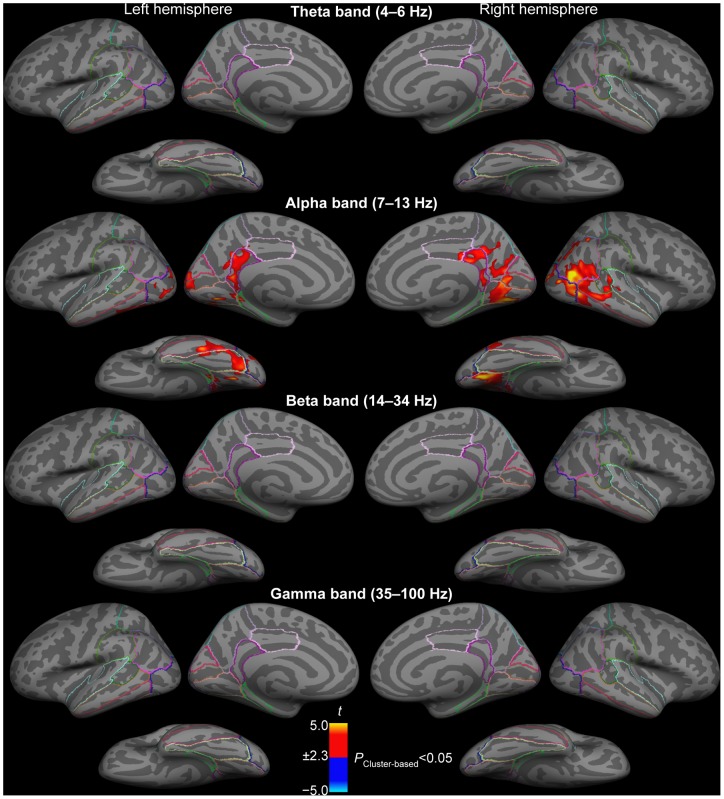
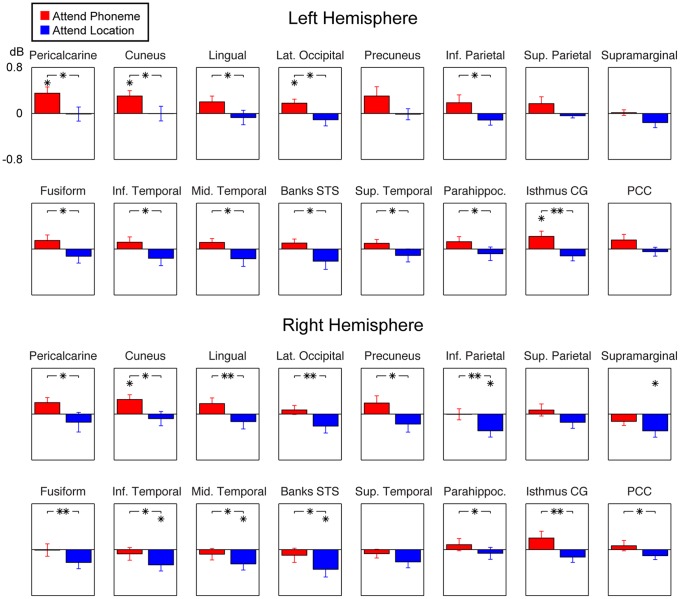
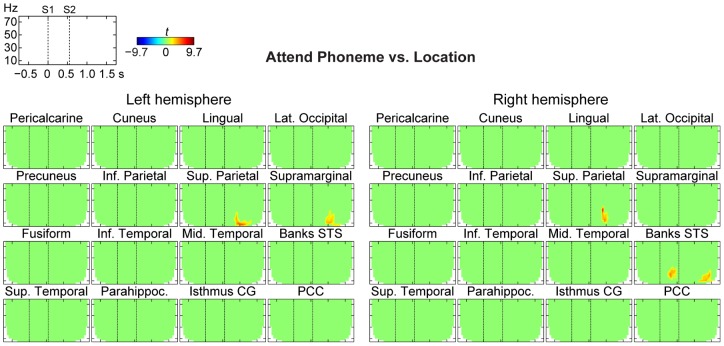
Given that both auditory and visual systems have anatomically separate object identification ("what") and spatial ("where") pathways, it is of interest whether attention-driven cross-sensory modulations occur separately within these feature domains. Here, we investigated how auditory "what" vs. "where" attention tasks modulate activity in visual pathways using cortically constrained source estimates of magnetoencephalograpic (MEG) oscillatory activity. In the absence of visual stimuli or tasks, subjects were presented with a sequence of auditory-stimulus pairs and instructed to selectively attend to phonetic ("what") vs. spatial ("where") aspects of these sounds, or to listen passively. To investigate sustained modulatory effects, oscillatory power was estimated from time periods between sound-pair presentations. In comparison to attention to sound locations, phonetic auditory attention was associated with stronger alpha (7-13 Hz) power in several visual areas (primary visual cortex; lingual, fusiform, and inferior temporal gyri, lateral occipital cortex), as well as in higher-order visual/multisensory areas including lateral/medial parietal and retrosplenial cortices. Region-of-interest (ROI) analyses of dynamic changes, from which the sustained effects had been removed, suggested further power increases during Attend Phoneme vs. Location centered at the alpha range 400-600 ms after the onset of second sound of each stimulus pair. These results suggest distinct modulations of visual system oscillatory activity during auditory attention to sound object identity ("what") vs. sound location ("where"). The alpha modulations could be interpreted to reflect enhanced crossmodal inhibition of feature-specific visual pathways and adjacent audiovisual association areas during "what" vs. "where" auditory attention.
Conflict of interest statement
Figures
References
-
- Ungerleider L, Mishkin M. Analysis of Visual Behavior. Cambridge, MA: MIT Press; 1982. Ingle D, Goodale M, Mansfield R, editors.
-
- Schroeder CE, Foxe J. Multisensory contributions to low-level, ‘unisensory’ processing. Curr Opin Neurobiol. 2005;15:454–458. - PubMed
Publication types
MeSH terms
Grants and funding
- S10 RR014798/RR/NCRR NIH HHS/United States
- R01 NS048279/NS/NINDS NIH HHS/United States
- R01NS057500/NS/NINDS NIH HHS/United States
- R01NS048279/NS/NINDS NIH HHS/United States
- R01 MH083744/MH/NIMH NIH HHS/United States
- P41RR14075/RR/NCRR NIH HHS/United States
- R01HD040712/HD/NICHD NIH HHS/United States
- R21DC010060/DC/NIDCD NIH HHS/United States
- S10RR023043/RR/NCRR NIH HHS/United States
- S10RR14798/RR/NCRR NIH HHS/United States
- 5R01EB009048/EB/NIBIB NIH HHS/United States
- R21 DC010060/DC/NIDCD NIH HHS/United States
- S10 RR019307/RR/NCRR NIH HHS/United States
- S10RR023401/RR/NCRR NIH HHS/United States
- P41 RR014075/RR/NCRR NIH HHS/United States
- R01 HD040712/HD/NICHD NIH HHS/United States
- R01 EB009048/EB/NIBIB NIH HHS/United States
- S10RR019307/RR/NCRR NIH HHS/United States
- R01 NS037462/NS/NINDS NIH HHS/United States
- R01NS037462/NS/NINDS NIH HHS/United States
- S10 RR023043/RR/NCRR NIH HHS/United States
- R01MH083744/MH/NIMH NIH HHS/United States
- R56 NS057500/NS/NINDS NIH HHS/United States
- R01 NS057500/NS/NINDS NIH HHS/United States
- S10 RR023401/RR/NCRR NIH HHS/United States
LinkOut - more resources
Full Text Sources
