Review
. 2012:359:59-78.
doi: 10.1007/82_2012_222.

Henipavirus receptor usage and tropism

Affiliations
Review

Henipavirus receptor usage and tropism

Olivier Pernet et al. Curr Top Microbiol Immunol. 2012.

Abstract

Nipah (NiV) and Hendra (HeV) viruses are the deadliest human pathogens within the Paramyxoviridae family, which include human and animal pathogens of global biomedical importance. NiV and HeV infections cause respiratory and encephalitic illness with high mortality rates in humans. Henipaviruses (HNV) are the only Paramyxoviruses classified as biosafety level 4 (BSL4) pathogens due to their extreme pathogenicity, potential for bioterrorism, and lack of licensed vaccines and therapeutics. HNV use ephrin-B2 and ephrin-B3, highly conserved proteins, as viral entry receptors. This likely accounts for their unusually broad species tropism, and also provides opportunities to study how receptor usage, cellular tropism, and end-organ pathology relates to the pathobiology of HNV infections. The clinical and pathologic manifestations of NiV and HeV virus infections are reviewed in the chapters by Wong et al. and Geisbert et al. in this issue. Here, we will review the biology of the HNV receptors, and how receptor usage relates to HNV cell tropism in vitro and in vivo.


Figures
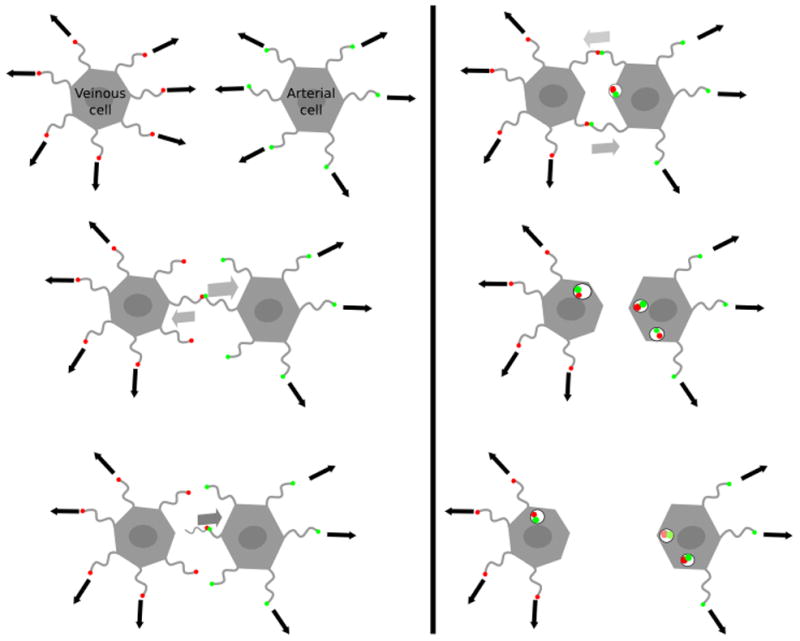
Figure 1
Figure 1. Schematic illustration of EphB4/phrin-B2-mediated cell-cell repulsion
Green dots represent ephrinB2. Red dots represent ephB4. Arrows indicate the direction of the filopodia extensions. Migrating cells move along the filopods they project. When ephrin-B2 on the surface of an arterial cell interacts with EphB4 on the surface of a venous cell, bi-directional signaling induces membrane ruffling and internalization of the EphB4-ephrin-B2 complex. Continued filopodia growth in opposite directions leads to the repulsion of these two cells. However, context dependent signaling can also lead to cell attraction and forward cell propulsion.
Figure 2
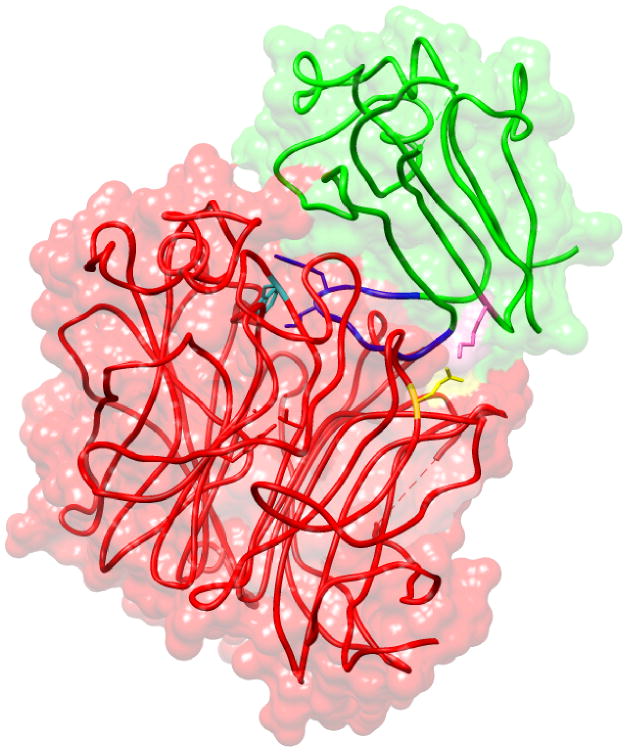
Figure 2. Interaction between NiV-G and ephrin-B2
Basic amino acid residue K60 (pink) of ephrin-B2 (green) forms a salt bridge with acidic amino acid E533 (yellow) of NiV-G (red), guiding the GH-Loop of ephrin-B2 (blue) into the hydrophobic canyon located at the top of NiV- G globular head. Amino acid W504 (cyan) of NiV-G, located in the hydrophobic canyon, is important for differential binding to ephrinB2 versus ephrinB3. Based on PDB ID:2VSM

References

    1. Adams RH, Wilkinson GA, Weiss C, Diella F, Gale NW, et al. Roles of ephrinb ligands and ephb receptors in cardiovascular development: demarcation of arterial/venous domains, vascular morphogenesis, and sprouting angiogenesis. Genes Dev. 1999;13:295–306. - PMC - PubMed
    1. Aguilar HC, Lee B. Emerging paramyxoviruses: molecular mechanisms and antiviral strategies. Expert Rev Mol Med. 2011;13:e6. - PMC - PubMed
    1. Bennett BD, Zeigler FC, Gu Q, Fendly B, Goddard AD, et al. Molecular cloning of a ligand for the eph-related receptor protein-tyrosine kinase htk. Proc Natl Acad Sci USA. 1995;92:1866–1870. - PMC - PubMed
    1. Benson MD, Romero MI, Lush ME, Lu QR, Henkemeyer M, et al. Ephrin-b3 is a myelin-based inhibitor of neurite outgrowth. Proc Natl Acad Sci USA. 2005;102:10694–10699. - PMC - PubMed
    1. Bergemann AD, Cheng HJ, Brambilla R, Klein R, Flanagan JG. Elf-2, a new member of the eph ligand family, is segmentally expressed in mouse embryos in the region of the hindbrain and newly forming somites. Mol Cell Biol. 1995;15:4921–4929. - PMC - PubMed

MeSH terms

LinkOut - more resources