


Interactive effects of neonatal exposure to monosodium glutamate and aspartame on glucose homeostasis
- PMID: 22697049
- PMCID: PMC3466134
- DOI: 10.1186/1743-7075-9-58
Interactive effects of neonatal exposure to monosodium glutamate and aspartame on glucose homeostasis
Abstract
Background: Recent evidence suggests that the effects of certain food additives may be synergistic or additive. Aspartame (ASP) and Monosodium Glutamate (MSG) are ubiquitous food additives with a common moiety: both contain acidic amino acids which can act as neurotransmitters, interacting with NMDA receptors concentrated in areas of the Central Nervous System regulating energy expenditure and conservation. MSG has been shown to promote a neuroendocrine dysfunction when large quantities are administered to mammals during the neonatal period. ASP is a low-calorie dipeptide sweetener found in a wide variety of diet beverages and foods. However, recent reports suggest that ASP may promote weight gain and hyperglycemia in a zebrafish nutritional model.
Methods: We investigated the effects of ASP, MSG or a combination of both on glucose and insulin homeostasis, weight change and adiposity, in C57BL/6 J mice chronically exposed to these food additives commencing in-utero, compared to an additive-free diet. Pearson correlation analysis was used to investigate the associations between body characteristics and variables in glucose and insulin homeostasis.
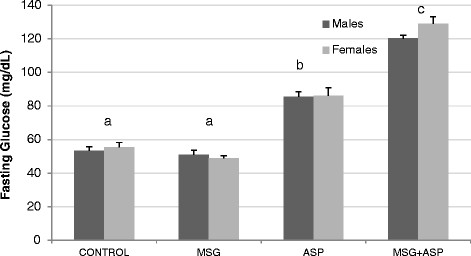
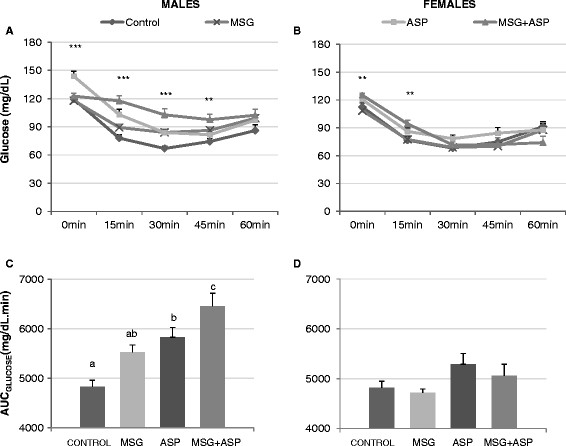
Results: ASP alone (50 mg/Kgbw/day) caused an increase in fasting blood glucose of 1.6-fold, together with reduced insulin sensitivity during an Insulin Tolerance Test (ITT) P < 0.05. Conversely MSG alone decreased blood triglyceride and total cholesterol (T-CHOL) levels. The combination of MSG (120 mg/Kgbw/day) and ASP elevated body weight, and caused a further increase in fasting blood glucose of 2.3-fold compared to Controls (prediabetic levels); together with evidence of insulin resistance during the ITT (P < 0.05). T-CHOL levels were reduced in both ASP-containing diets in both genders. Further analysis showed a strong correlation between body weight at 6 weeks, and body weight and fasting blood glucose levels at 17 weeks, suggesting that early body weight may be a predictor of glucose homeostasis in later life.
Conclusions: Aspartame exposure may promote hyperglycemia and insulin intolerance. MSG may interact with aspartame to further impair glucose homeostasis. This is the first study to ascertain the hyperglycemic effects of chronic exposure to a combination of these commonly consumed food additives; however these observations are limited to a C57BL/6 J mouse model. Caution should be applied in extrapolating these findings to other species.
Figures
References
-
- Christian B, McConnaughey K, Bethea E, Brantley S, Coffey A, Hammond L, Harrell S, Metcalf K, Muelenbein D, Spruill W, Brinson L, McConnaughey M. Chronic aspartame affects T-maze performance, brain cholinergic receptors and Na+, K + −ATPase in rats. Pharmacol Biochem Behav. 2004;78(1):121–127. doi: 10.1016/j.pbb.2004.02.017. - DOI - PubMed
-
- Iguchi A, Gotoh M, Matsunaga H, Yatomi A, Honmura A, Yanase M, Sakamoto N. Mechanism of central hyperglycemic effect of cholinergic agonists in fasted rats. Am J Physiol. 1986;254, 251(4 Pt 1):E431–E437. - PubMed
LinkOut - more resources
Full Text Sources
Medical
