


Structure of major depressive disorder in adolescents and adults in the US general population
- PMID: 22700082
- PMCID: PMC3409428
- DOI: 10.1192/bjp.bp.111.098079
Structure of major depressive disorder in adolescents and adults in the US general population
Abstract
Background: Although techniques such as latent class analysis have been used to derive empirically based subtypes of depression in adult samples, there is limited information on subtypes of depression in youth.
Aims: To identify empirically based subtypes of depression in a nationally representative sample of US adolescents, and to test the comparability of subtypes of depression in adolescents with those derived from a nationally representative sample of adults.
Method: Respondents included 912 adolescents and 805 adults with a 12-month major depressive disorder, selected from the National Comorbidity Survey Adolescent Supplement and the National Comorbidity Survey Replication samples respectively. Latent class analysis was used to identify subtypes of depression across samples. Sociodemographic and clinical correlates of derived subtypes were also examined to establish their validity.
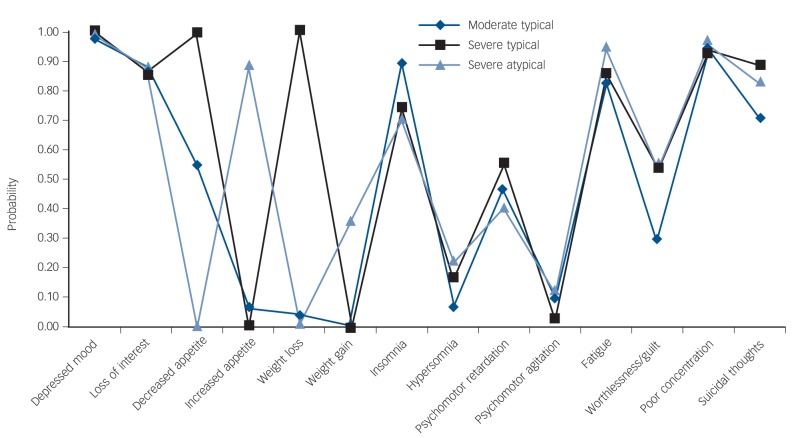
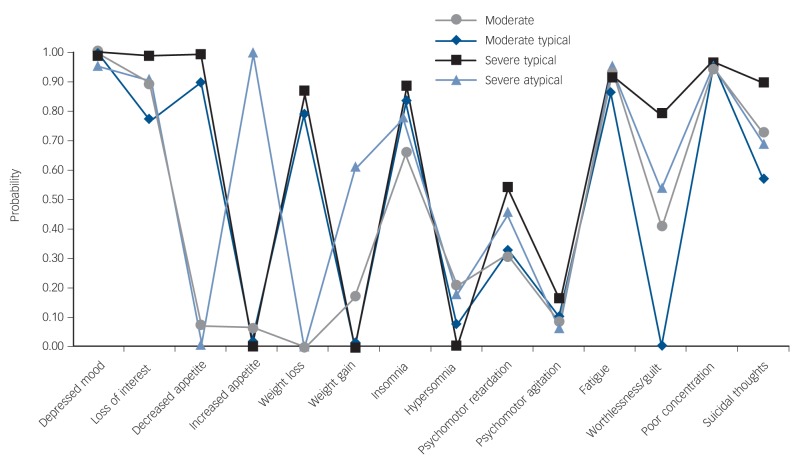
Results: Three subtypes of depression were identified among adolescents, whereas four subtypes were identified among adults. Two of these subtypes displayed similar diagnostic profiles across adolescent and adult samples (P = 0.43); these subtypes were labelled 'severe typical' (adults 45%, adolescents 35%) and 'atypical' (adults 16%, adolescents 26%). The latter subtype was characterised by increased appetite and weight gain.
Conclusions: The structure of depression observed in adolescents is highly similar to the structure observed in adults. Longitudinal research is necessary to evaluate the stability of these subtypes of depression across development.
Conflict of interest statement
None.
Figures
References
-
- Cohen P, Cohen J, Kasen S, Velez CN, Hartmark C, Johnson J, et al. An epidemiological study of disorders in late childhood and adolescence – I. Age- and gender-specific prevalence. J Child Psychol Psychiatry 1993; 34: 851–67 - PubMed
-
- Cole DA, Tram JM, Martin JM, Hoffman KB, Ruiz MD, Jacquez FM, et al. Individual differences in the emergence of depressive symptoms in children and adolescents: a longitudinal investigation of parent and child reports. J Abnorm Psychol 2002; 111: 156–65 - PubMed
-
- Feehan M, McGee R, Raja SN, Williams SM. DSM-III-R disorders in New Zealand 18-year-olds. Aust N Z J Psychiatry 1994; 28: 87–99 - PubMed
-
- Kovacs M, Feinberg TL, Crouse-Novak M, Paulauskas SL, Pollock M, Finkelstein R. Depressive disorders in childhood. II. A longitudinal study of the risk for a subsequent major depression. Arch Gen Psychiatry 1984; 41: 643–9 - PubMed
-
- Simonoff E, Pickles A, Meyer JM, Silberg JL, Maes HH, Loeber R, et al. The Virginia Twin Study of Adolescent Behavioral Development. Influences of age, sex, and impairment on rates of disorder. Arch Gen Psychiatry 1997; 54: 801–8 - PubMed
Publication types
MeSH terms
Grants and funding
LinkOut - more resources
Full Text Sources
Other Literature Sources
