


Nosocomial diarrhea: evaluation and treatment of causes other than Clostridium difficile
- PMID: 22700831
- PMCID: PMC3657522
- DOI: 10.1093/cid/cis551
Nosocomial diarrhea: evaluation and treatment of causes other than Clostridium difficile
Abstract
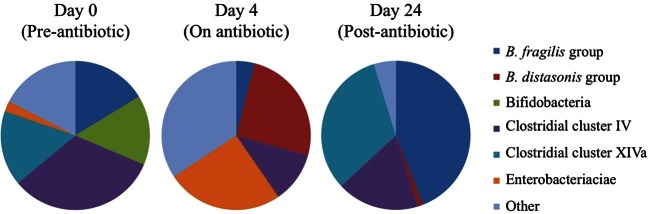
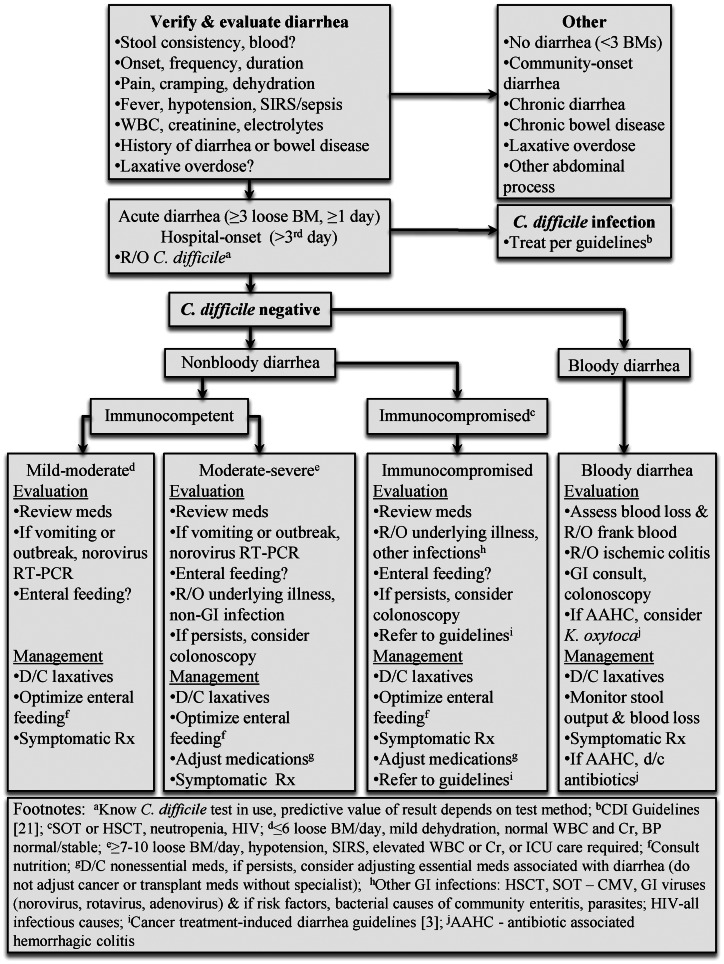
Diarrhea is common among hospitalized patients but the causes are distinct from those of diarrhea in the community. We review existing data about the epidemiology of nosocomial diarrhea and summarize recent progress in understanding the mechanisms of diarrhea. Clinicians should recognize that most cases of nosocomial diarrhea have a noninfectious etiology, including medications, underlying illness, and enteral feeding. Apart from Clostridium difficile, the frequency of infectious causes such as norovirus and toxigenic strains of Clostridium perfringens, Klebsiella oxytoca, Staphylococcus aureus, and Bacteroides fragilis remains largely undefined and test availability is limited. Here we provide a practical approach to the evaluation and management of nosocomial diarrhea when tests for C. difficile are negative.
Figures
References
-
- Bunnapradist S, Neri L, Wong W, et al. Incidence and risk factors for diarrhea following kidney transplantation and association with graft loss and mortality. Am J Kidney Dis. 2008;51:478–86. - PubMed
-
- Lima NL, Guerrant RL, Kaiser DL, Germanson T, Farr BM. A retrospective cohort study of nosocomial diarrhea as a risk factor for nosocomial infection. J Infect Dis. 1990;161:948–52. - PubMed
-
- Roddie C, Paul JP, Benjamin R, et al. Allogeneic hematopoietic stem cell transplantation and norovirus gastroenteritis: a previously unrecognized cause of morbidity. Clin Infect Dis. 2009;49:1061–8. - PubMed
-
- Kelly TW, Patrick MR, Hillman KM. Study of diarrhea in critically ill patients. Crit Care Med. 1983;11:7–9. - PubMed
Publication types
MeSH terms
Grants and funding
LinkOut - more resources
Full Text Sources
Medical
