


WNT1-inducible signaling pathway protein 1 contributes to ventilator-induced lung injury
- PMID: 22700866
- PMCID: PMC3488625
- DOI: 10.1165/rcmb.2012-0127OC
WNT1-inducible signaling pathway protein 1 contributes to ventilator-induced lung injury
Abstract
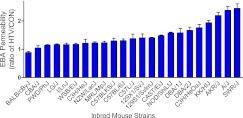
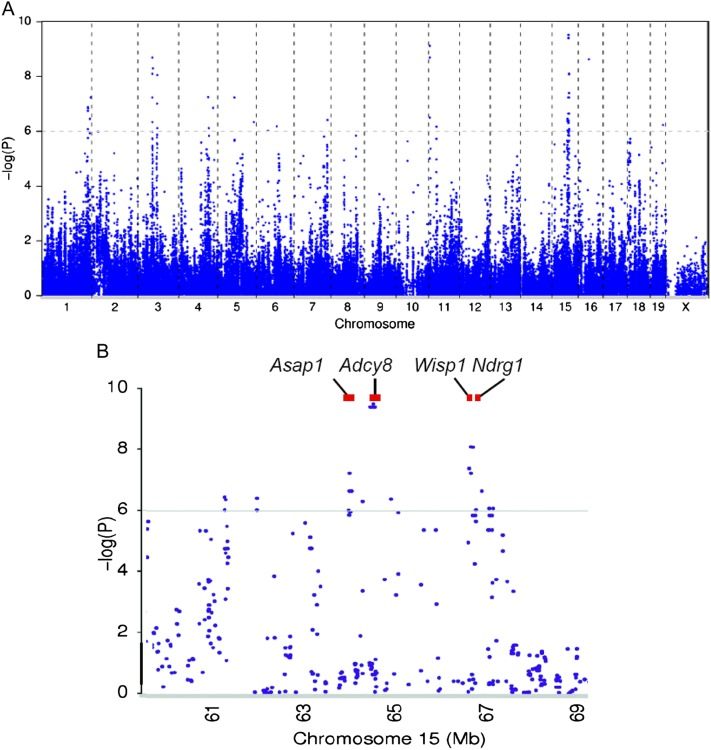
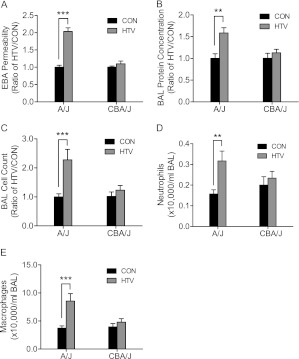
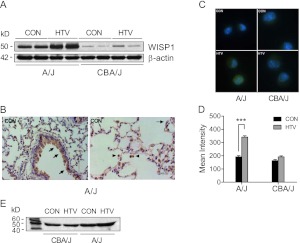
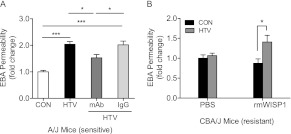
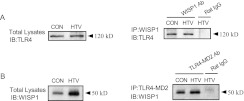
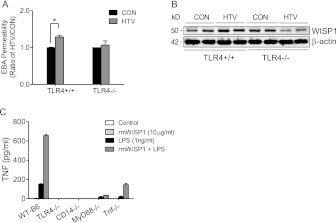
Although strides have been made to reduce ventilator-induced lung injury (VILI), critically ill patients can vary in sensitivity to VILI, suggesting gene-environment interactions could contribute to individual susceptibility. This study sought to uncover candidate genes associated with VILI using a genome-wide approach followed by functional analysis of the leading candidate in mice. Alveolar-capillary permeability after high tidal volume (HTV) ventilation was measured in 23 mouse strains, and haplotype association mapping was performed. A locus was identified on chromosome 15 that contained ArfGAP with SH3 domain, ankyrin repeat and PH domain 1 (Asap1), adenylate cyclase 8 (Adcy8), WNT1-inducible signaling pathway protein 1 (Wisp1), and N-myc downstream regulated 1 (Ndrg1). Information from published studies guided initial assessment to Wisp1. After HTV, lung WISP1 protein increased in sensitive A/J mice, but was unchanged in resistant CBA/J mice. Anti-WISP1 antibody decreased HTV-induced alveolar-capillary permeability in sensitive A/J mice, and recombinant WISP1 protein increased HTV-induced alveolar-capillary permeability in resistant CBA/J mice. HTV-induced WISP1 coimmunoprecipitated with glycosylated Toll-like receptor (TLR) 4 in A/J lung homogenates. After HTV, WISP1 increased in strain-matched control lungs, but was unchanged in TLR4 gene-targeted lungs. In peritoneal macrophages from strain-matched mice, WISP1 augmented LPS-induced TNF release that was inhibited in macrophages from TLR4 or CD14 antigen gene-targeted mice, and was attenuated in macrophages from myeloid differentiation primary response gene 88 gene-targeted or TLR adaptor molecule 1 mutant mice. These findings support a role for WISP1 as an endogenous signal that acts through TLR4 signaling to increase alveolar-capillary permeability in VILI.
Figures
References
-
- Rubenfeld GD, Caldwell E, Peabody E, Weaver J, Martin DP, Neff M, Stern EJ, Hudson LD. Incidence and outcomes of acute lung injury. N Engl J Med 2005;353:1685–1693 - PubMed
-
- Wheeler AP, Bernard GR. Acute lung injury and the acute respiratory distress syndrome: a clinical review. Lancet 2007;369:1553–1564 - PubMed
-
- Dolinay T, Kaminski N, Felgendreher M, Kim HP, Reynolds P, Watkins SC, Karp D, Uhlig S, Choi AM. Gene expression profiling of target genes in ventilator-induced lung injury. Physiol Genomics 2006;26:68–75 - PubMed
-
- Ma SF, Grigoryev DN, Taylor AD, Nonas S, Sammani S, Ye SQ, Garcia JG. Bioinformatic identification of novel early stress response genes in rodent models of lung injury. Am J Physiol Lung Cell Mol Physiol 2005;289:L468–L477 - PubMed
Publication types
MeSH terms
Substances
Grants and funding
- R01 HL077763/HL/NHLBI NIH HHS/United States
- GM080906/GM/NIGMS NIH HHS/United States
- R01 DK083752/DK/NIDDK NIH HHS/United States
- R01 GM080906/GM/NIGMS NIH HHS/United States
- HL65697/HL/NHLBI NIH HHS/United States
- R01 GM078238/GM/NIGMS NIH HHS/United States
- GM50441/GM/NIGMS NIH HHS/United States
- R37 HL065697/HL/NHLBI NIH HHS/United States
- R01 HL085655/HL/NHLBI NIH HHS/United States
- K08 HL079456/HL/NHLBI NIH HHS/United States
- HL085655/HL/NHLBI NIH HHS/United States
- HL79456/HL/NHLBI NIH HHS/United States
- HL077763/HL/NHLBI NIH HHS/United States
- R01 GM050441/GM/NIGMS NIH HHS/United States
- U01 ES015675/ES/NIEHS NIH HHS/United States
- ES015675/ES/NIEHS NIH HHS/United States
LinkOut - more resources
Full Text Sources
Molecular Biology Databases
Research Materials
