


Cervical cancers require the continuous expression of the human papillomavirus type 16 E7 oncoprotein even in the presence of the viral E6 oncoprotein
- PMID: 22700879
- PMCID: PMC3421037
- DOI: 10.1158/0008-5472.CAN-11-3085
Cervical cancers require the continuous expression of the human papillomavirus type 16 E7 oncoprotein even in the presence of the viral E6 oncoprotein
Abstract
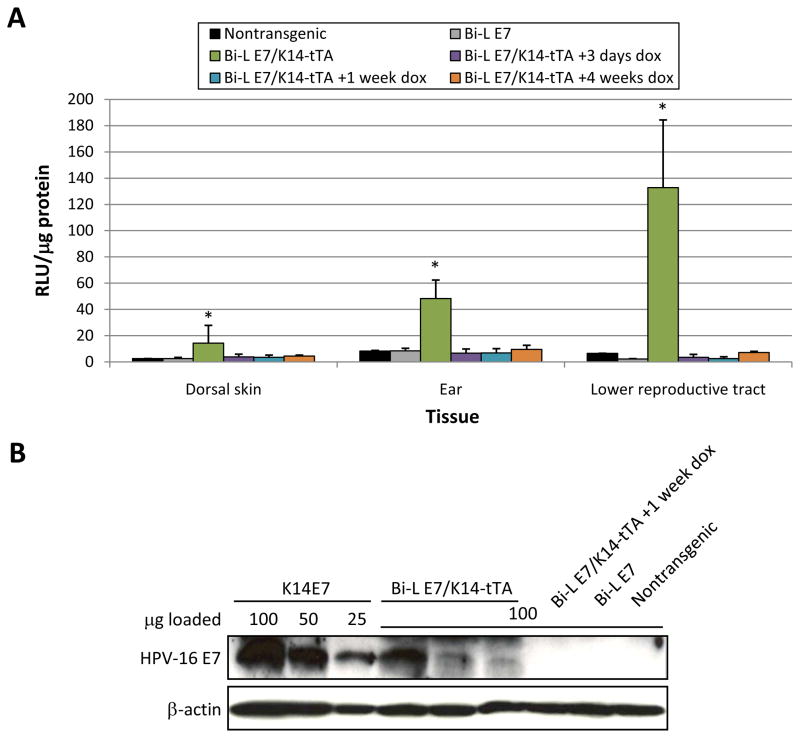
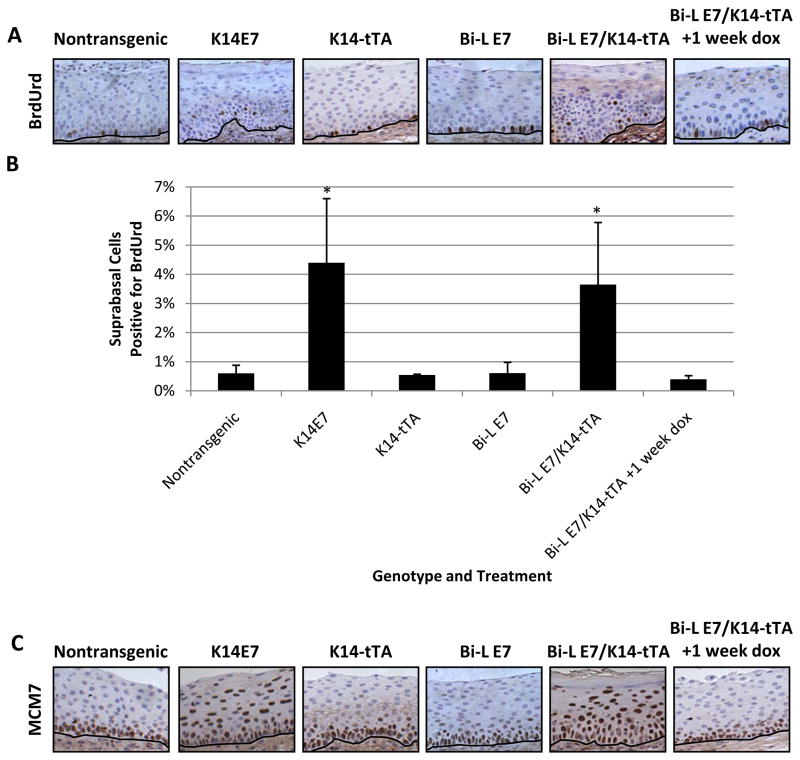
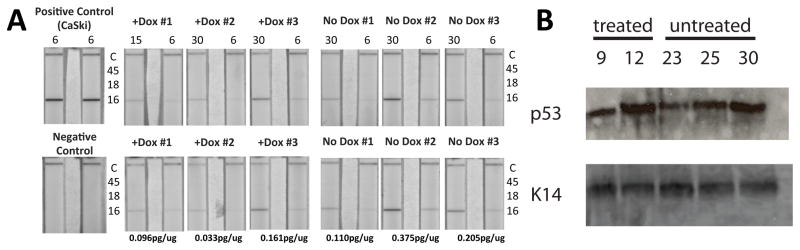
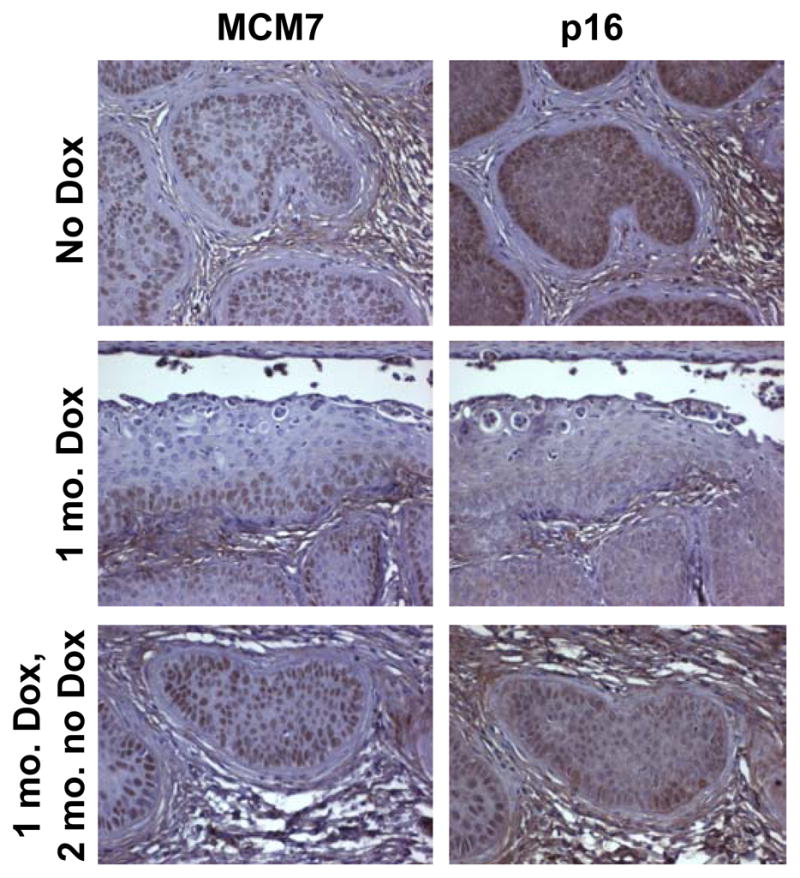
High-risk human papillomaviruses (HPV), such as HPV-16, are etiologic agents of a variety of anogenital and oral malignancies, including nearly all cases of cervical cancer. Cervical cancers arising in transgenic mice that express HPV-16 E7 in an inducible manner require the continuous expression of E7 for their maintenance. However, in HPV-associated cancers in vivo, E6 and E7 invariably are coexpressed. In this study, we investigated whether cervical cancers rely on the continuous expression of E7 in the context of constitutively expressed E6. We placed the inducible HPV-16 E7 transgene onto a background in which HPV-16 E6 was constitutively expressed. In transgenic mice with high-grade cervical dysplastic lesions and cervical cancer, repressing the expression of E7 led to the regression of all cancers and the vast majority of high-grade dysplastic lesions. In addition, cervical cancers were occasionally observed in transgenic mice in which E7 was repressed and then reexpressed. Our findings indicate that even in the presence of constitutively expressed E6, the continuous expression of E7 is required for the maintenance of cervical cancers and most precancerous lesions. These data have important implications for the potential clinical use of drugs designed to inhibit the expression and/or function of E7 to treat HPV-associated cancers.
©2012 AACR.
Figures
References
-
- zur Hausen H. Papillomaviruses and cancer: from basic studies to clinical application. Nat Rev Cancer. 2002;2:342–50. - PubMed
-
- Riley RR, Duensing S, Brake T, Munger K, Lambert PF, Arbeit JM. Dissection of human papillomavirus E6 and E7 function in transgenic mouse models of cervical carcinogenesis. Cancer Res. 2003;63:4862–71. - PubMed
-
- Boyer SN, Wazer DE, Band V. E7 protein of human papilloma virus-16 induces degradation of retinoblastoma protein through the ubiquitin-proteasome pathway. Cancer Res. 1996;56:4620–4. - PubMed
Publication types
MeSH terms
Substances
Grants and funding
LinkOut - more resources
Full Text Sources
Medical
Molecular Biology Databases
